Space & the Future

From Earth to other planets: discover spaceflight, models and questions researchers investigate.

What would you like to discover?

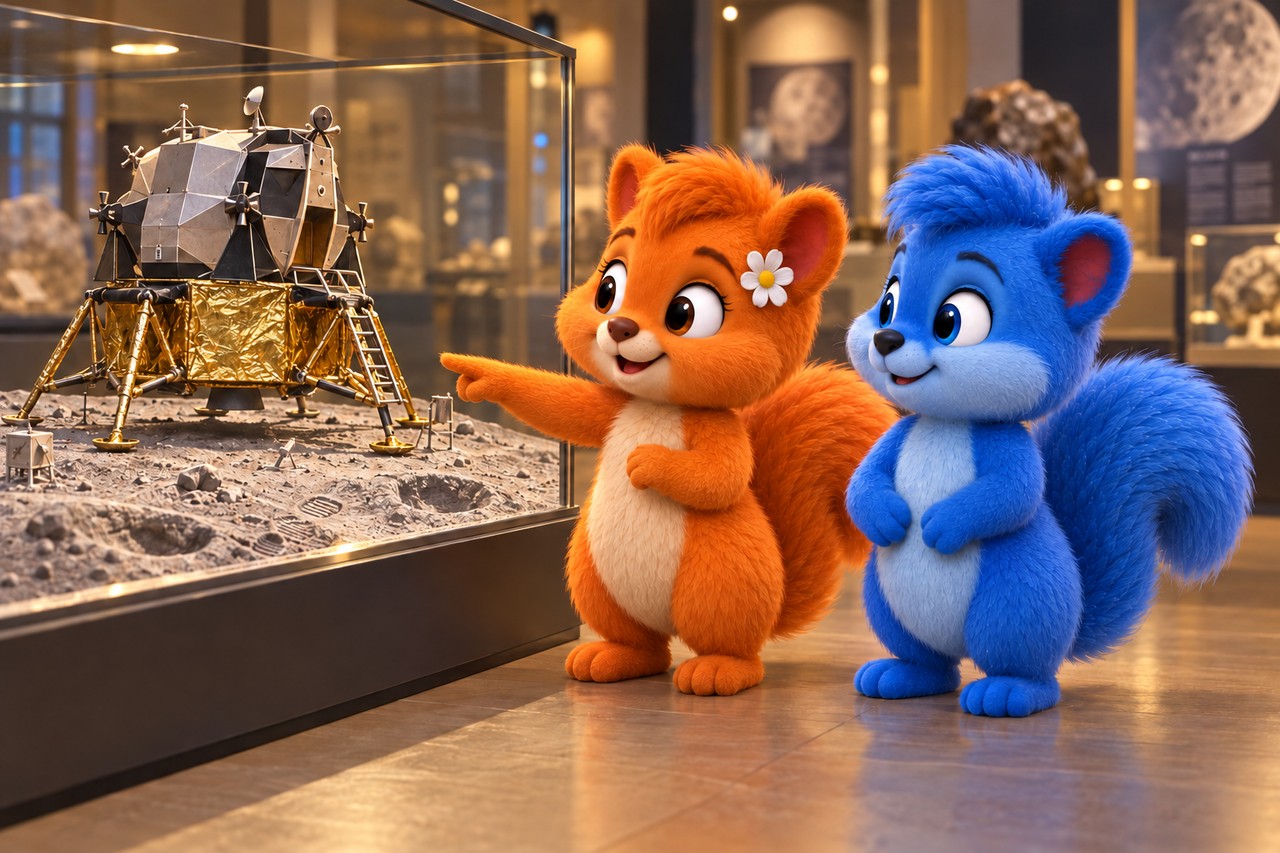
Equal-sized Puschel and Flauschi examine a simplified Apollo lunar-module museum model.

How did people reach the Moon?

One spacecraft stayed in lunar orbit. Another took two people down and back up.

Ages 6–10 · Discover together

Open learning page →
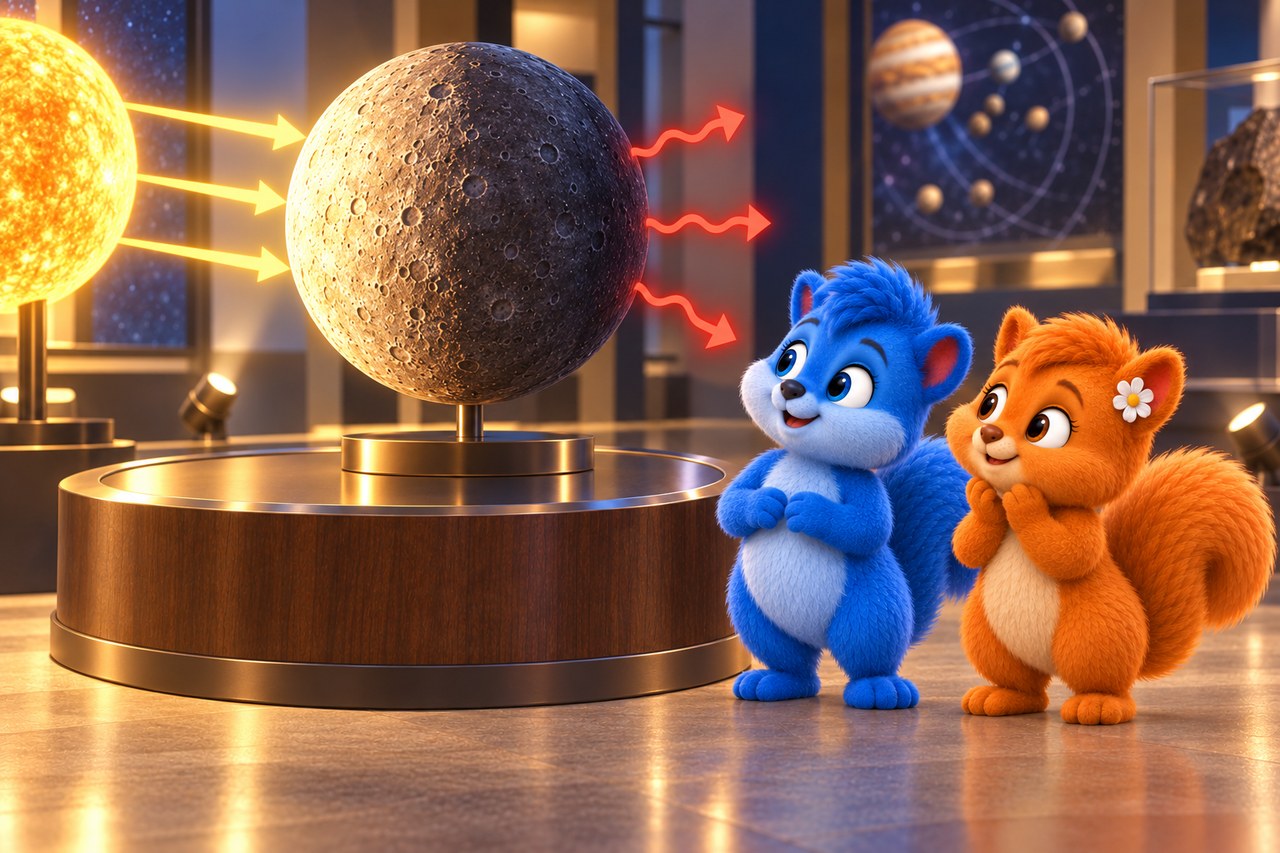
Puschel and Flauschi in the museum. Mercury model: sunlight arrives and heat leaves.

Why is Mercury hot by day and cold at night?

The smallest planet orbits close to the Sun. Its extremely thin gas envelope matters.

Ages 6–10 · Discover together

Open learning page →
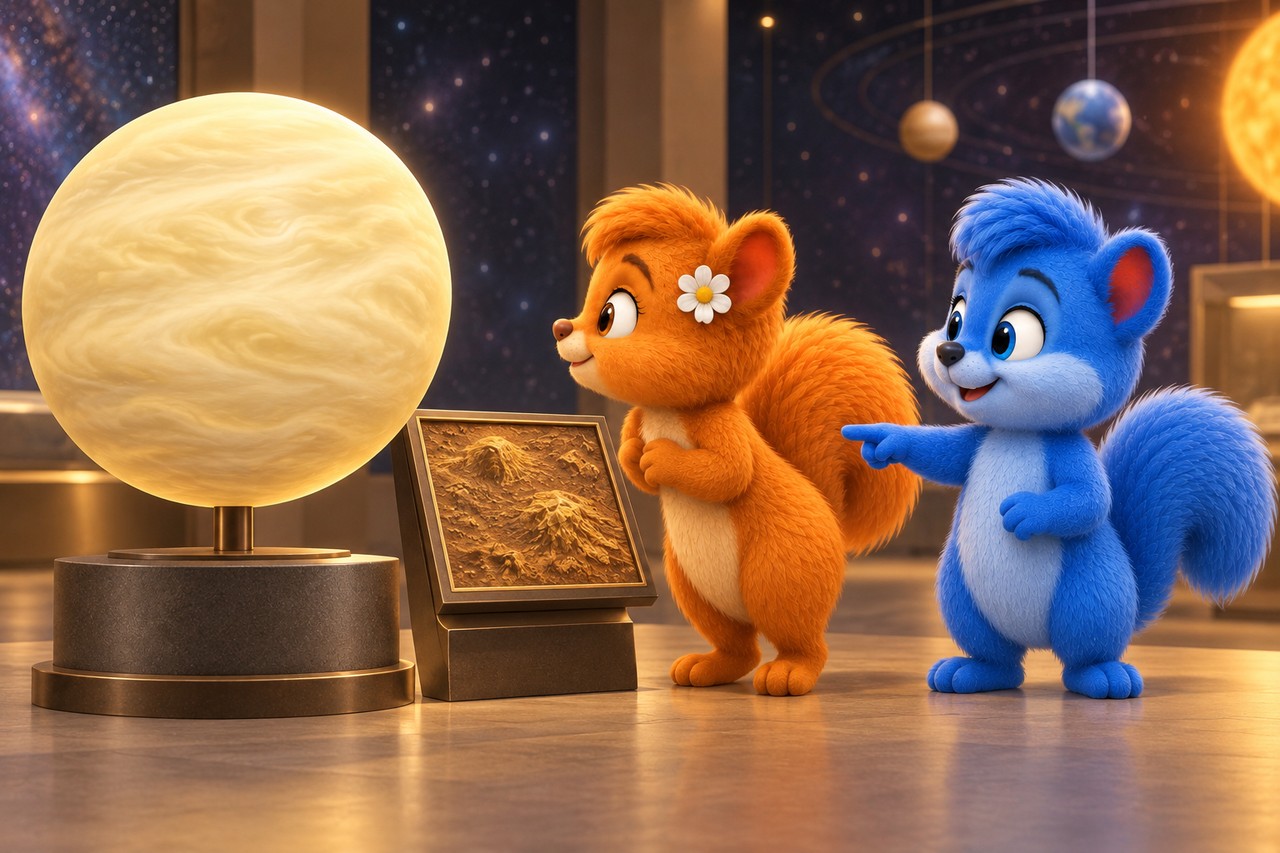
Equal-sized Wusels examine a cloud-covered Venus museum model.

Why is Venus so hot?

It is similar in size to Earth but has a very different atmosphere.

Ages 6–10 · Discover together

Open learning page →
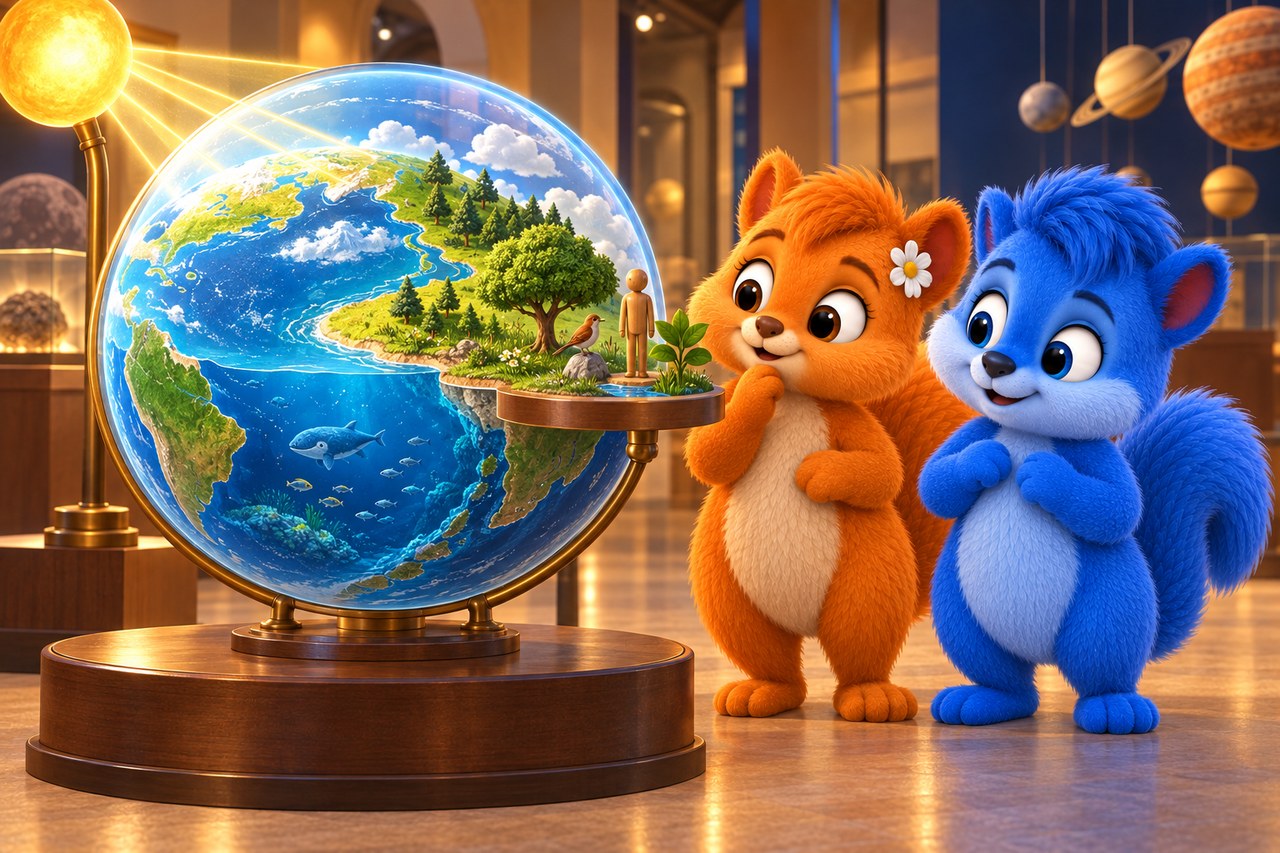
Puschel and Flauschi in the museum. Earth model with oceans, an air layer and a landscape with living things.

What makes Earth our home planet?

Land, water, air and life are connected. A globe helps us understand.

Ages 6–10 · Discover together

Open learning page →
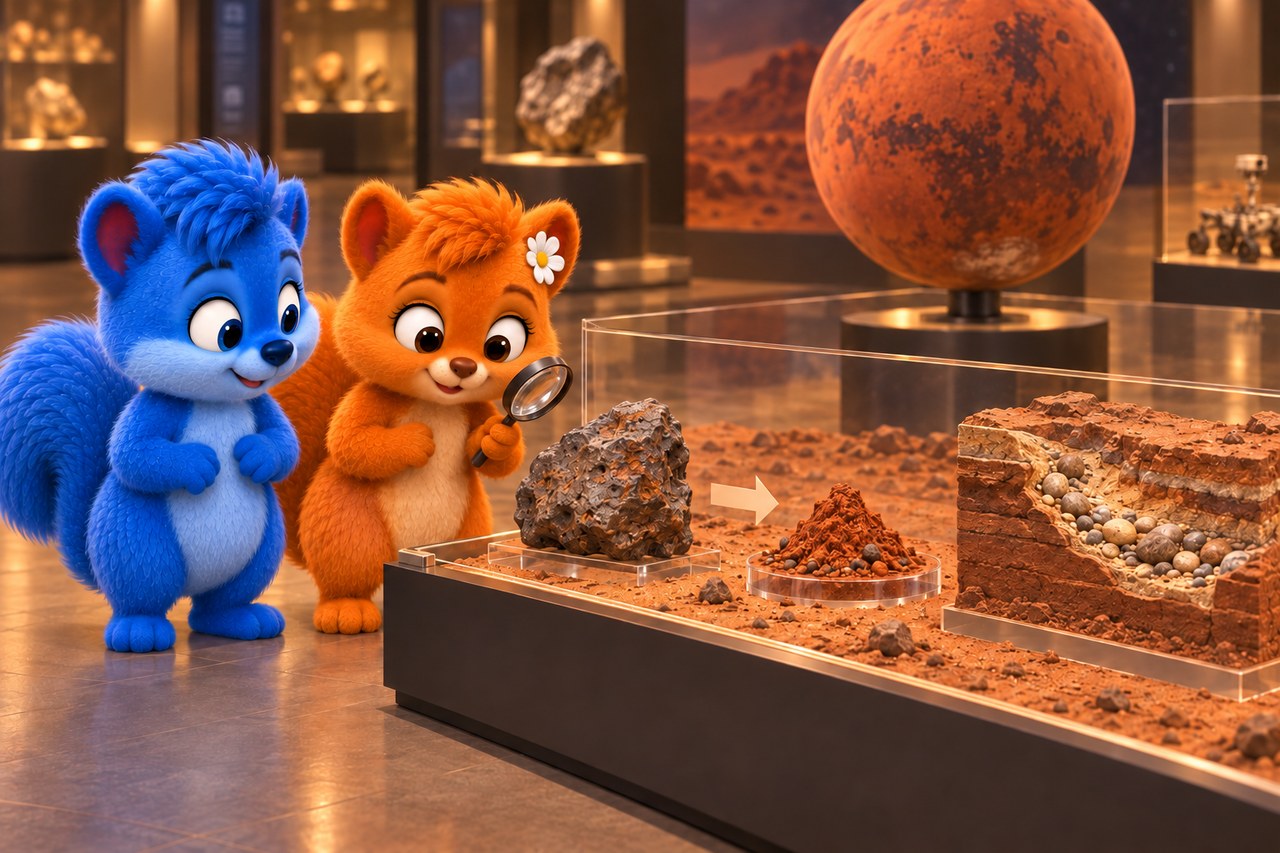
Puschel and Flauschi in the museum. Mars model with iron-bearing rock, red rust and an old water channel.

Why is Mars red, and what do its rocks reveal?

A cold desert world preserves evidence of ancient water. Evidence for water is not proof of life.

Ages 6–10 · Discover together

Open learning page →
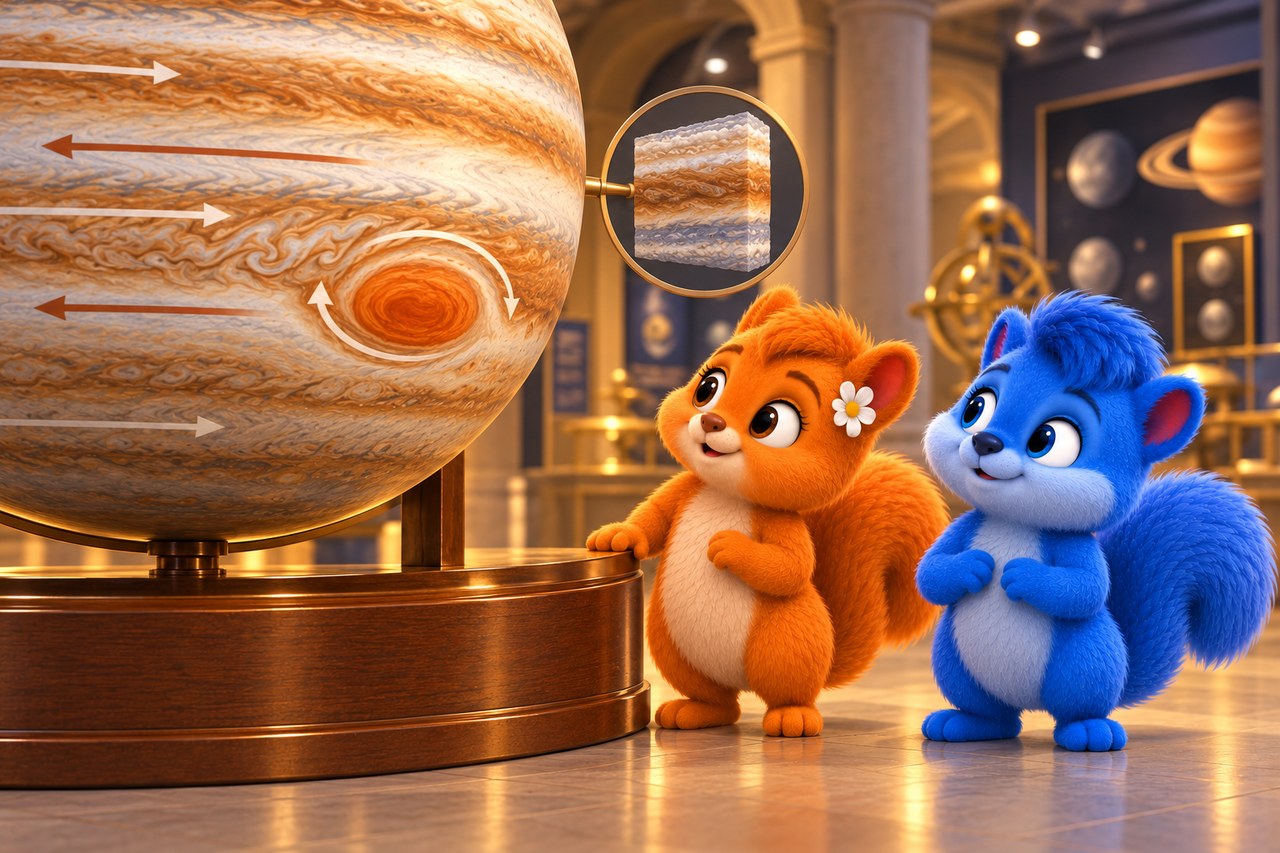
Puschel and Flauschi in the museum. Jupiter model with cloud bands, wind arrows and an enlarged vortex.

Why does Jupiter have stripes and a red spot?

These striking patterns belong to moving clouds. Jupiter has no solid ground like Earth.

Ages 6–10 · Discover together

Open learning page →
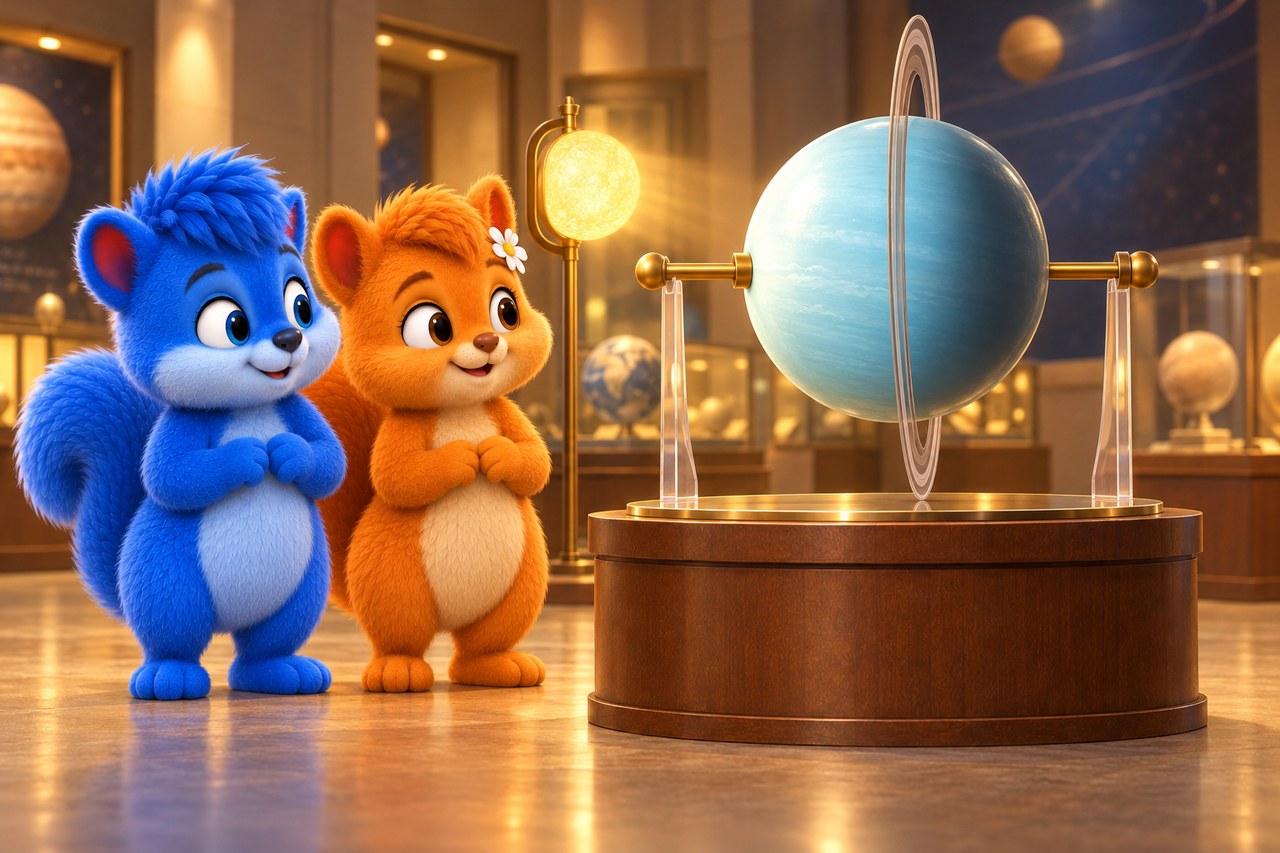
Puschel and Flauschi in the museum. Uranus model with a strongly tilted axis, ring plane and sunlight from the side.

Why does Uranus spin almost on its side?

Its strongly tilted rotation axis is unusual. A table model helps explain it.

Ages 6–10 · Discover together

Open learning page →
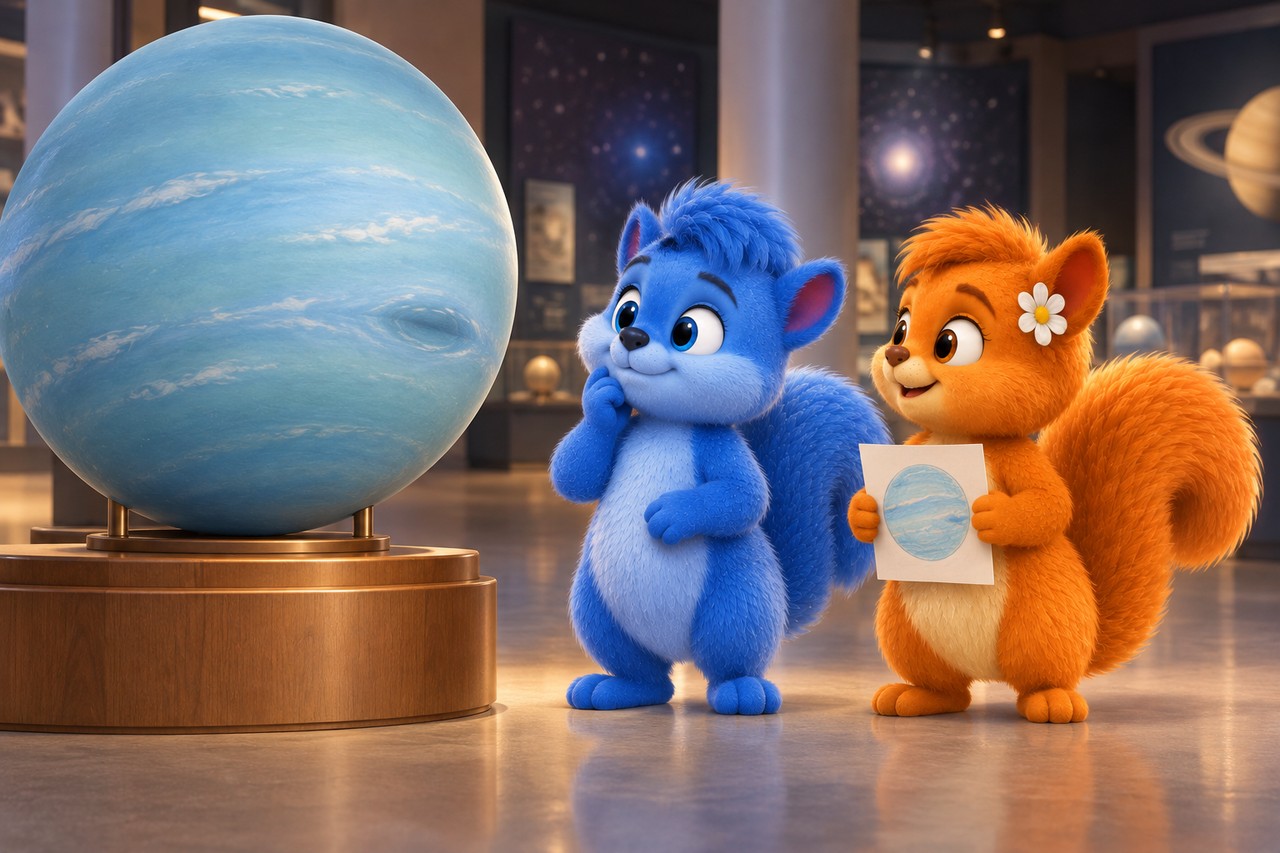
Equal-sized Wusels discover a pale Neptune museum model.

How did researchers find distant Neptune?

Calculations guided the search. Familiar blue pictures do not always tell the whole colour story.

Ages 6–10 · Discover together

Open learning page →
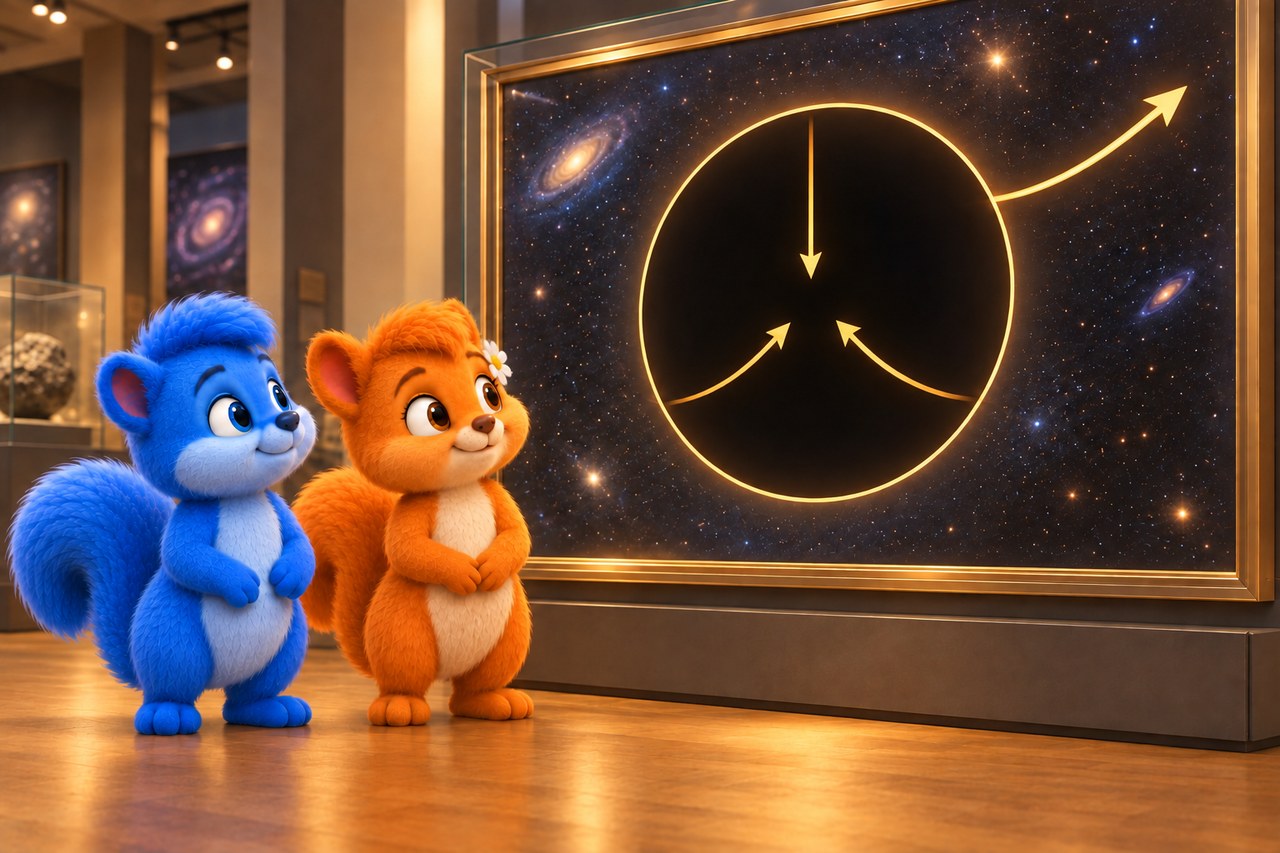
Puschel and Flauschi in the museum. Museum picture: paths inside lead inward; an outside path leads away.

Why can light not escape from a black hole?

A great concentration of mass changes its surroundings. Separate the dark interior from glowing gas outside it.

Ages 6–10 · Discover together

Open learning page →
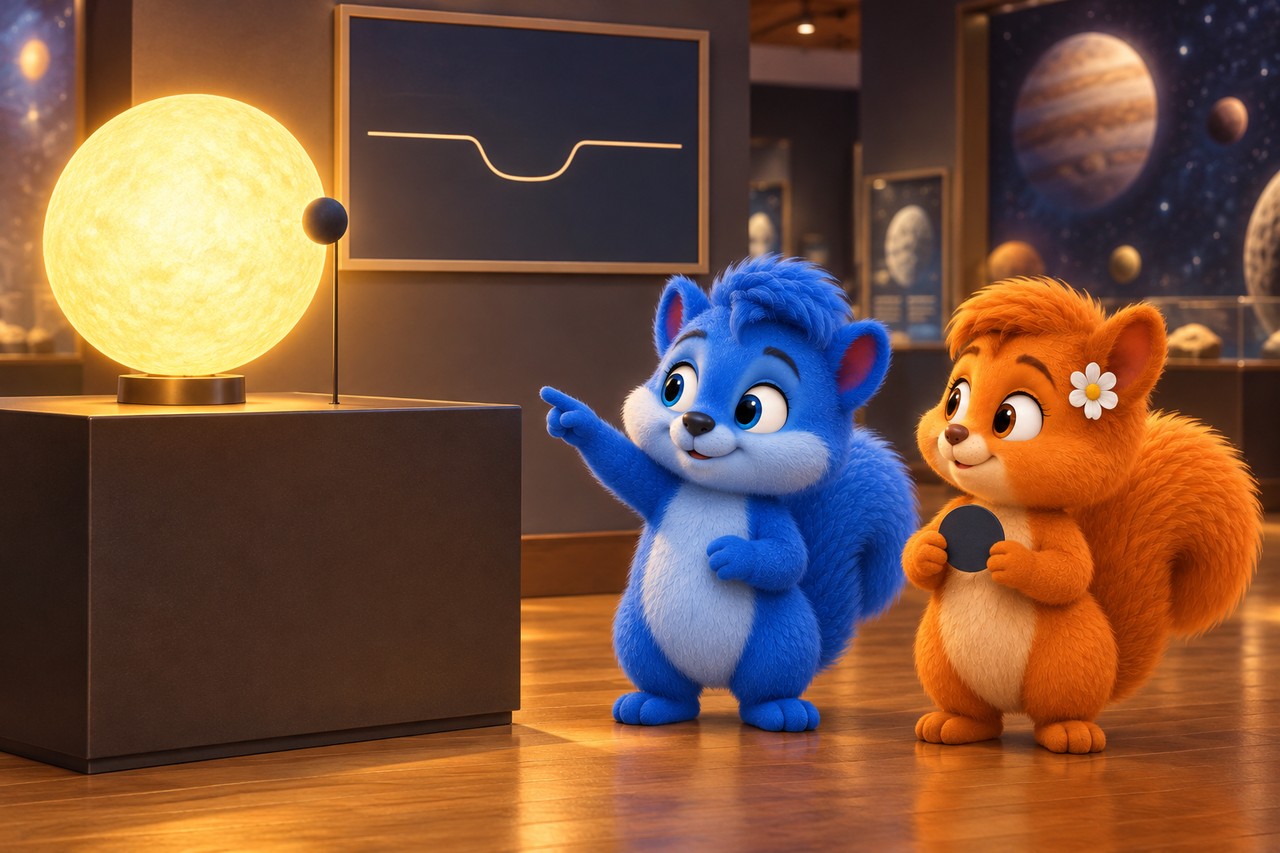
Equal-sized Wusels study a small planet model in front of a glowing model star.

How do we find planets around other stars?

A tiny change in brightness may reveal a planet crossing in front of a distant star.

Ages 6–10 · Discover together

Open learning page →
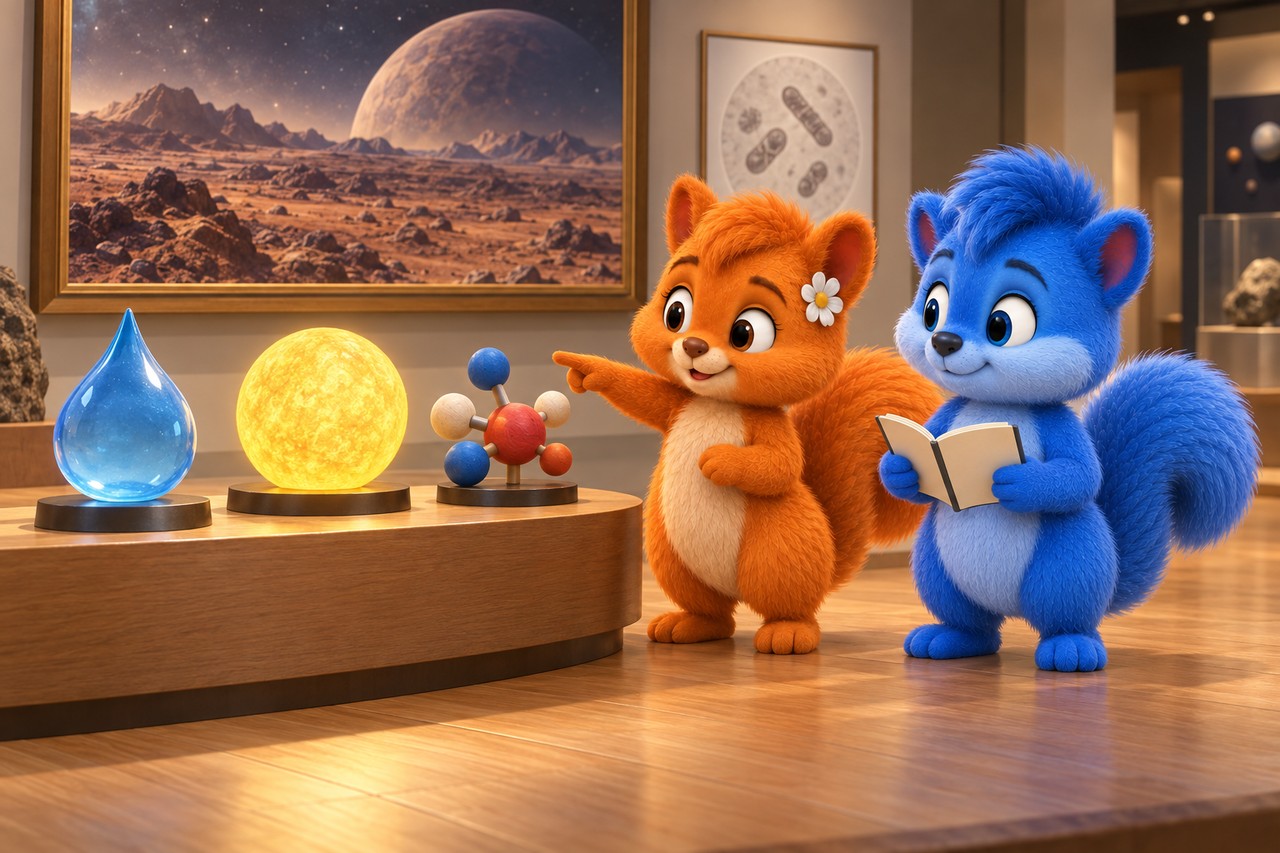
Equal-sized Wusels compare museum models representing water, energy and chemical substances.

How do researchers search for life beyond Earth?

Suitable conditions, possible clues and confirmed evidence are three different things.

Ages 6–10 · Discover together

Open learning page →
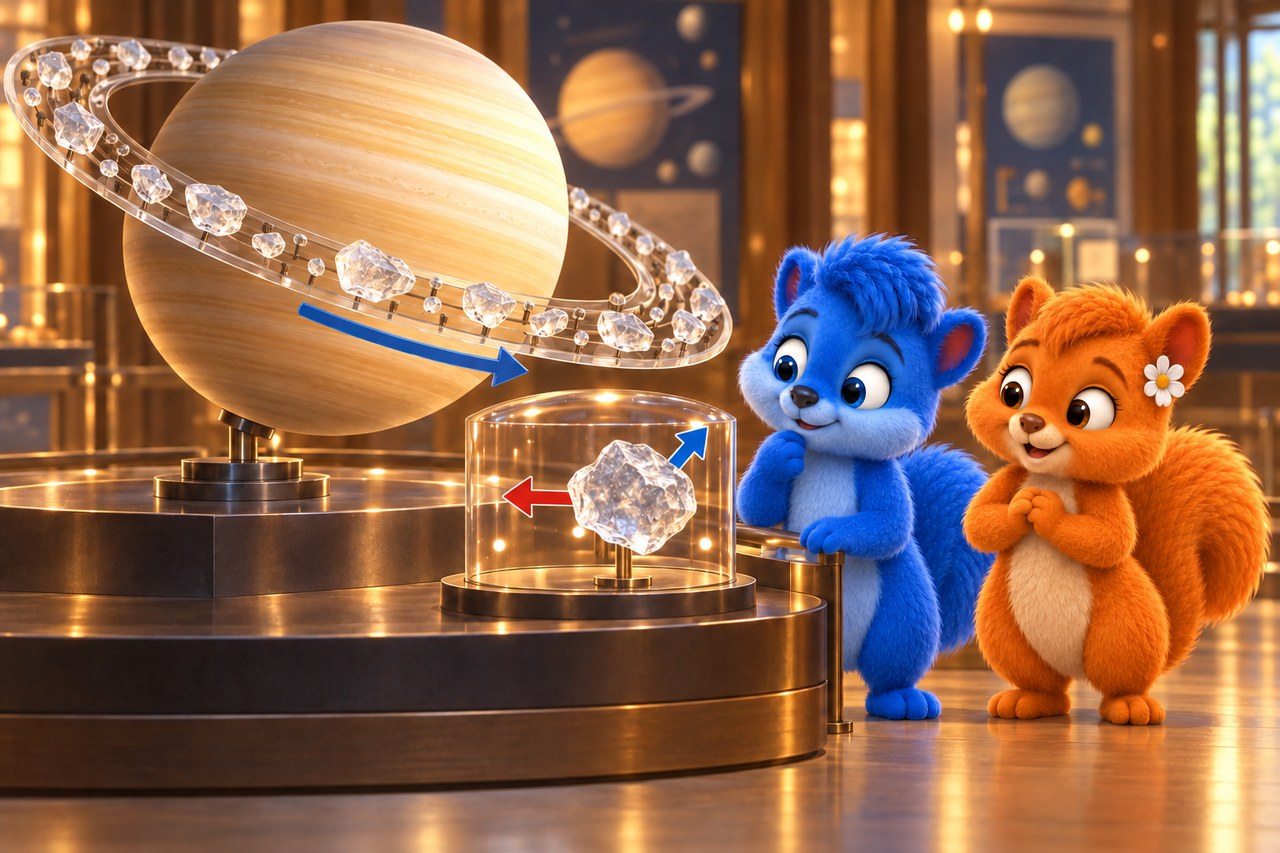
Puschel and Flauschi in the museum. Saturn model with separate ring pieces and arrows for motion and attraction.

Why does Saturn have rings?

What looks like a broad tyre consists of many separate pieces, each moving around the planet.

Ages 6–10 · Discover together

Open learning page →
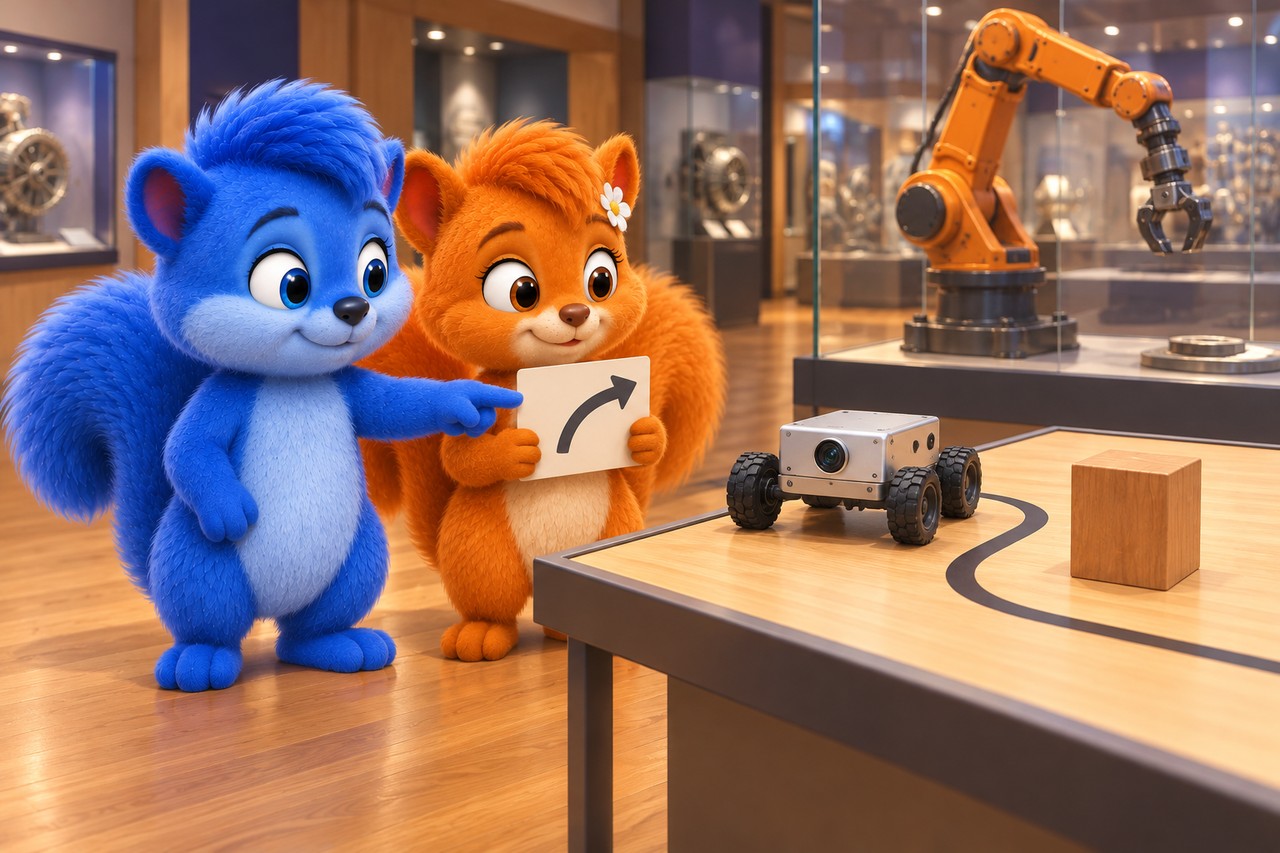
Equal-sized Wusels examine arrow cards beside a parked rover model and obstacle.

How does a robot know what to do?

Measuring devices, instructions and motors work together. Robots do not have to look like people.

Ages 6–10 · Discover together

Open learning page →
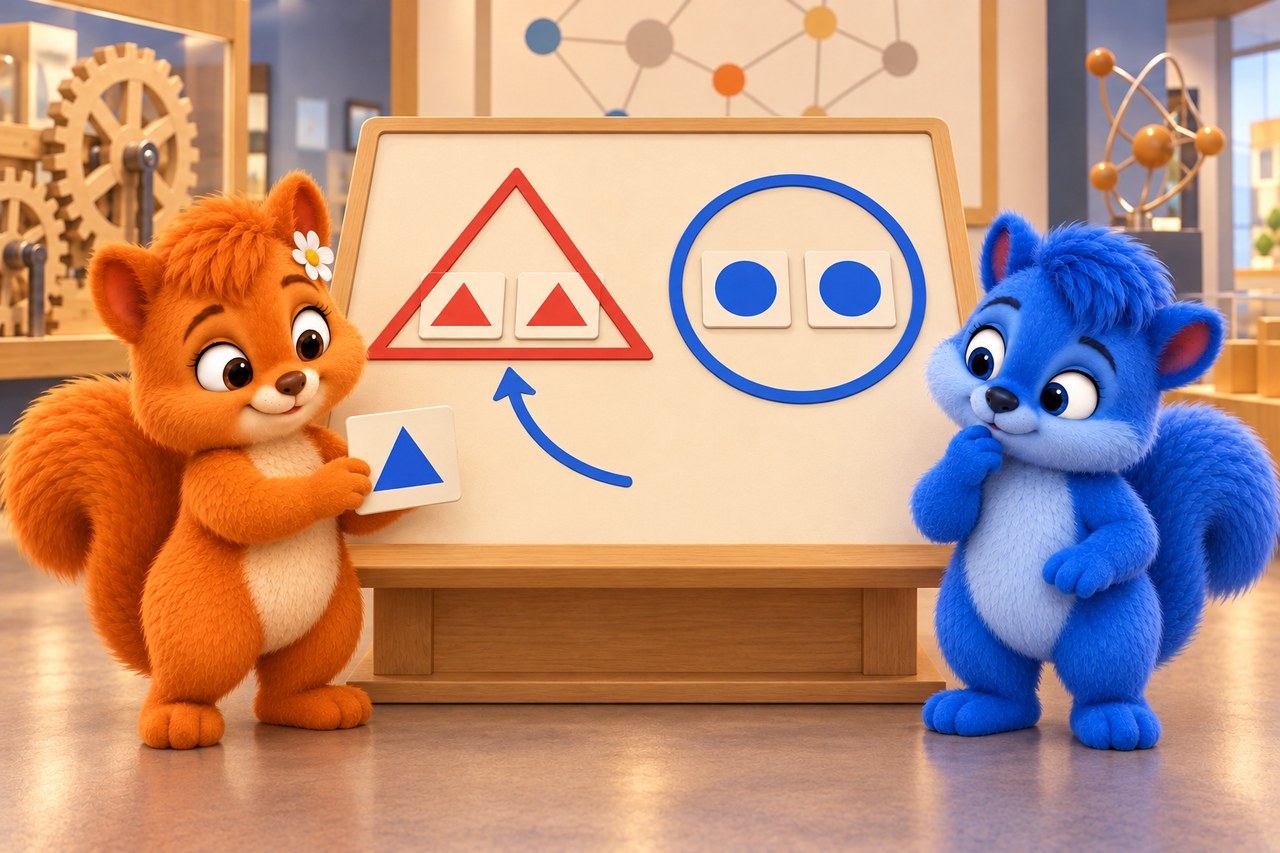
Puschel and Flauschi in the museum. Sorting board: a blue triangle joins the triangles according to shape.

How does artificial intelligence learn from examples?

Computers can look for patterns in data. A matching pattern is not always a correct answer.

Ages 6–10 · Discover together

Open learning page →
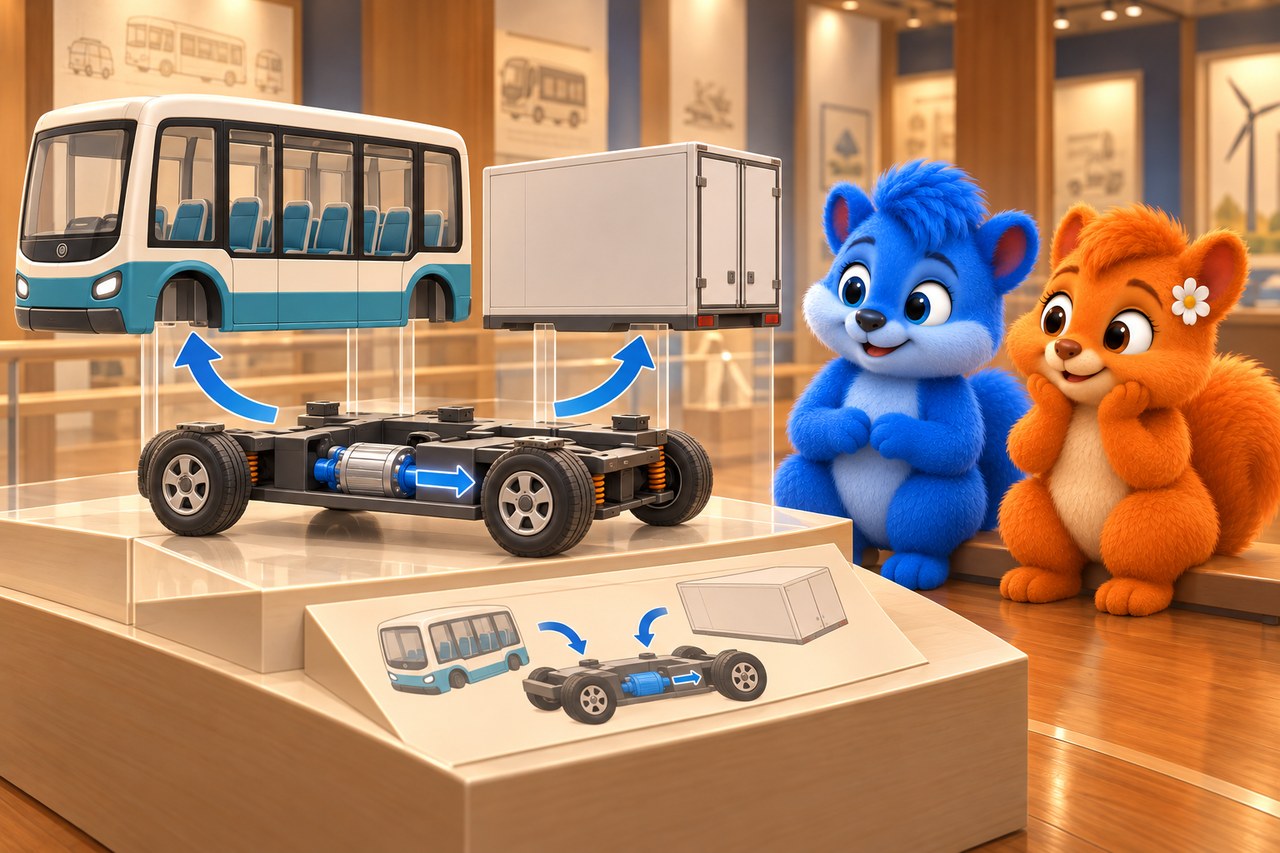
Puschel and Flauschi in the museum. Vehicle design with a shared chassis and interchangeable bodies.

How might vehicles travel in the future?

Power, control and sharing a ride are different questions. Research models help test ideas.

Ages 6–10 · Discover together

Open learning page →