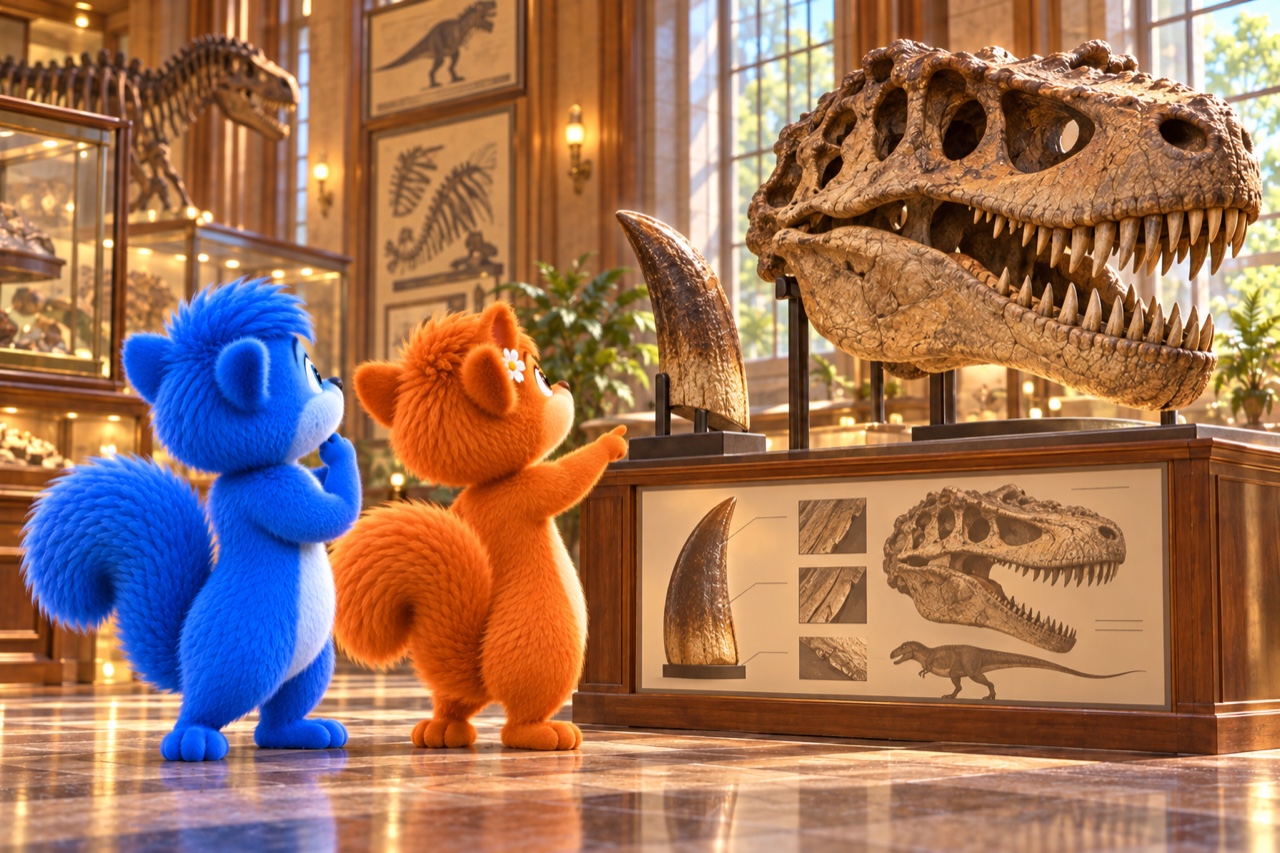
What do T. rex teeth tell us?
T. rex's large serrated teeth and powerful jaws fit meat-eating and breaking tough food.
Open learning page →Your choices apply to all pages in this browser.
Big teeth, three horns, long necks and small eggs: explore five learning pages about dinosaurs. Each explains what fossils tell us, step by step, and where questions remain.
Start here: Did all dinosaurs become extinct? →
T. rex's large serrated teeth and powerful jaws fit meat-eating and breaking tough food.
Open learning page →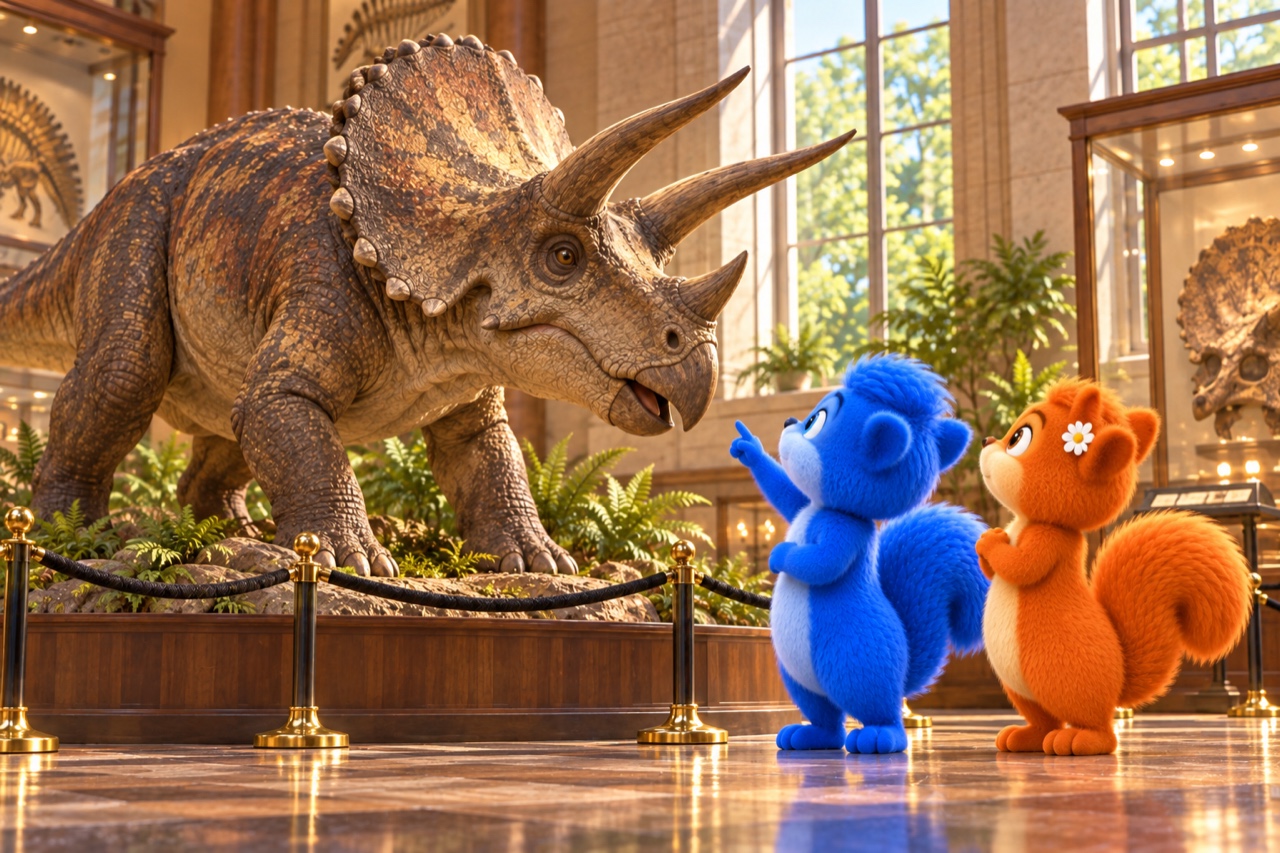
Triceratops had three conspicuous horns and a large neck frill. These may have mattered for defence or encounters with its own species.
Open learning page →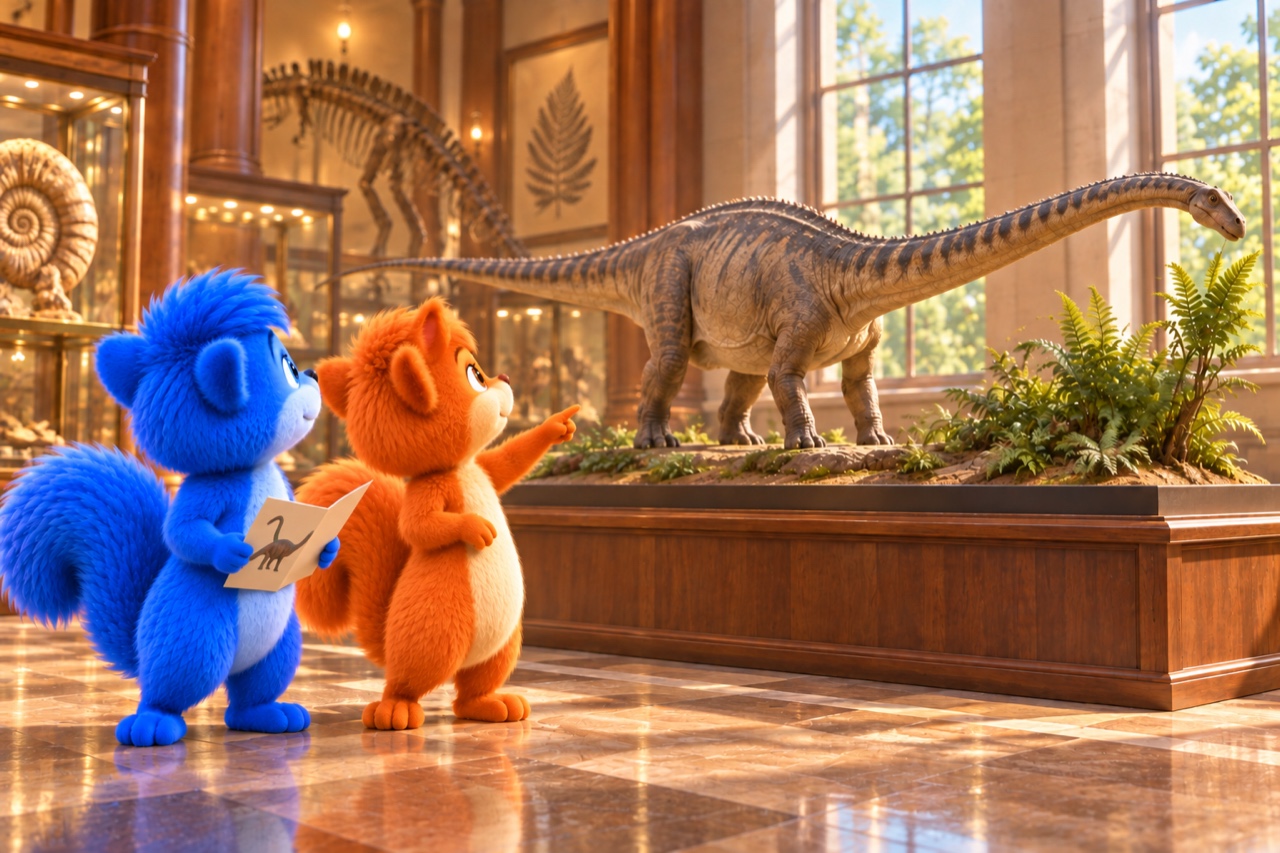
Many large plant-eating dinosaurs could use a long neck to reach food across a wide area without constantly moving the whole body. Different species did not necessarily use it alike.
Open learning page →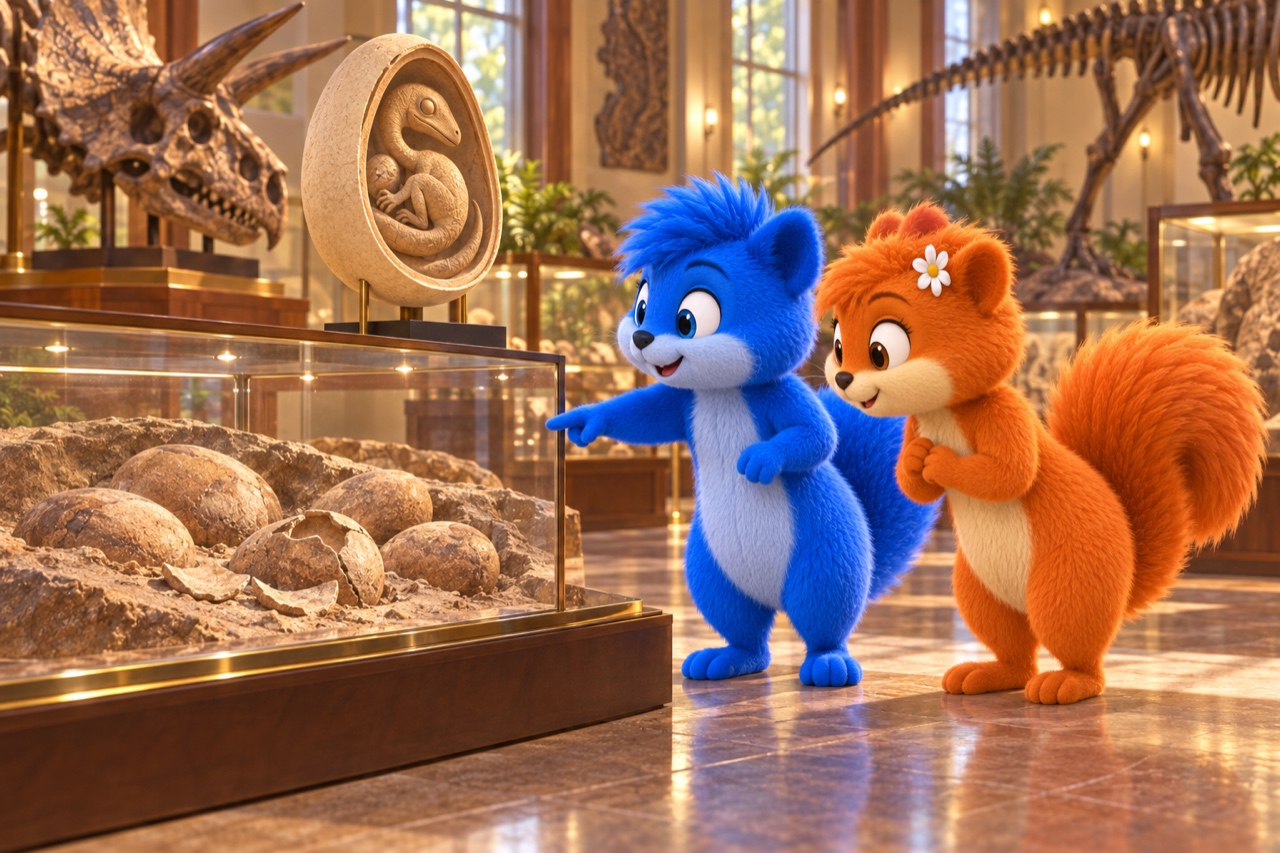
Dinosaurs laid eggs. Young developed inside and later hatched.
Open learning page →
What did a dinosaur look like? Bones reveal body parts, teeth give clues about food and footprints about movement.
Open learning page →