Insect · Tettigonia viridissima
Discover the great green bush-cricket
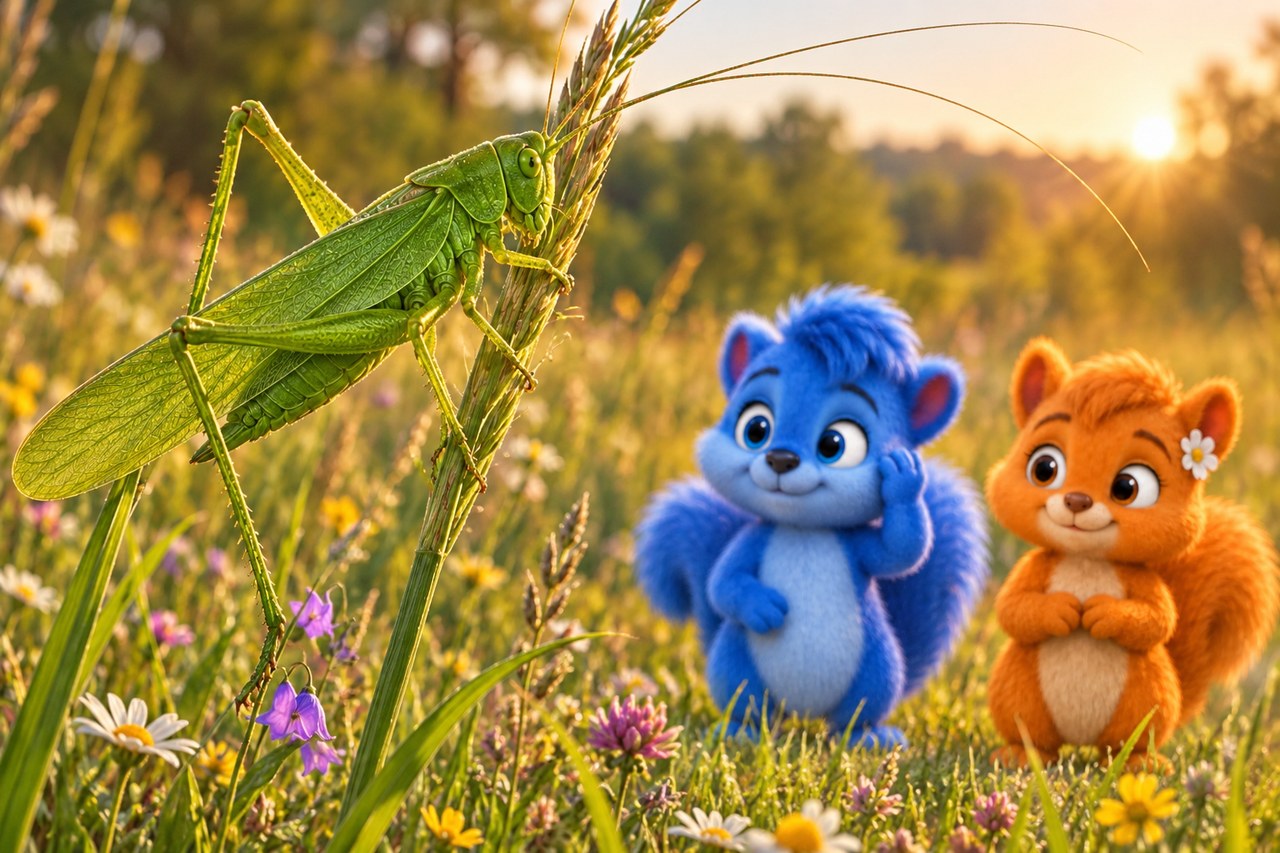
A green animal among green stems: first the pair listen, then they look.
The short answer
The great green bush-cricket has six legs and very long antennae. Strong hind legs help it jump. Males make their song by rubbing their forewings together.
An imagined Wusel scene
Puschel and Flauschi investigate
Puschel holds a paw beside his ear. A quiet chirp comes from the grass. Puschel“A hay horse? Should it not neigh?”
Flauschi smiles. Flauschi“That is its German name, but it belongs with crickets and grasshoppers.” They stay at the meadow edge to leave it in peace.
Puschel listens again. Puschel“Today I will practise listening.” Flauschi nods. That is much easier when you are quiet yourself.
What it looks like
The great green bush-cricket is an insect in the grasshopper and cricket group. It has long antennae and six legs, including strong jumping hind legs.
How it lives
Males sing by rubbing their forewings together. The sound does not come from a mouth like ours.
Good to know
It lives among grasses and shrubs and eats other insects among other foods. Its German name means “hay horse”, but it is no horse.
Little Wusel quiz
How does the male make its song?
Show answer
It rubs its forewings together.
Explore in more detail
Here you will find longer explanations and further details. You can explore them together.
Understand step by step
How it works – simply explained
Legs have different jobs
Six legs include powerful hind legs for jumping. Long antennae are sensory organs, not extra legs.
Wings produce song
Males rub forewing parts together, producing vibrations and sound rather than a speaking voice.
Observe without touching
Females have a long egg-laying ovipositor, not a venomous stinger. Understanding it does not permit catching animals.
References for this explanation: [1]
Additional specialist reference: Bundesamt für Naturschutz: Kinatschu Sommer, Seite 17
Explore animal sounds
Listen to a great green bush-cricket stridulating.
Great green bush-cricket stridulation
Recording: Harald Süpfle · Original: Tettigonia viridissima - Grünes Heupferd (HS).ogg · CC BY-SA 3.0 · Wikimedia MP3 conversion; no trimming or content changes by us.
Listen quietly. Do not play animal recordings outdoors to attract animals.