Herb garden and kitchen · Mentha spicata
Spearmint: look, smell and learn
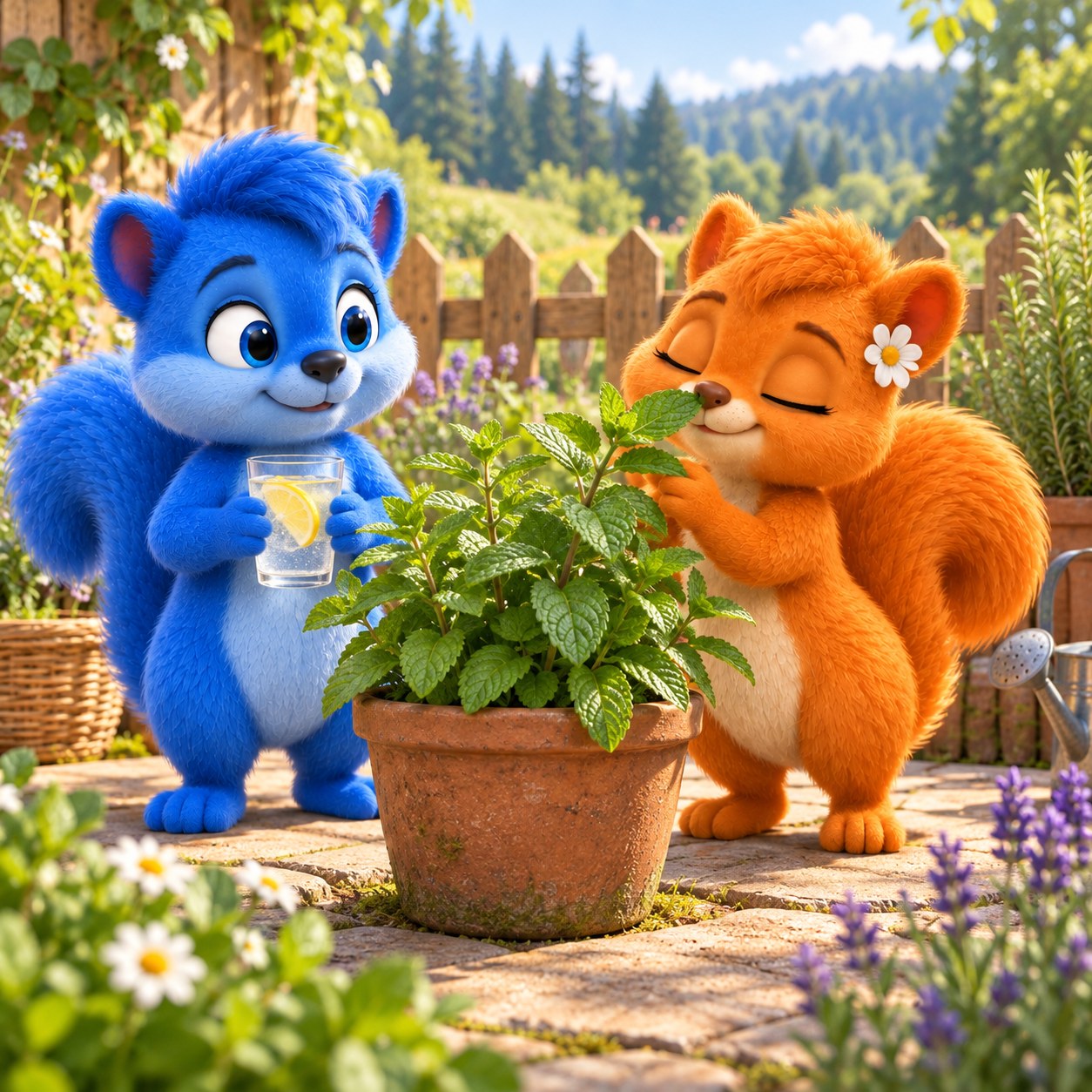
A fresh scent from its own pot: Flauschi sniffs while Puschel thinks about his water glass.
The short answer
Spearmint has toothed leaves in opposite pairs. It makes spreading stems from which new plants can grow. These stems are called runners. A separate pot can limit spreading. A minty smell alone does not make unknown leaves safe to eat.
An imagined Wusel scene
Puschel and Flauschi investigate
Flauschi gently smells a leaf. Puschel looks at his water glass. Puschel“The smell makes me smile!” Flauschi“And we ask an adult before tasting,” says Flauschi.
Puschel looks at the pot rim. Puschel“A place of your own,” he tells the mint. Flauschi explains that its runners can spread vigorously. For water, they will later use only known, washed leaves with adults’ help; scent alone is not an identification guide.
What it looks like
Opposite, elongated leaves with toothed edges; this page shows spearmint.
Scent and cooking
Fresh and minty; a few washed leaves go in water or with fruit.
How it grows
Spreads vigorously; its own pot helps contain the runners.
Little Wusel quiz
Why might mint take up plenty of space beside other herbs?
Show answer
It can spread vigorously through runners. A separate pot limits its spread.
Word help
- toothed
- The edge has little points like tiny teeth. A leaf has no real teeth.
- runner
- A spreading stem from which new plants can grow at suitable points.
Explore in more detail
Here you will find longer explanations and further details. You can explore them together.
How does mint spread beyond its pot?
Many mints produce spreading stems called runners. New shoots can develop at other points along them without first growing from seeds. A small mint plant can therefore gradually occupy a large part of a bed.
Compare and understand
A separate pot can help contain it, though adults should still watch for escaping stems. Not every plant with toothed leaves is mint. Compare safely labelled kitchen plants. A minty scent is a plant feature, not proof that an unknown leaf is safe to eat.