Herb garden and kitchen · Petroselinum crispum
Parsley: look, smell and learn
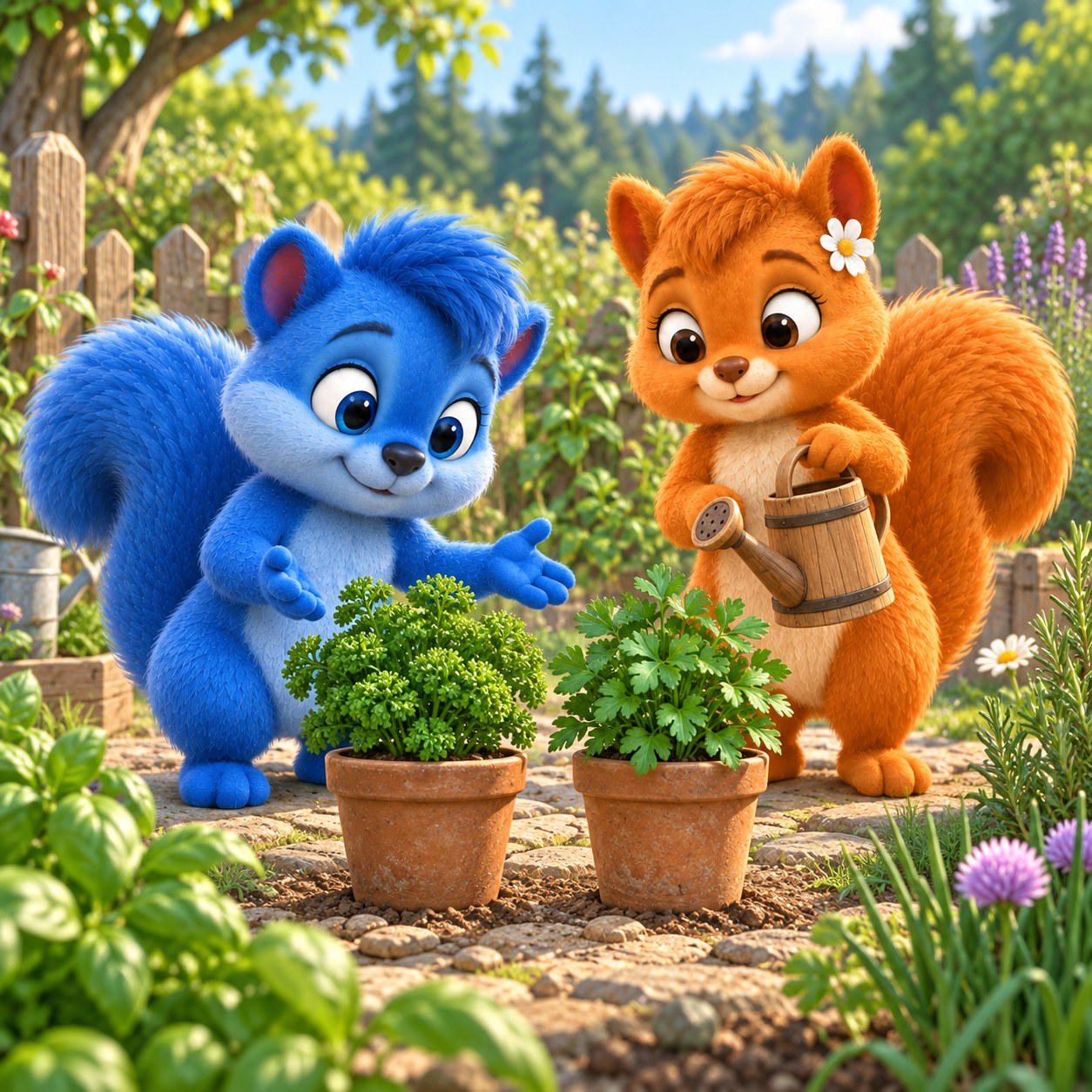
Curly or flat leaves? Puschel compares two parsley pots. Flauschi knows both varieties.
The short answer
Parsley has divided leaves, flat or curly depending on variety. As a correctly identified kitchen herb it can flavour soup. Similar wild plants may be poisonous: use only verified kitchen herbs.
An imagined Wusel scene
Puschel and Flauschi investigate
Puschel compares two pots. Puschel“Does that parsley have curls?” Flauschi giggles. Flauschi“Some varieties are curly; others have flat leaves.”
Puschel looks for divided leaves on both plants. Puschel“Same name, different hairstyle!” Flauschi nods. For cooking, they let adults select and wash the familiar herb. Neither hairstyle wins today: both belong on his imaginary parsley card.
What it looks like
Divided leaves may be flat or curly.
Scent and cooking
Fresh and savoury; good with potatoes, soups and quark.
How it grows
Evenly moist soil and a bright position away from harsh midday sun.
Little Wusel quiz
Puschel sees curly and flat parsley. What do both leaf forms have in common?
Show answer
Both have divided leaves. Whether they are flat or curly depends on the variety.
Word help
- germination
- The young plant inside a seed begins to grow.
Explore in more detail
Here you will find longer explanations and further details. You can explore them together.
Why does parsley change in its second year?
Parsley is usually biennial. It mainly grows leaves and roots in its first year. In the second it can send up a taller flowering stem and produce seeds, after which its life normally ends. A life cycle is the sequence from germination through growth and reproduction to death.
Compare and understand
Curly and flat-leaved parsley are different varieties, not two ages of one plant. A cultivated variety is a form selected by people. Compare leaf edges on labelled pots. Use safely selected kitchen parsley; never substitute similar-looking wild plants.