Discovery 4 / 27
Puschel & Flauschi’s Forest Discoveries
The Secret Fungal Network
The green explorer’s magnifying glass with a leaf-shaped handle
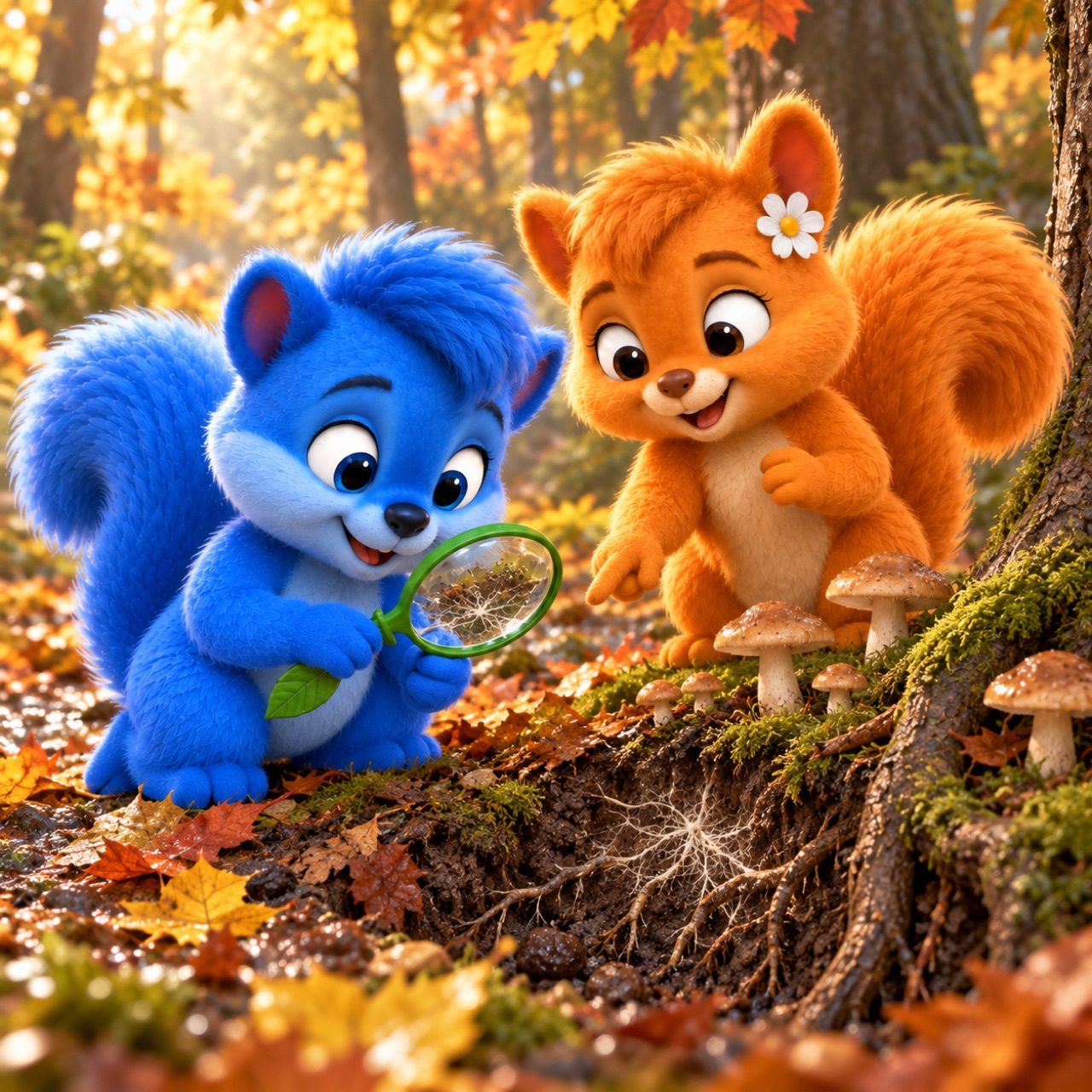
After a warm rain shower, the Wusel Forest smelled of damp earth. At a naturally exposed edge of soil beside an old tree root, Puschel noticed very fine pale threads among moss and fallen leaves. Neither of them dug or moved anything aside.
Puschel“A secret woodland post office! Messages must travel from root to root through here.”
Flauschi knelt beside him. Puschel held the green explorer’s magnifying glass close to the ground without touching the threads. They ran between crumbs of soil and tiny roots before disappearing beneath the moss.
Flauschi“That is not a postal line. It is probably a network of fungal threads. Many fungi are mostly made of these fine threads. One thread is called a hypha.”
Puschel glanced at the small mushroom caps nearby. Flauschi explained that the caps we see are only one part of a fungus. Much more of it may grow hidden in soil or wood.
Puschel“Then the mushroom caps are just the noses of an enormous underground wusel!”
Flauschi explained that some fungi and plant roots help each other. The fungal threads collect water and minerals from the soil. Minerals are tiny things the plant needs to grow. In return, the plant gives the fungus sugar it made with the help of sunlight. This teamwork is called mycorrhiza.
Flauschi“They help one another without even shaking paws. That is a real forest partnership.”
Puschel wanted to make a welcome sign for the secret network. Then he realised that a sign might crush the delicate threads. So they left the soil, moss and leaves exactly as they were.
Puschel“The woodland post will stay unlabelled today. But now I know there is much more happening beneath our paws than we can see.”
Look closely
What the two discovered
Many fungi are made of very thin threads. One thread is called a hypha. Lots of threads together form a network called a mycelium.
The mushroom cap we see is only one part of a fungus. This visible part is called a fruiting body. It makes tiny specks that can grow into new fungi. These specks are called spores. Much of the fungus stays hidden as threads in soil or wood.
Some fungi and plant roots help each other. The fungal threads collect water and tiny things from the soil that help the plant grow. These things are called minerals. The plant gives the fungus sugar. This teamwork is called mycorrhiza.
Never taste or eat mushrooms in the woods. Some are poisonous and can make you ill. Leave the soil and fungal threads as they are. Our pictures and stories cannot tell you safely which mushrooms can be eaten.
Explorer’s rule: Leave animals and plants in peace. Just watch and do not damage anything.
Sources for adults: WSL / waldwissen.net: Mykorrhiza · WSL: Bracket fungi – fungal threads and spores (German)
Keep exploring
Where shall we wusel next?
Choose how to keep exploring: another story or a related activity.
Look for woodland treasures
Take an adult along and choose the printable nature bingo. Leave plants and animal homes untouched.
Start exploring →Keep making in the workshop
Safe craft ideas include materials, steps and the adult help needed.
See workshop ideas →