What is imagined about witches and wizards?
Fairy-tale magic, theatre and history are different things. Discover how to distinguish them carefully when reading.
The short answer
In fairy tales and fantasy, characters can perform magic. Those powers belong to the invented world. Historical accusations against real people did not prove magic and could cause great injustice.
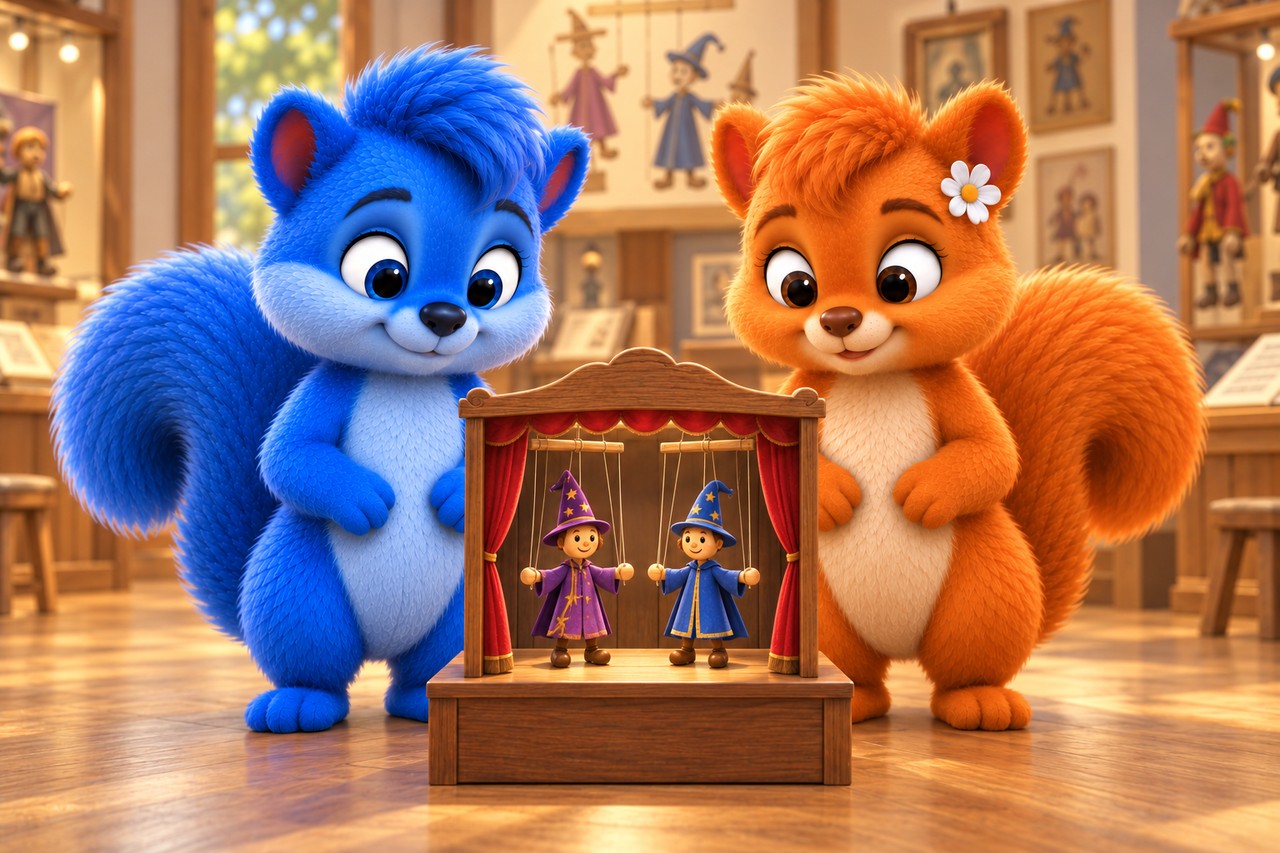
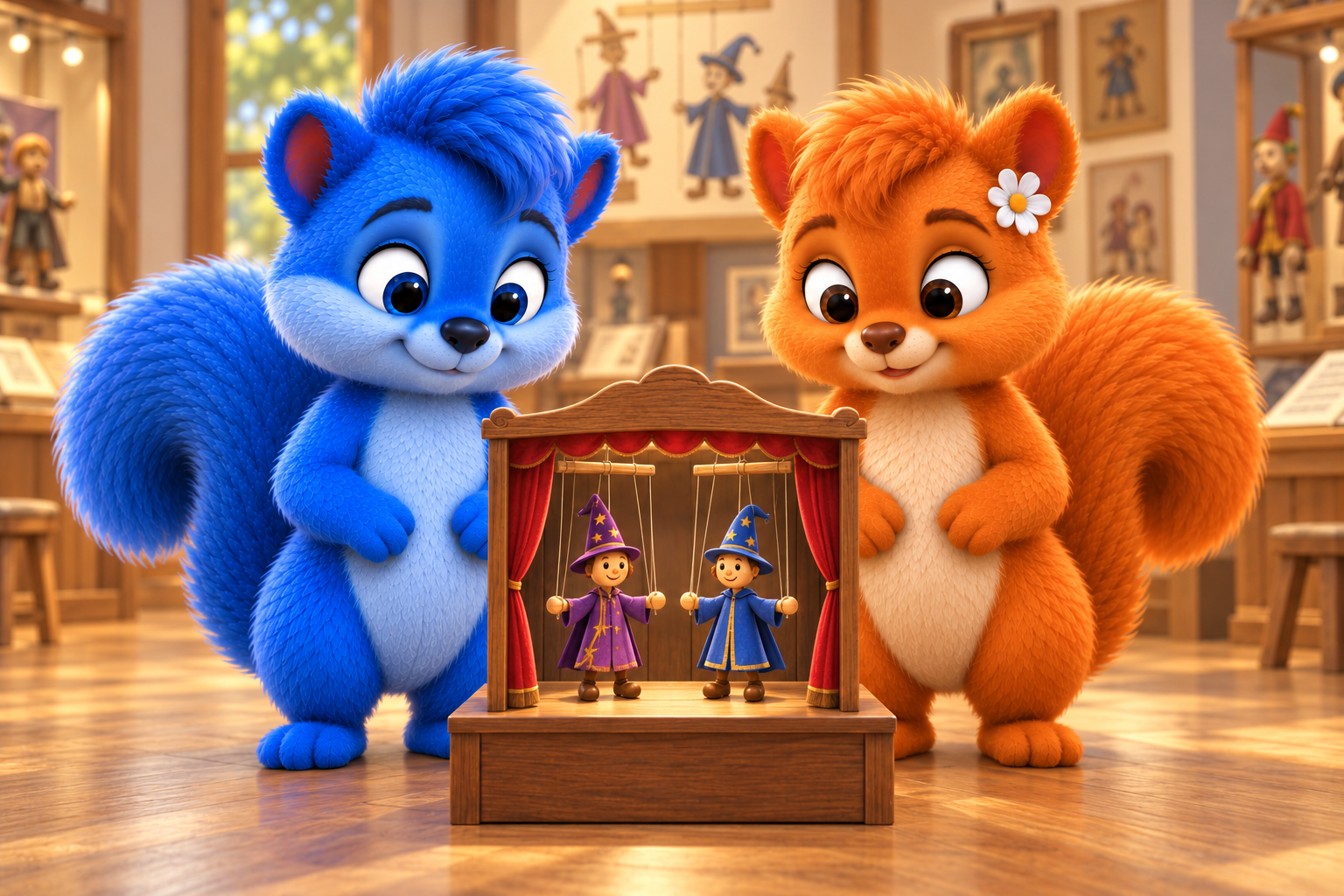
Puschel and Flauschi examine two friendly theatre puppets with hats on a small puppet stage. Invented theatre learning scene; puppets and props, no magic powers or historical persecution depicted. AI-created illustration, not a photograph of nature.
What the diagram shows
The diagram simplifies the process. First compare its shapes and arrows. You can read its labels in larger text below.
Read the picture labels
These are the words and sentences from the diagram above. The full explanation follows below.
- On paper: a change that accompanies a story
- Card with stone drawing
- Card with flower drawing
- Narrated: “In our story, a stone becomes a flower.”
- Actually: we exchange one paper card for the other.
- The arrow shows the card exchange, not a magical force.
- No real stone or real plant is changed.
- Invented paper example; no instructions for dangerous stage effects.
An imagined Wusel scene
Puschel and Flauschi investigate
Puschel applies a fairy-tale spell to a picture of a real person. Flauschi asks for evidence. They find only an invented event and separate the cards. Their fantasy can remain without becoming an accusation against someone.
Look closely
Puschel and Flauschi watch a small invented puppet stage. The figures in pointed hats are theatre puppets, not people with real magic powers. Visible strings belong to the depiction.
An example to help you understand
Draw your own friendly magic character and two cards: one shows a stone in your story and the other a flower. Say, “In our invented world, the character transforms the stone.” Exchange the paper cards while telling the story. Afterwards explain what actually happened: you displayed another drawing. No real stone was transformed. Agree how your character treats others; nobody has to participate.
Try explaining it
Does a fairy-tale character prove a real person can do magic?
Choose a), b) or c), then explain your choice.
- a)Yes, if a story is very old and often retold.
- b)No, invented powers are not evidence about real people.
- c)Yes, if the same magic appears in several fairy tales.
Show the explanation
Correct: b): No, invented powers are not evidence about real people.
In fairy tales and fantasy, characters can perform magic. Those powers belong to the invented world. Historical accusations against real people did not prove magic and could cause great injustice.
Explore in more detail
Here you will find longer explanations and further details. You can explore them together.
1. Magic belongs to a narrated world
In fairy tales, magic characters may grant wishes, cast curses or transform things. These possibilities apply within their particular story. Different versions may depict the same character differently. Ask which book or narrative the character belongs to and what it actually says.
Checked against: [1]
2. A character makes choices
A fairy-tale character may help or cause harm. We can discuss this through their actions in the particular story. A hat or a certain face does not explain those actions. In our own design, we choose what the character wants and how they treat others. Our example is a new imagined idea, not a fixed rule for every witch or wizard story.
Checked against: [1]
3. People work behind a stage scene
Theatre can make a scene look magical. Scenery, lighting and prepared effects create an illusion: an impression that looks different from how it was produced. The V&A documents such theatre techniques. A visible stage change provides no evidence of supernatural power. In our paper example, we simply exchange two picture cards and explain the change afterwards.
Checked against: [2]
4. History concerns real people
In Europe, real women and men were accused of supposed witchcraft and persecuted. The major waves occurred mainly in the early modern period, after the Middle Ages. Historical records document accusations and persecution; they do not prove that the accused possessed fairy-tale powers. Speak respectfully about these people and do not confuse them with invented villains.
Checked against: [3]
An optional question for further exploration
You can use the longer explanation above. This is extra, not needed for the first quiz.
An extra question
Does a magical-looking stage scene prove that someone possesses real fairy-tale powers?
Discover the answer
No. Prepared stage effects can create that impression. Our example exchanges a picture card. A story may invent magic; historical accusations against real people likewise provide no evidence for such powers.
Pictures and sources for adults
Sources for further reading
Facts checked against the specialist sources below on 12 October 2026. The Wusel scene is fictional; comparisons and simplified models are explicitly explained. Sources are in English.