Everyday Life & Technology
Why does wet laundry dry?
The washing dries without all the water dripping away. Where does it go?
The short answer
Water leaves wet laundry and enters the air as invisible water vapour. This is evaporation. Warmth and moving, drier air can speed it up. The water does not have to boil.
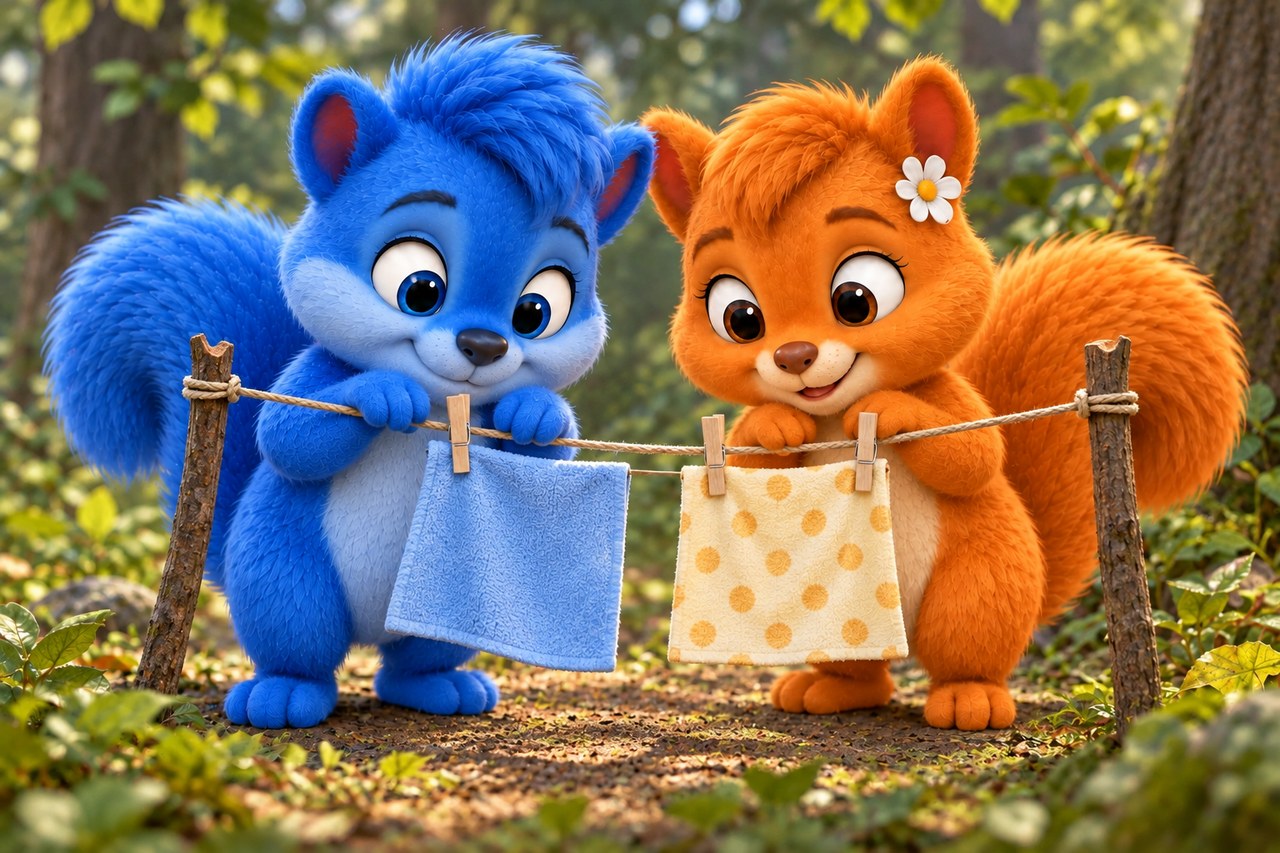
An imagined Wusel scene
Puschel and Flauschi investigate
Puschel hangs a damp cloth on the line and waits to see drops in the air. Flauschi suggests checking it later. The cloth is drier, although they saw no vapour. Now he draws little arrows from the cloth into the air.
Try explaining it
Where does the water go when laundry dries?
Choose a), b) or c), then explain your choice.
- a)As tiny liquid drops that always remain visible in the air.
- b)As air, into which the substance water completely changes.
- c)Into the air as invisible water vapour.
Show the explanation
Correct: c): Into the air as invisible water vapour.
Water leaves wet laundry and enters the air as invisible water vapour. This is evaporation. Warmth and moving, drier air can speed it up. The water does not have to boil.
Word help
- evaporation
- Liquid becomes gas at its surface, even without boiling.
Explore in more detail
Here you will find longer explanations and further details. You can explore them together.
Understand step by step
How it works – simply explained
Water is in the fabric
Wet laundry holds liquid water on fibres and in gaps. It does not need to boil to leave.
Particles enter the air
Surface water evaporates into invisible vapour that spreads in air. Less liquid water remains in the fabric.
Conditions change speed
Warmth, drier air or moving air can help. Air movement carries moist air away. Already moist air accepts less extra moisture, so drying speeds vary.
Why drying does not always leave a puddle
Water can leave a damp shirt as invisible vapour rather than dripping onto the floor. Moving air carries moist air away, and drier air helps further evaporation. Cool clothing can dry too, often more slowly than under favourable warmer conditions. Evaporation and boiling are different processes.
References for this explanation: [1]