Water life · Habitat
A pond full of life
Puschel looks for one important resident and discovers lots of little homes instead.
The short answer
A pond is a small body of standing water; ponds can be natural or made by people. Different animals and plants may live on its banks, on the surface and underwater. Shallow planted margins shelter many small animals.
Amphibians often need water and suitable habitats on land.
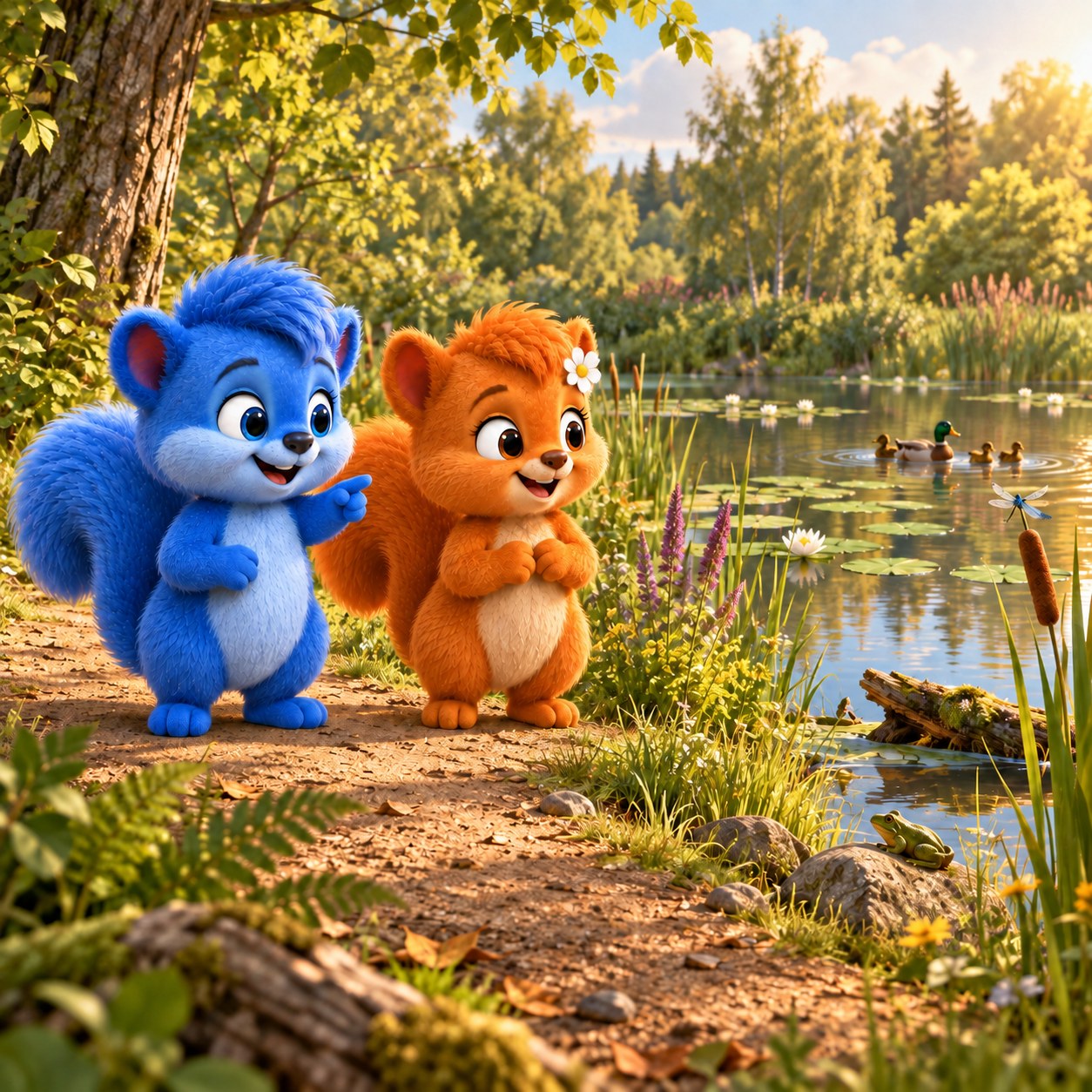
An imagined Wusel scene
Puschel and Flauschi investigate
Puschel“Where is the most important pond resident?” asks Puschel. Flauschi points to the bank plants, leaves and water. Flauschi“Perhaps there are many important neighbours.”
They stay on the broad path. Puschel notices a small visitor, then a plant, then movement in the water. His list keeps growing.
Puschel“A home with lots of rooms,” he says. Flauschi smiles. Flauschi“And we are guests who leave everything where it belongs.”
Discover
A pond is a small body of standing water; ponds can be natural or made by people. Different animals and plants may live on its banks, on the surface and underwater.
Understand
Shallow planted margins shelter many small animals. Amphibians often need water and suitable habitats on land.
Connections
Not every pond has the same species. The season, plants and water quality influence who lives there.
Little Wusel quiz
Why do water and a planted bank matter together?
Show answer
Different animals need different places. Many amphibians use both water and habitats on land.
Word help
- amphibians
- The group including frogs, toads and newts. Many need both water and land habitats.
Explore in more detail
Here you will find longer explanations and further details. You can explore them together.
Why do pond animals need the surrounding land?
A pond has different habitats: its surface, open water, bottom and vegetated edges. Not every animal lives in every part. Plants provide shelter, while small organisms help decompose dead material. Food, cover and suitable water conditions work together.
Compare and understand
A common frog starts as an egg and tadpole in water but also spends much of adult life on land. Preserving the water alone is not enough: suitable surrounding shelter and routes matter too. Observe with adults from a safe place, leaving animals, eggs and plants undisturbed.
Sources for this explanation
- The Wildlife Trusts: Ponds
- Umweltbundesamt: Kleingewässer – Teiche und Weiher
- LBV: Vogeltricks gegen eisige Kälte (Federn, Energie und Gewässerwechsel)
- NABU Berlin: Wasservögel im Winter (Wärmeaustausch in den Beinen; PDF)
- The Wildlife Trusts: Common frog – Laich, Kaulquappen und Leben an Land
- The Wildlife Trusts: Smooth newt – Nahrung im Wasser und Landlebensraum
- The Wildlife Trusts: Common pond skater – Leben an der Oberfläche
- LBV: Stockente – Merkmale von Männchen und Weibchen
- RHS: How plants reproduce