What distinguishes a unicorn from Pegasus?
A horn or wings? Compare two familiar imagined creatures with artworks and a real animal with a long tooth.
The short answer
A unicorn is usually shown with one horn, Pegasus with wings. Both belong to stories and art. Similar images can come from different traditions; they do not describe confirmed animal species.
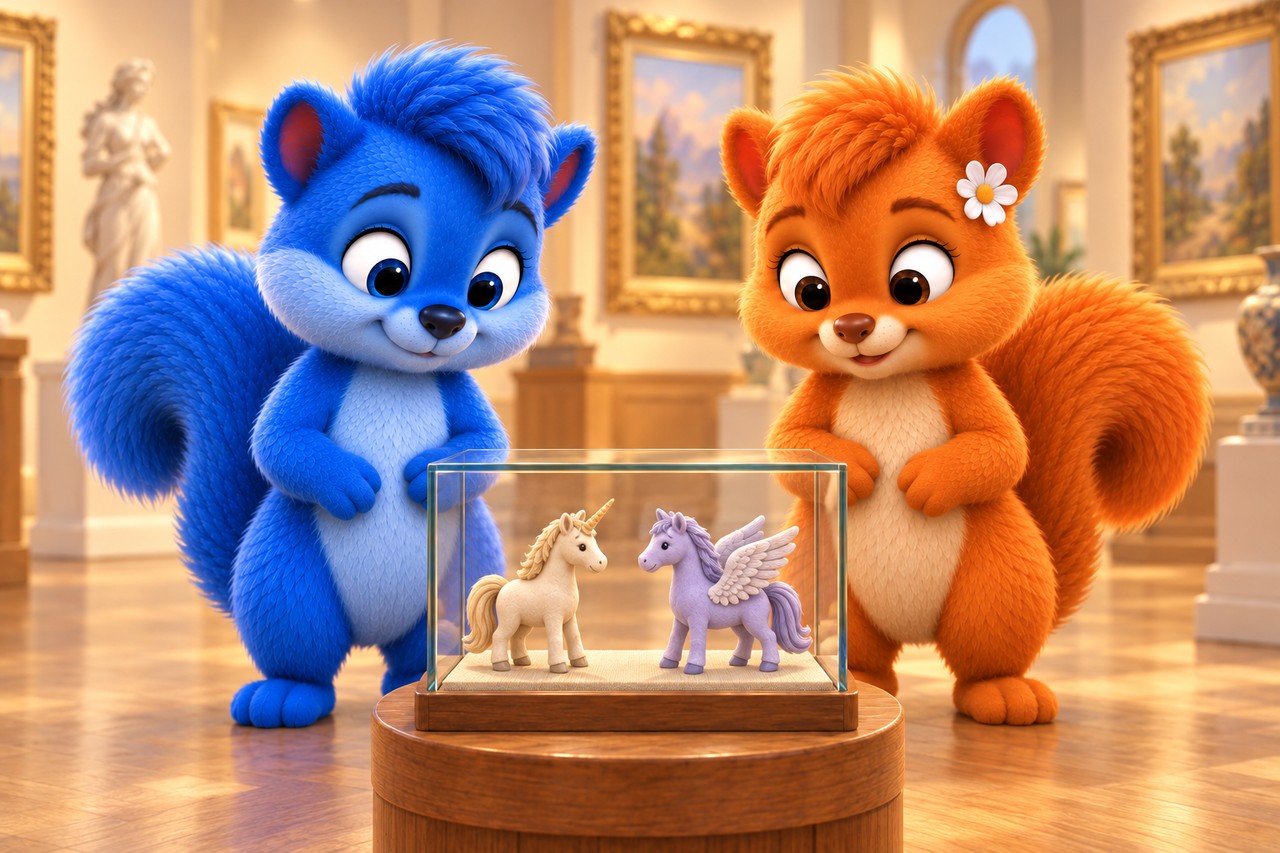
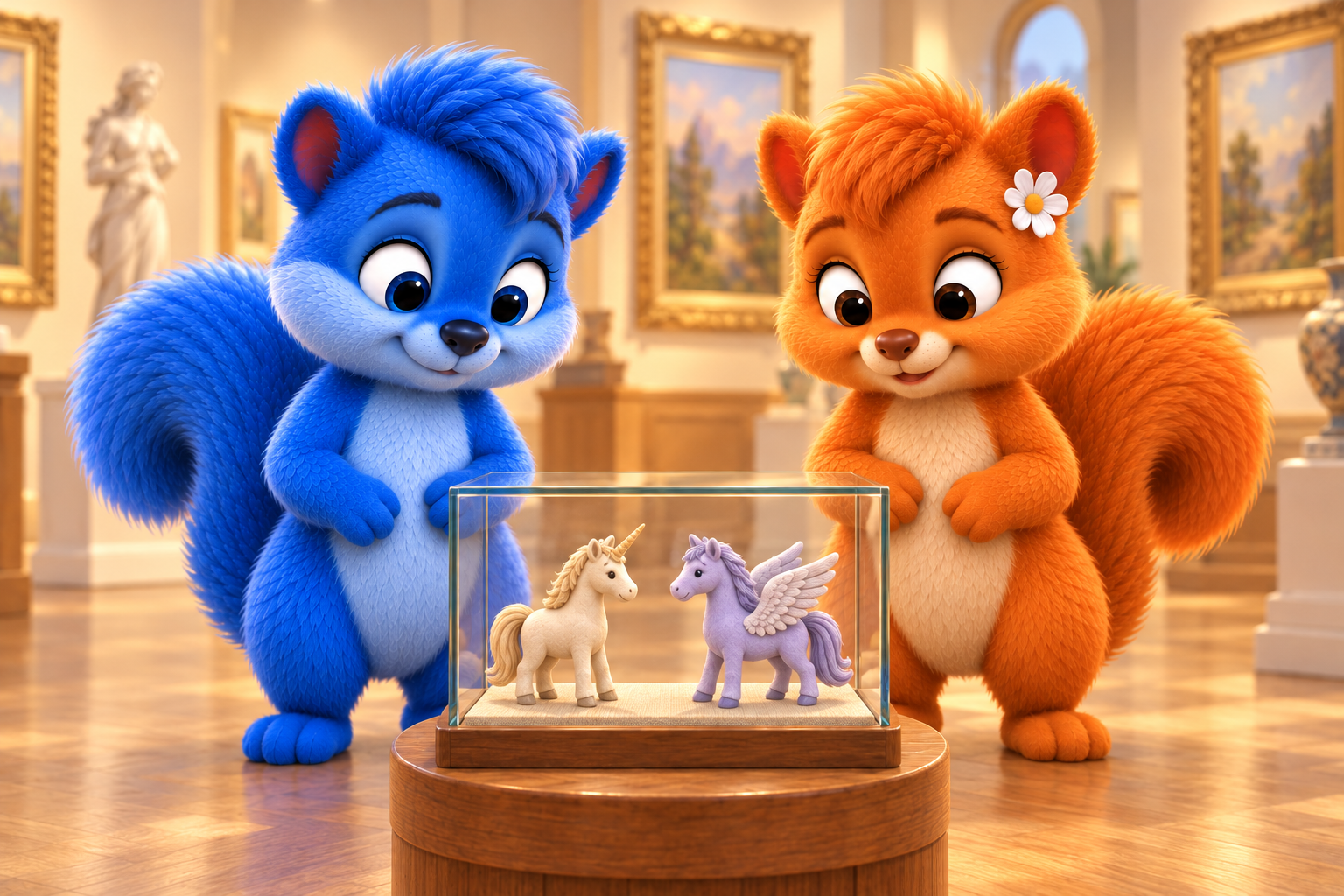
Puschel and Flauschi compare imagined art figurines of a unicorn and a winged horse in a display case. Invented art scene; no live animals or reproductions of particular historical originals. AI-created illustration, not a photograph of nature.
What the diagram shows
The diagram simplifies the process. First compare its shapes and arrows. You can read its labels in larger text below.
Read the picture labels
These are the words and sentences from the diagram above. The full explanation follows below.
- Two imagined designs: compare the distinctive feature
- Our unicorn design
- One horn, no wings
- Our Pegasus design
- Wings, no horn
- Gold marks the compared feature here, not a traditional colour rule.
- Original stories may invent other combinations.
- A narwhal tusk is a real whale’s tooth, not a magic horn.
- Schematic side views: far legs and the far wing are hidden.
- Original designs, not historical originals or animal anatomy; not to scale.
An imagined Wusel scene
Puschel and Flauschi investigate
Puschel swaps name cards under two story pictures. Flauschi asks him to compare horn and wings first. He rearranges them and finds the difference. A third creature they invent gets its own story card.
Look closely
Puschel and Flauschi examine two freely imagined art figurines behind glass: a unicorn with a forehead horn and a winged horse without a horn. The scene reproduces no particular historical objects.
An example to help you understand
Draw two reminder cards: your own unicorn design with a forehead horn and a Pegasus design with wings. Highlight each distinctive feature in a different colour. Add “Imagined design.” Then invent a third card with your own rules and explain what you changed. The cards explain your picture ideas; they are not identification charts for real animals.
Try explaining it
Which feature usually belongs to a Pegasus picture?
Choose a), b) or c), then explain your choice.
- a)A horn on the forehead without wings.
- b)A lion's body with an eagle's head and wings.
- c)Wings.
Show the explanation
Correct: c): Wings.
A unicorn is usually shown with one horn, Pegasus with wings. Both belong to stories and art. Similar images can come from different traditions; they do not describe confirmed animal species.
Explore in more detail
Here you will find longer explanations and further details. You can explore them together.
1. A unicorn has a distinctive horn
Unicorns appear in stories and art as creatures with one horn. Their shape and meaning are not the same everywhere. The Metropolitan Museum’s tapestry “The Unicorn Rests in a Garden” shows a unicorn in a flowering setting. It is a surviving artwork from around 1500, not evidence of a magical animal species.
2. Pegasus is a winged horse
Pegasus belongs to Greek narratives about gods and heroes. His distinctive features are a horse’s body and wings. An ancient silver coin from Corinth in the Canellopoulos Museum bears his depiction. The coin shows that this motif appeared on money; it provides no evidence for a flying horse. Pegasus and the unicorn are different ideas. Another depiction shows the hero Bellerophon riding Pegasus against the Chimaera. In the myth this creature combines lion and goat features with a snake’s tail. That story explains why the flying horse often carries a rider in ancient artworks. It belongs to Greek tradition, not a real horse’s biography.
3. A resemblance does not make a unicorn
The narwhal is a real whale living in Arctic waters. In many male narwhals, an upper-jaw tooth grows into a long tusk. Some females have such a tooth too; males without tusks or with two tusks also occur. A horn-like shape does not make this whale a magical unicorn. The body part and animal require closer examination.
Checked against: [4]
4. Your own fiction can have its own rules
Historical unicorn stories and pictures include different features and interpretations. In our own story, we can also decide what a creature looks like. An invented horse with both a horn and wings can belong to that story. We label it as our design and do not confuse it with a historical original or a real animal.
An optional question for further exploration
You can use the longer explanation above. This is extra, not needed for the first quiz.
An extra question
Does having a long tusk make a narwhal a unicorn from a magic story?
Discover the answer
No. A narwhal is a real whale, and its tusk is an elongated tooth. Unicorns and Pegasus belong to narratives and art. Similar-looking features provide no evidence for magical creatures.
Pictures and sources for adults
Sources for further reading
Facts checked against the specialist sources below on 12 October 2026. The Wusel scene is fictional; comparisons and simplified models are explicitly explained. Sources are in English.