Species conservation needs habitats
An animal needs more than a memorable name: food, shelter and a suitable habitat belong together.
The short answer
Animals and plants need suitable habitats, food and connections between places. Conservation therefore protects these conditions too. One nesting aid may help, but does not solve every problem facing a species.
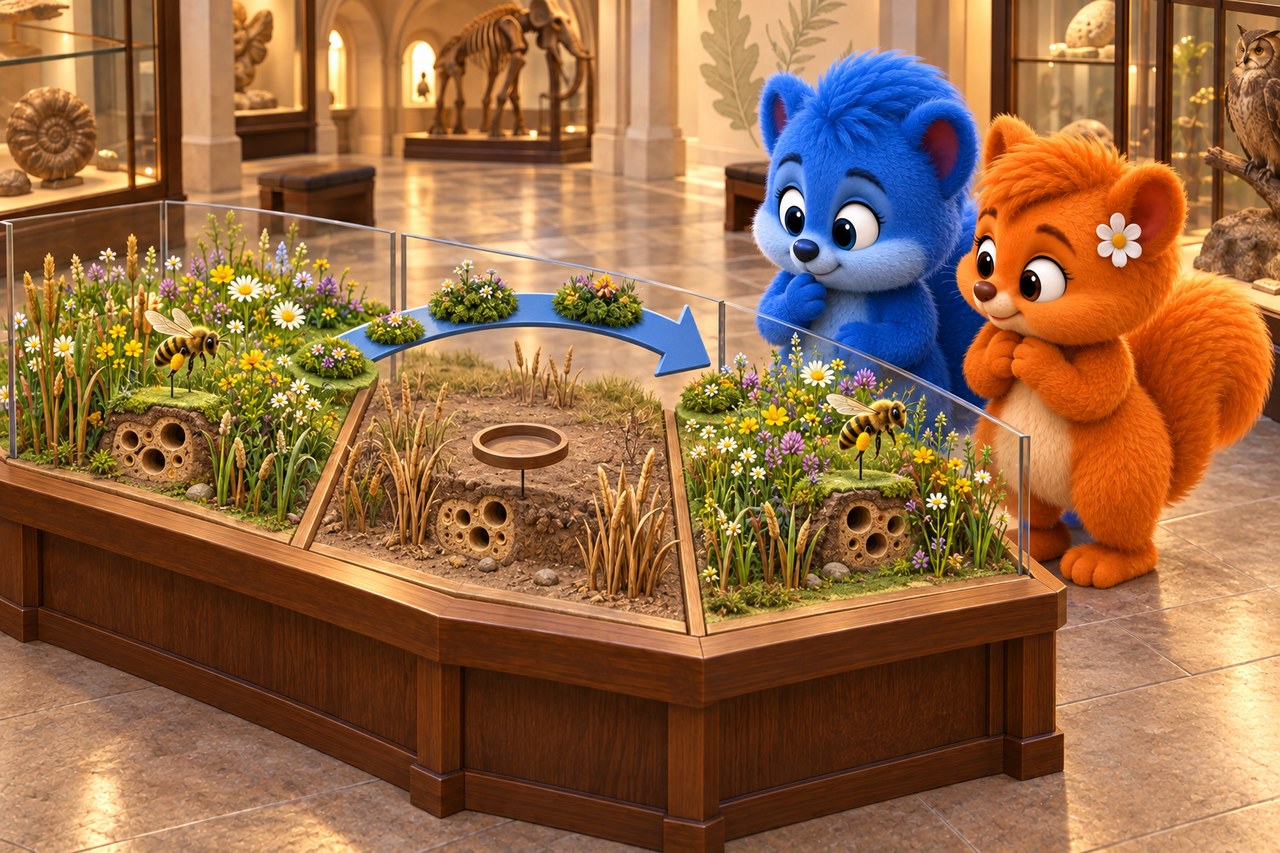
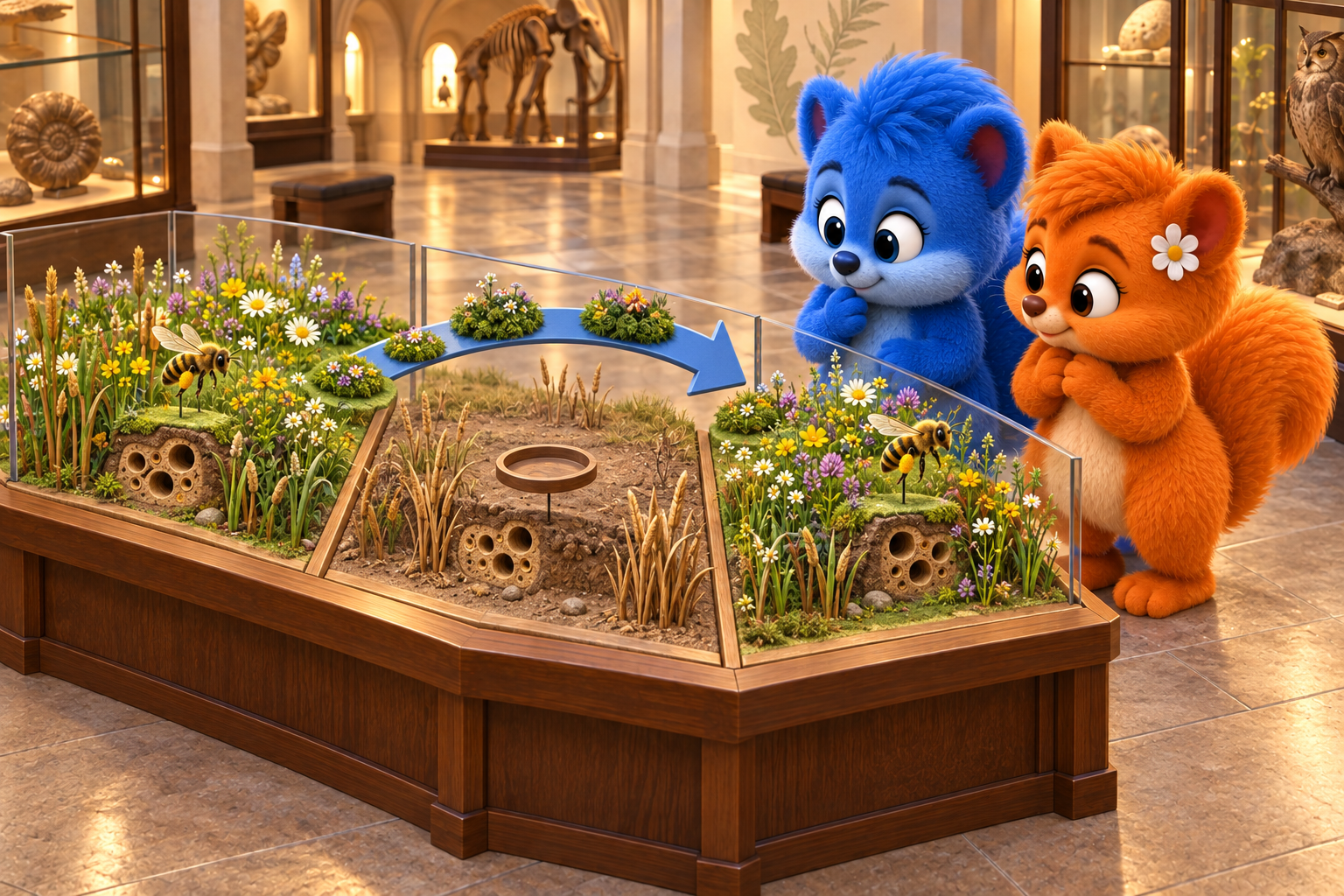
Puschel and Flauschi in the museum. Habitat models compare food, nesting places and connecting both needs. Simplified inanimate museum model; arrows and colours help explain it. AI-created illustration, not a photograph of nature.
Explained in three pictures
1 Food and shelter
A wild bee needs suitable flowers and a nesting site.
2 One part is lost
Without flowers, a nesting site alone is not enough.
3 Assess suitable help
Conservation must connect food and habitat. Results must be checked.
More about the picture
Conservation must suit a species’ needs. This wild-bee example connects food and nesting: an attractive nesting box alone is not enough. Conservation also concerns many other animals, plants and fungi; actions and outcomes must be assessed.
An imagined Wusel scene
Puschel and Flauschi investigate
Puschel places one nesting aid on his landscape plan. Flauschi asks where animals find food and other shelter. They connect plants, safe spaces and nesting places. The little house is now only one part of the plan.
Look closely
Compare the museum model with the three picture steps. Without flowers, a nesting site alone is not enough.
An example to help you understand
On permitted paper draw an original landscape with woodland, meadow and pond. Write questions instead of blanket promises: Where might food be? Where could shelter be? Which species do we mean? The green museum tokens represent suggestions, not proven success. Real measures need knowledge of the site and its inhabitants.
Try explaining it
What do animals need besides one nesting place?
Choose a), b) or c), then explain your choice.
- a)A nesting place instead of food and protected surroundings.
- b)Suitable food and habitats.
- c)The same habitat for all species so they have the same supplies.
Show the explanation
Correct: b): Suitable food and habitats.
Animals and plants need suitable habitats, food and connections between places. Conservation therefore protects these conditions too. One nesting aid may help, but does not solve every problem facing a species.
Explore in more detail
Here you will find longer explanations and further details. You can explore them together.
1. Diversity has several levels
Biodiversity includes different species, variation within a species and the diversity of living communities. Species conservation is an important part of preserving it. Animals, plants and fungi matter, not only conspicuous large animals. Changes to habitats and climate can threaten biodiversity.
Checked against: [1]
2. Include the habitat
Species conservation aims to help wild species survive in their natural habitats over time. Suitable conditions matter beyond considering a single animal. Poaching means hunting or catching animals against the applicable rules. Protected areas, action against poaching and trade rules may contribute to conservation. Suitable measures depend on the species and its circumstances.
Checked against: [2]
3. A Red List is an assessment
IUCN is a worldwide union for nature conservation. Its Red List assesses species’ extinction risk: how threatened a species is with disappearing completely. Experts consider information such as distribution, populations, habitats and threats. “Threatened” is different from “extinct”. An assessment may change with new data. Always consider its date, area and explanation.
Checked against: [3]
4. Small retreats may help too
An undisturbed wild corner in a garden may offer insects, birds and small mammals food and shelter. Native wild plants, shrubs or plant stems can serve different purposes. Adults check what suits the site. A small garden measure complements wider conservation work but cannot replace it.
Checked against: [4]
An optional question for further exploration
You can use the longer explanation above. This is extra, not needed for the first quiz.
An extra question
Why is looking at just one animal not enough for species conservation?
Discover the answer
Because species need suitable habitats and conditions, such as food and shelter. Conservation must consider the species’ needs and its habitat’s circumstances. Experts assess measures and their effects.
Pictures and sources for adults
Sources for further reading
Facts checked against the specialist sources below on 12 October 2026. The Wusel scene is fictional; comparisons and simplified models are explicitly explained. Sources are in German and English.