How do shape-shifters differ from real changes?
A story character turns into an animal? Compare fiction with butterfly development and imitation by an octopus.
The short answer
Shapeshifters change magically in stories. Real animals develop through biological processes, such as a caterpillar becoming a butterfly. That development takes time and does not follow a spell.
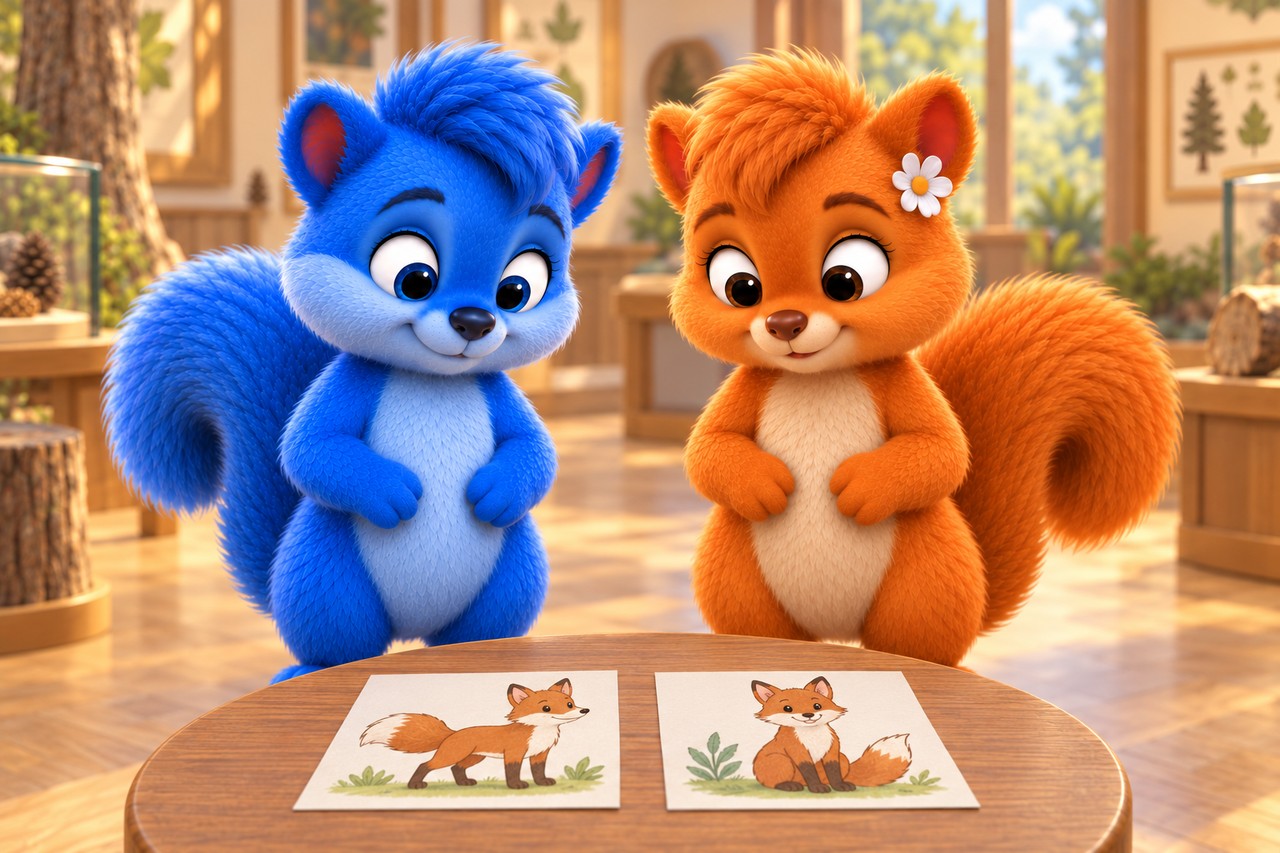
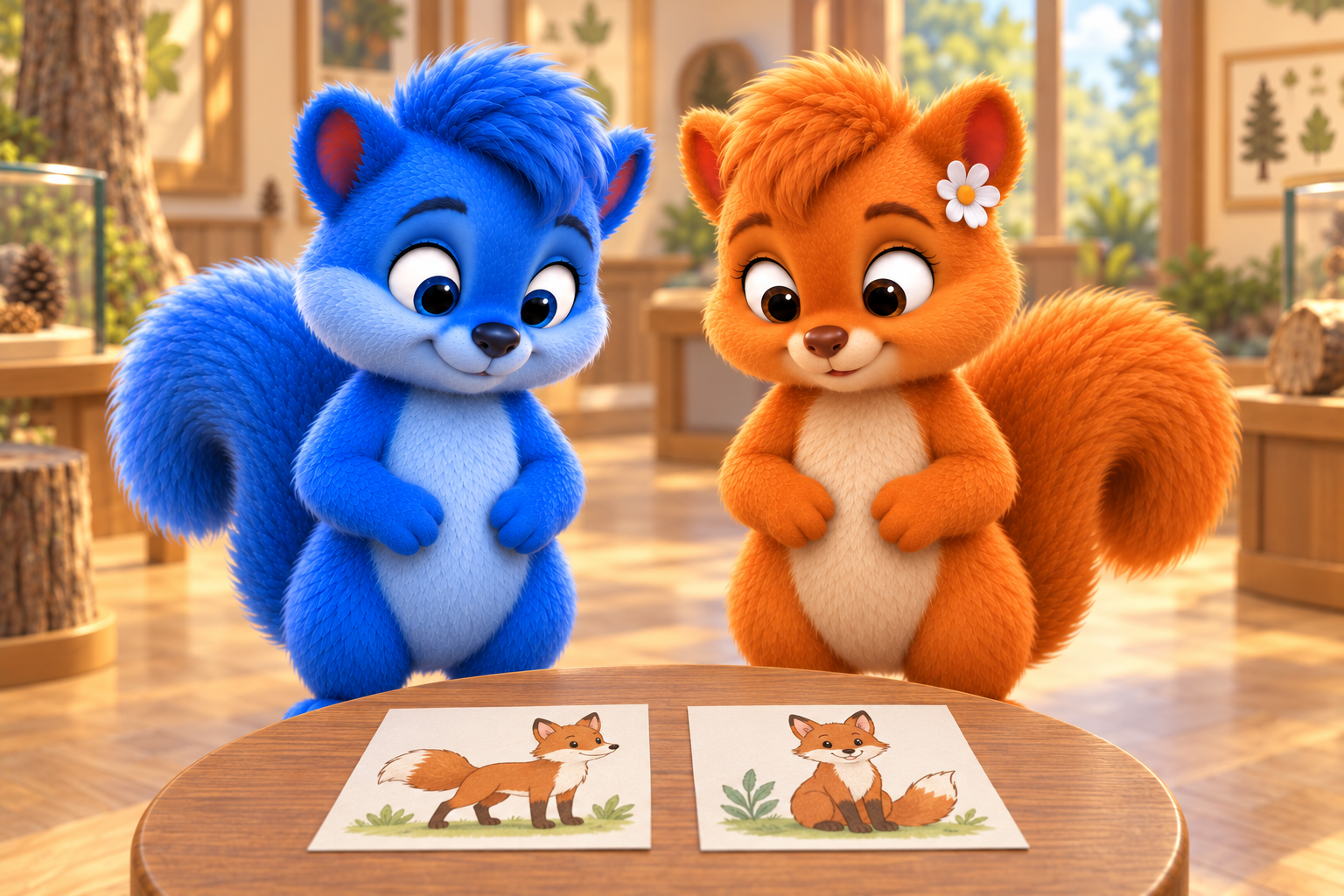
Puschel and Flauschi examine two flat picture cards showing different postures of an imagined fox. Invented paper learning scene; no actual transformation or study of live animals. AI-created illustration, not a photograph of nature.
What the diagram shows
The diagram simplifies the process. First compare its shapes and arrows. You can read its labels in larger text below.
Read the picture labels
These are the words and sentences from the diagram above. The full explanation follows below.
- Looking different: what has actually happened?
- Development: caterpillar → pupa → adult butterfly
- Arrows: successive stages of the same animal; no magical reversal.
- Imitation: a mimic octopus remains an octopus
- Posture and arm arrangement may resemble other animals. Resemblance is no transformation into another species.
- Fiction: our story invents a new form
- The narrative rule applies in the story, not as a law of nature.
- Schematic development comparison without egg or reproductive cycle.
- No complete anatomy, species identification or duration shown.
An imagined Wusel scene
Puschel and Flauschi investigate
Puschel puts caterpillar pictures beside a spell. Flauschi orders egg, caterpillar, pupa and butterfly as development. Beside them they keep magical change as fiction. Different explanations need separate picture sequences.
Look closely
Puschel and Flauschi examine two flat fox cards on a table. The pictures show different postures of an imagined character, not yet a transformation into another species. Both Wusels themselves remain unchanged.
An example to help you understand
Draw two cards for your own story: an imagined fox sitting and standing. Initially, this is simply a different posture. On a third card, invent a new form for the same story character and add “imagined transformation” with adults. Compare: what change have you actually made on paper? You made another drawing. Voluntarily tell a little story about it without changing animals or your body.
Try explaining it
What differs between caterpillar development and magical transformation?
Choose a), b) or c), then explain your choice.
- a)A caterpillar instantly changes its outer shape after a wish.
- b)The caterpillar stays the same inside and only gains wings on the outside.
- c)Real development takes time and biological stages.
Show the explanation
Correct: c): Real development takes time and biological stages.
Shapeshifters change magically in stories. Real animals develop through biological processes, such as a caterpillar becoming a butterfly. That development takes time and does not follow a spell.
Explore in more detail
Here you will find longer explanations and further details. You can explore them together.
1. A narrative sets its own rules
In fairy tales, characters may take another form, such as that of an animal. Such transformations belong to the possibilities of the narrated world. The British Library presents different animal transformations in fairy tales. In our own story, we may invent rules: which forms are possible and when does a transformation end? These are storytelling decisions, not laws of nature.
Checked against: [1]
2. A caterpillar develops further
A caterpillar is the larva of a butterfly. Larva here means an early developmental stage. Through the pupal stage, the animal develops into an adult butterfly. This metamorphosis, a restructuring during development, is a real biological process. A spell does not turn it into any arbitrarily chosen animal species.
Checked against: [2]
3. Imitation does not mean becoming the other animal
A mimic octopus can resemble other marine animals through posture and the arrangement of its arms. Mimicry here means imitation. For example, it may arrange its arms so that its appearance resembles a flatfish. It remains an octopus. The similarity concerns appearance and behaviour, not a magical transformation into the fish it imitates.
Checked against: [3]
4. Specify which change you mean
For an imagined character, we discuss a rule within our story. For a butterfly, we consider developmental stages; for an octopus, observable imitation. These three explanations answer different questions. An animal looking different from before therefore cannot by itself provide evidence for a fictional shape-shifter.
An optional question for further exploration
You can use the longer explanation above. This is extra, not needed for the first quiz.
An extra question
Does a mimic octopus really become a flatfish when it looks similar?
Discover the answer
No. Posture and arm arrangement can create a similar appearance, but it remains an octopus. Imitation differs from a story character’s imagined transformation or a caterpillar’s development into a butterfly.
Pictures and sources for adults
Sources for further reading
Facts checked against the specialist sources below on 12 October 2026. The Wusel scene is fictional; comparisons and simplified models are explicitly explained. Sources are in English.