How do a phoenix, griffin and centaur differ?
Three creatures from narrative and art: a bird associated with rebirth and two differently combined forms.
The short answer
In stories, the phoenix is a special bird; a griffin often combines eagle and lion features, and a centaur human and horse features. These are traditional imagined beings. Depictions can vary.
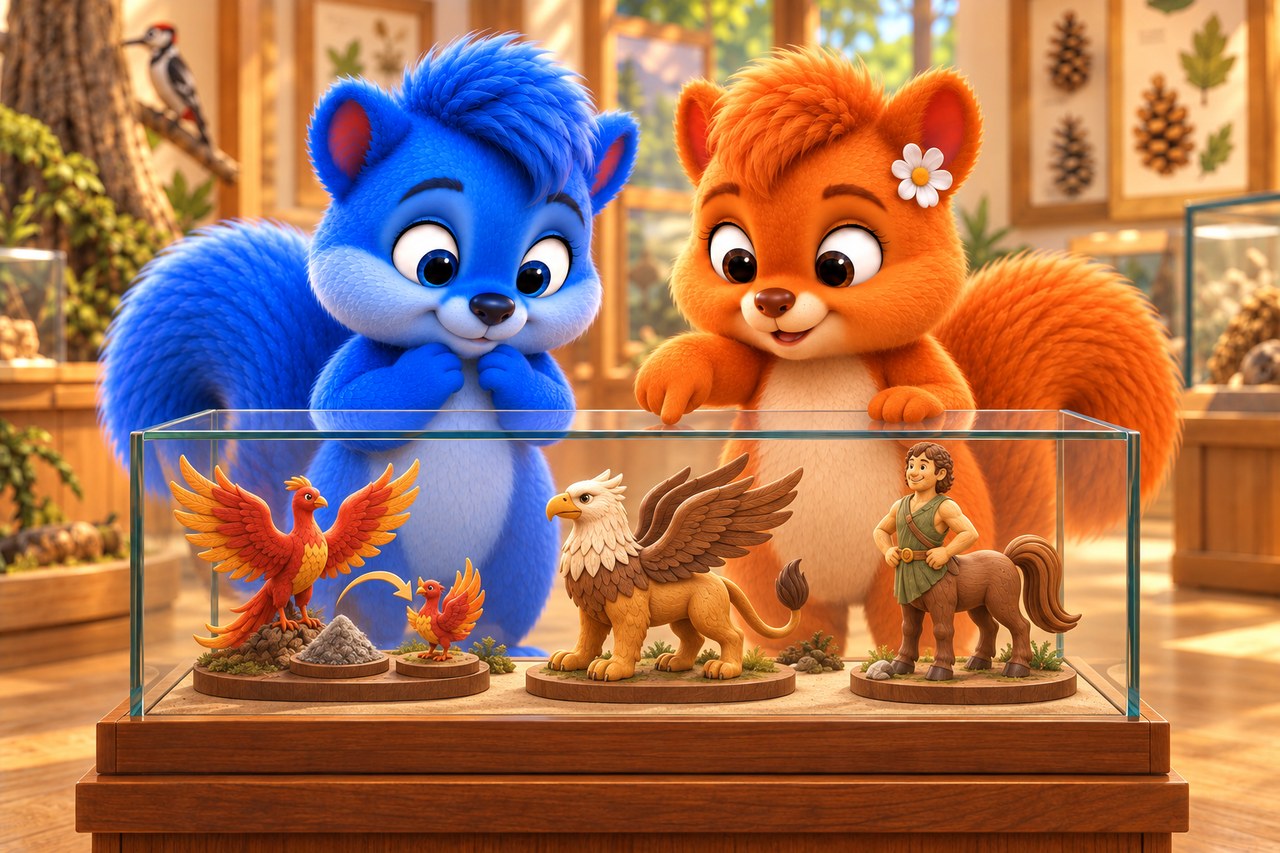
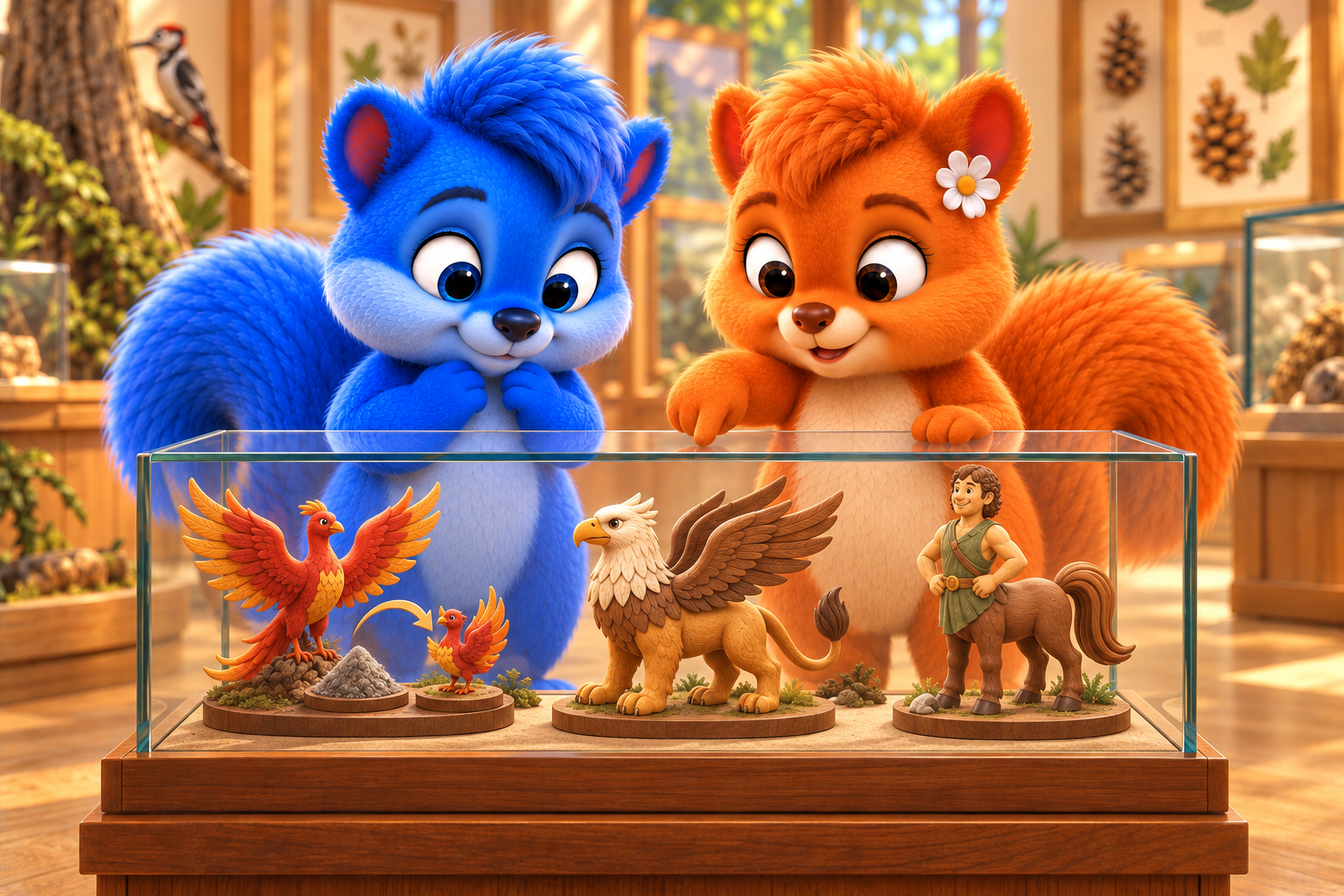
Puschel and Flauschi in the museum. Story figures: phoenix motif, griffin combining lion and eagle, centaur combining human and horse. Figures from stories, not real living creatures. AI-created illustration, not a photograph of nature.
Explained in three pictures
1 Phoenix: a story motif
In the phoenix legend discussed, new life follows an ending.
2 Griffin: lion and eagle
A griffin combines a lion’s body with a bird’s head and wings.
3 Centaur: human + horse
A centaur combines a human upper body with a horse’s body.
More about the picture
Body forms help distinguish a griffin and a centaur. For the phoenix, rebirth is a motif in the legend discussed, not a visible feature of every bird picture. All three are story creatures, not observed hybrid animals.
An imagined Wusel scene
Puschel and Flauschi investigate
Puschel mixes up two fantasy models. Flauschi suggests comparing visible body parts first. They find wings and a lion's body on one, a human upper body and horse's body on the other. Now the names match what they observed in the depictions.
Look closely
Compare the museum model with the three picture steps. A griffin combines a lion’s body with a bird’s head and wings.
An example to help you understand
Draw three reminder cards. With adults, write: phoenix — rebirth in the legend discussed here; griffin — lion and eagle; centaur — human and horse. Circle visible body features and put a frame around the narrative motif of rebirth. Different marks remind you that a motif cannot always be recognised from body shape. Then invent a friendly fourth design and add “our own imagination.”
Try explaining it
Which depiction often combines eagle and lion features?
Choose a), b) or c), then explain your choice.
- a)A griffin.
- b)The centaur combining a human and a horse.
- c)The phoenix as a special bird.
Show the explanation
Correct: a): A griffin.
In stories, the phoenix is a special bird; a griffin often combines eagle and lion features, and a centaur human and horse features. These are traditional imagined beings. Depictions can vary.
Explore in more detail
Here you will find longer explanations and further details. You can explore them together.
1. The phoenix returns in a story
A medieval British Library manuscript describes the phoenix as a bird returning from ashes after death. This rebirth belongs to the legend. The book also interpreted the motif through Christianity. This concerns the narrative and its interpretation, not a biological feature of real birds. Other versions may tell details differently.
Checked against: [1]
2. A griffin combines lion and eagle
A griffin is an imagined creature combining lion and eagle features. A bronze throne leg in the Metropolitan Museum depicts such a creature. In this artistic context, it could express royal power. That meaning explains the particular object and context; it is no automatic rule for every modern griffin story.
Checked against: [2]
3. A centaur combines human and horse
Centaurs appear in Greek narratives and ancient art as composite creatures with a human upper body and a horse’s body. The Metropolitan Museum holds a surviving torso from such a depiction. Torso means the trunk of a figure, here part of a sculpture. An artwork may survive incompletely. Specialists distinguish surviving parts from interpretation of the original form. One well-known centaur is Chiron. Greek tradition makes him a teacher of the young Achilles, including music and hunting. While other centaurs are often shown as wild, Chiron is considered wise. The same composite body shape therefore need not mean the same role in a story.
4. Compare feature and meaning separately
For a griffin, we ask about lion and eagle features; for a centaur, human and horse form. For the phoenix in our example, the narrated rebirth matters. A picture alone does not reveal every story or meaning. We therefore connect visible features with information about the particular artwork or text and label our own additions as imagined.
An optional question for further exploration
You can use the longer explanation above. This is extra, not needed for the first quiz.
An extra question
Can a bird picture alone show for certain that it represents the phoenix legend of rebirth?
Discover the answer
No. A bird picture can represent many things. Information about the picture or text helps identify the motif. Rebirth belongs to the legend discussed here, not an observed life process of real birds.
Pictures and sources for adults
Sources for further reading
Facts checked against the specialist sources below on 12 October 2026. The Wusel scene is fictional; comparisons and simplified models are explicitly explained. Sources are in English.