Feelings & Togetherness
What can I do after a mistake?
Puschel’s building falls over, and the story continues.
The short answer
After a mistake, pause, look at what happened and choose a small next step. If someone was affected, take responsibility. Help and a break are allowed. A mistake does not mean you are bad.
An imagined Wusel scene
Puschel and Flauschi investigate
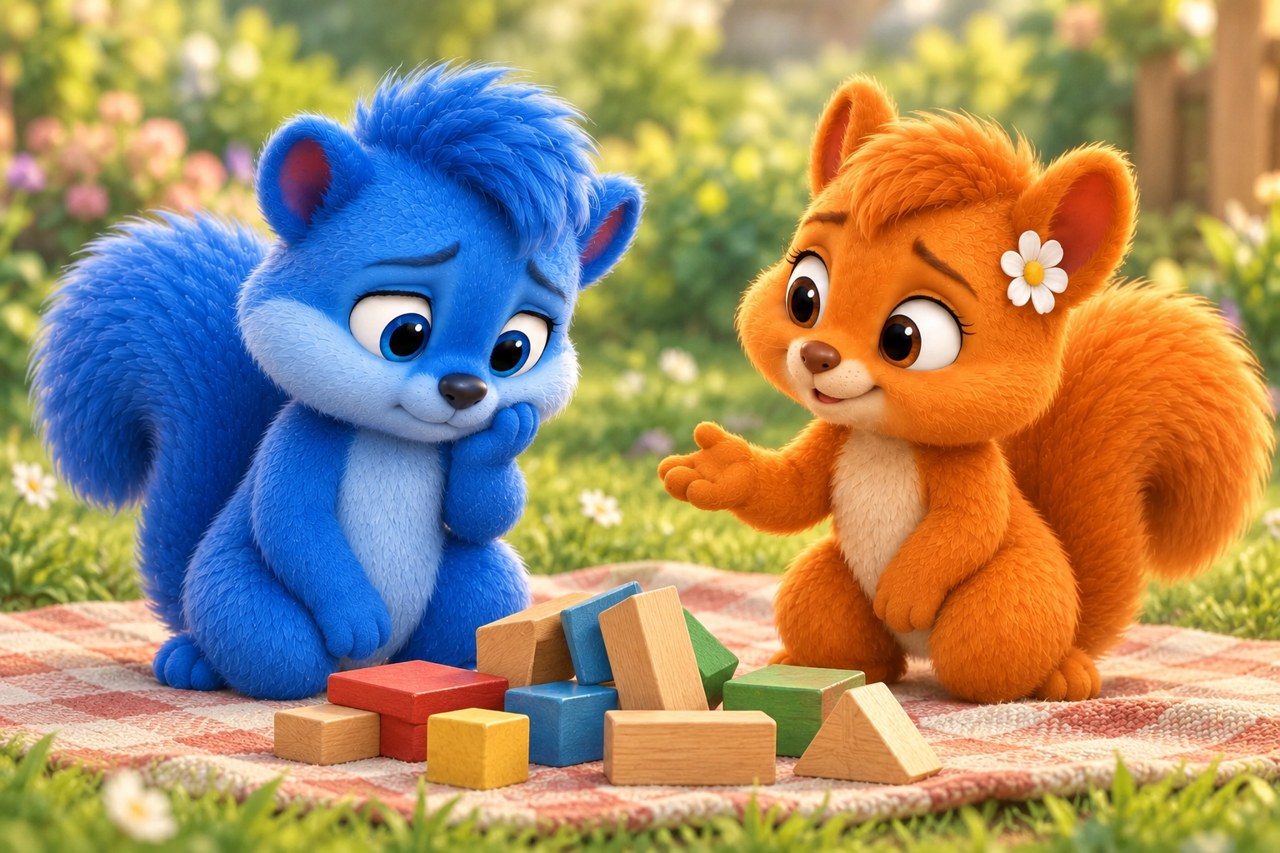
Puschel builds a little tower from large lightweight blocks. When he places the last one unevenly, the tower falls onto the blanket.
Puschel“It was supposed to stay up!” He rests his paws in his lap.
Flauschi“You are disappointed. First we can check whether everything is all right.” They examine the blocks and clear space.
Puschel takes a short break. Then he points to the bottom row. Puschel“Perhaps I could make the base wider.”
They tidy up together. Later Puschel tries a lower tower. This time it stands. Puschel“A pause and a new arrangement were my next steps.”
Try explaining it
This question is about a fictional situation and considerate actions, not about which feelings you should have.
What is a helpful next step after a mistake?
Choose a), b) or c), then explain your choice.
- a)Treat the mistake as proof of being worthless.
- b)Forbid every future attempt.
- c)Look at what happened and seek suitable help.
Show the explanation
Correct: c): Look at what happened and seek suitable help.
After a mistake, pause, look at what happened and choose a small next step. If someone was affected, take responsibility. Help and a break are allowed. A mistake does not mean you are bad.
Questions to think about
Must Puschel build again immediately when he needs a break?
Show conversation idea
No. A break and support can be suitable next steps.
What could matter before another try if something broke?
Show conversation idea
Check safety first and ask an adult. Together you can tidy up and think about how to put things right.
Explore in more detail
Here you will find longer explanations and further details. You can explore them together.
Understand step by step
What does this mean in everyday life?
Examples are possible situations. You need not feel a particular emotion or share a personal story.
Something goes differently
A tower falls. This shows that this construction failed, not that you have no ability.
Look for a change
With help consider a wider base or smaller steps. A pause before retrying is allowed.
Do not skip harm
Injury or damage needs help and repair first. Trying again does not replace responsibility.
The key points again
Discovery 1
An attempt can go differently from the plan. Making a mistake does not make you a bad person. Adults can help you understand what happened and find a next step.
Source: [1]
Discovery 2
You can pause, then ask: What happened? What could I change? You do not have to feel cheerful immediately or repeat every task straight away.
Discovery 3
If you hurt someone or damage something, ask for help. Together you can think about making things better: perhaps helping tidy up or saying a sincere sorry. Another attempt alone does not put the damage right.