Feelings & Togetherness
Can friends like different things?
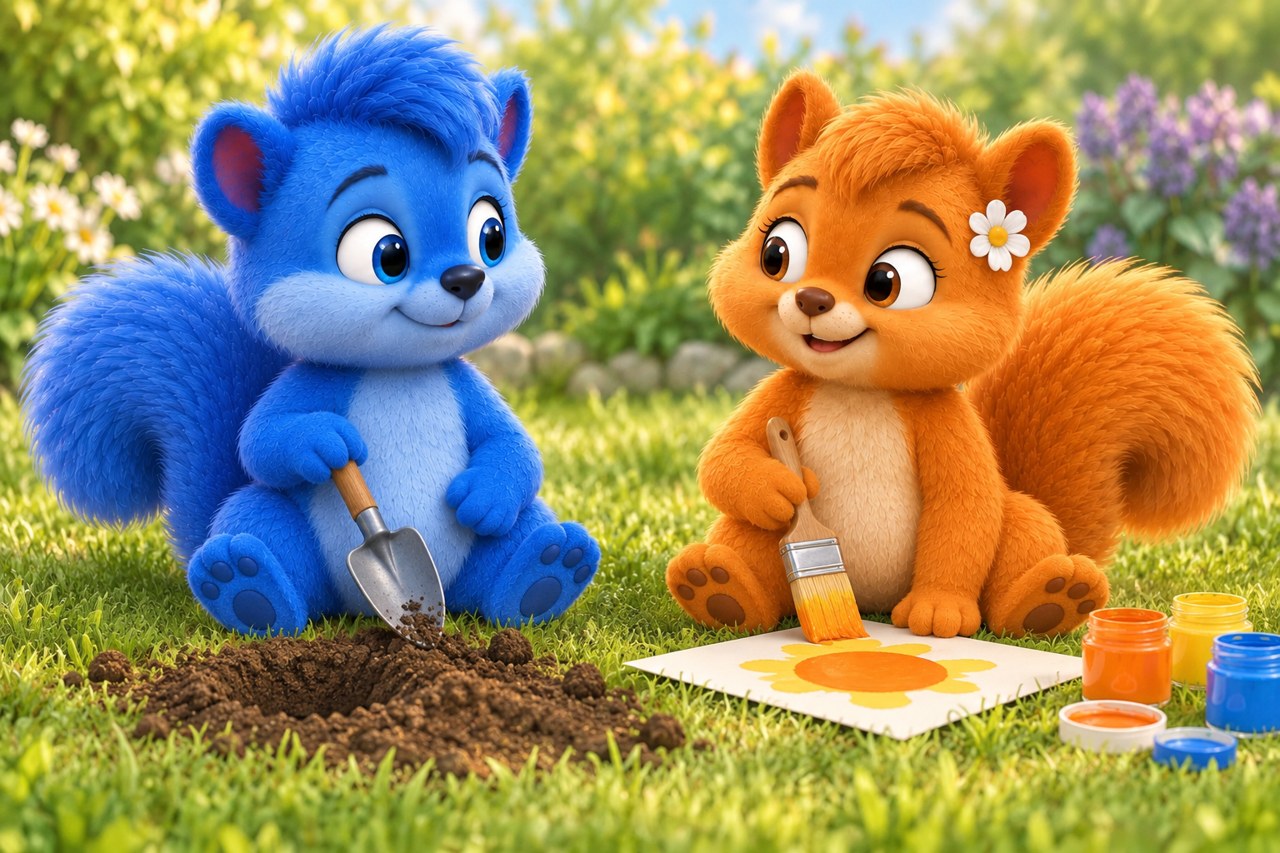
Flauschi wants to draw; Puschel wants to garden. What now?
The short answer
Yes. Friends do not have to like all the same things. You can listen, take turns or sometimes do different activities. Respect and boundaries matter even in close friendships.
An imagined Wusel scene
Puschel and Flauschi investigate
In the garden, Flauschi’s paper lies beside her paints. Puschel has brought a little garden trowel.
Puschel“I want to help with planting. Do you not like my plan?” Flauschi“I like you. But today I want to draw.”
Puschel“Could I work in the prepared bed beside you? We can show each other the results afterwards.”
Flauschi“That suits me. My paper stays clean, and your garden bed stays clear.”
Puschel uses the little trowel carefully. Later Flauschi shows her drawn flower. They did different things and still spent time together.
Try explaining it
This question is about a fictional situation and considerate actions, not about which feelings you should have.
May friends like different games?
Choose a), b) or c), then explain your choice.
- a)No, friendship always requires the same choice.
- b)No, one must decide everything.
- c)Yes, they can listen and seek agreements.
Show the explanation
Correct: c): Yes, they can listen and seek agreements.
Yes. Friends do not have to like all the same things. You can listen, take turns or sometimes do different activities. Respect and boundaries matter even in close friendships.
Questions to think about
Flauschi does not want to garden today. Does that mean she dislikes Puschel?
Show conversation idea
Not necessarily. A different wish can exist within a friendship. You can ask kindly.
What arrangement might fit without forcing either one?
Show conversation idea
For example, doing different things side by side, taking turns or voluntarily finding a shared idea. Several answers are possible.
Explore in more detail
Here you will find longer explanations and further details. You can explore them together.
Understand step by step
What does this mean in everyday life?
Examples are possible situations. You need not feel a particular emotion or share a personal story.
Different wishes can coexist
Your friend wants to paint while you want to build. This does not disprove friendship.
Consider several routes
Take turns, paint a built city or do different things for a while. Togetherness need not mean identical wishes.
Boundaries still matter
Nobody must join uncomfortable activities to remain a friend. Trusted adults help with pressure, threats or harm.
The key points again
Discovery 1
Friends can have things in common and still have different interests. Listening, consideration and respectful behaviour are important friendship skills.
Discovery 2
You can discuss wishes and seek an arrangement: take turns, combine ideas or do different things for a while. A shared solution is an invitation, not a demand.
Source: [1]
Discovery 3
Friendship does not mean saying yes to everything. A no and personal boundaries – what you are willing to join in with and what you are not – deserve respect. If someone threatens, hurts or pressures you, seek support from a trusted adult.
Source: [1]