What do we tell about mermaids and water spirits?
Distinguish invented hybrid figures, different water-spirit stories and a real manatee.
The short answer
Many images combine a human upper body with a fish tail. Such water beings belong to different storytelling traditions. Real marine animals may have inspired stories, but do not prove mermaids exist.
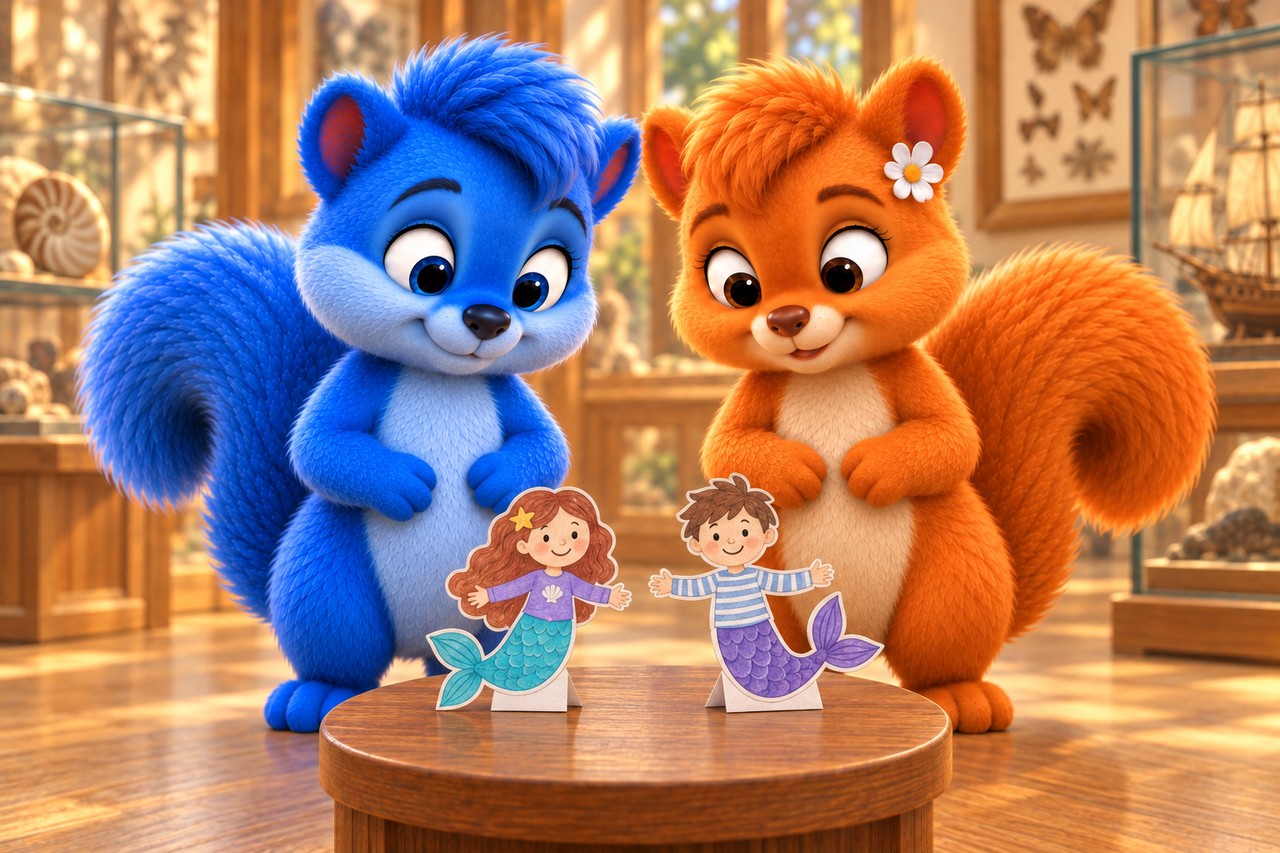
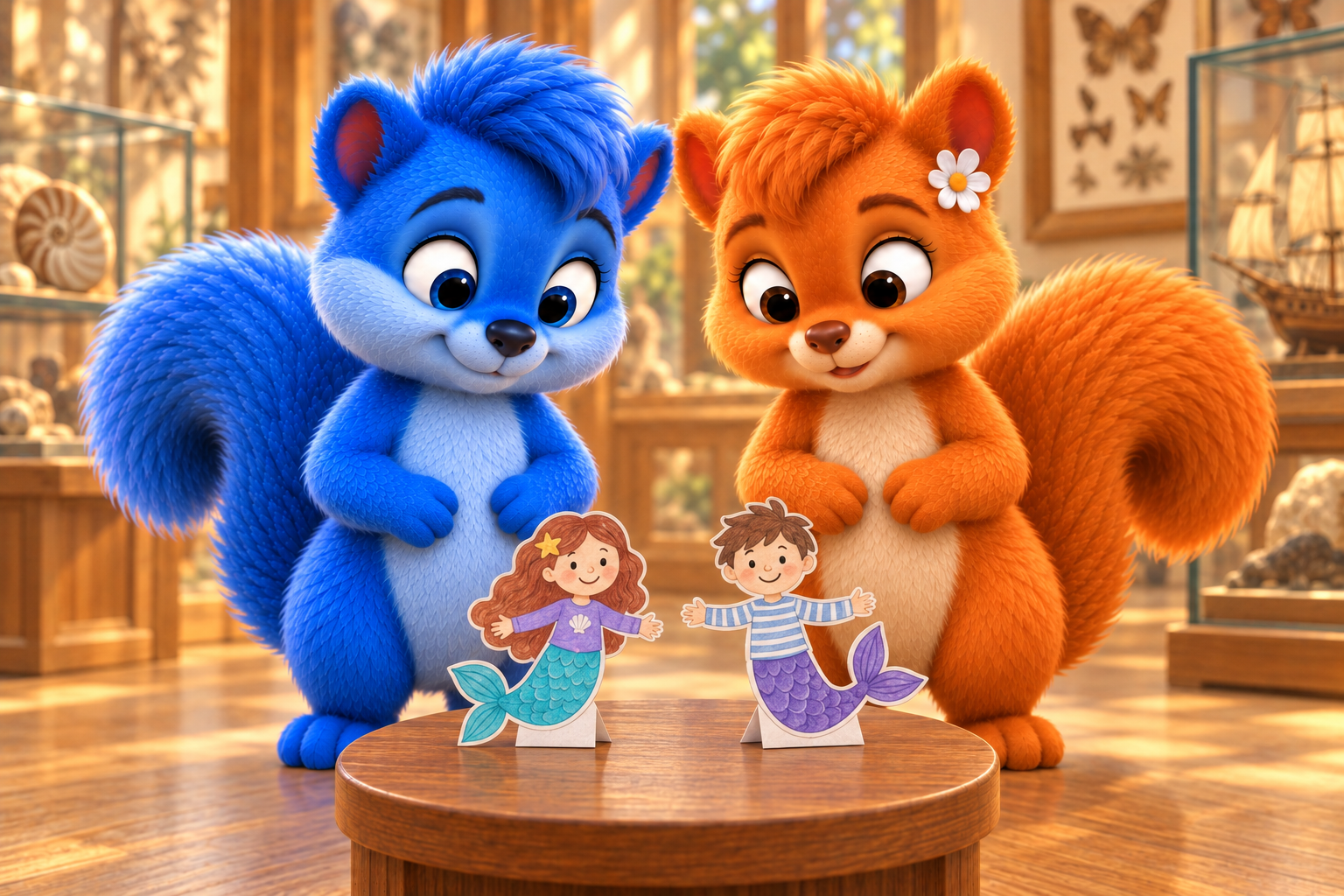
The two Wusels examine two clothed paper water characters with fish tails and folded stands. Original paper designs; no real water beings, particular tradition or Lasirèn depiction reproduced. AI-created illustration, not a photograph of nature.
What the diagram shows
The diagram simplifies the process. First compare its shapes and arrows. You can read its labels in larger text below.
Read the picture labels
These are the words and sentences from the diagram above. The full explanation follows below.
- Living in water does not determine a creature’s form
- Our paper character
- Florida manatee
- Invented design
- Mammal; breathes air
- Paddle-shaped tail
- A manatee has no human upper body.
- Paper art provides evidence of a depiction, not a living imaginary being.
- Name a traditional character and its context precisely.
- Schematic side views; second flipper hidden, no complete anatomy.
An imagined Wusel scene
Puschel and Flauschi investigate
Puschel treats a story figure as an animal-identification picture. Flauschi finds its fictional origin. They compare a real marine animal beside it. Similarities may inspire ideas, but do not become proof of the fantasy figure.
Look closely
Puschel and Flauschi examine two painted paper characters with folded stands. Their human upper bodies are clothed; their lower bodies end in drawn fish tails. They are original designs.
An example to help you understand
Draw two original water characters on paper. Give them new names, clothes and a friendly task in your story. With adults, label your work “invented characters.” On another card, collect testable manatee features: mammal, air breathing, forelimb flippers and paddle-shaped tail. Compare which statements describe an imagined idea and which concern a real animal. Nobody needs to enter water.
Try explaining it
Does a real animal with a tail prove mermaids exist?
Choose a), b) or c), then explain your choice.
- a)Yes, if several old pictures show the same body shape.
- b)No, resemblance does not prove the story being exists.
- c)Yes, one similar body part confirms the whole story.
Show the explanation
Correct: b): No, resemblance does not prove the story being exists.
Many images combine a human upper body with a fish tail. Such water beings belong to different storytelling traditions. Real marine animals may have inspired stories, but do not prove mermaids exist.
Explore in more detail
Here you will find longer explanations and further details. You can explore them together.
1. A mermaid is a story character
One common visual idea combines a human upper body with a fishlike lower body. It belongs to narratives and art. NOAA explains that there is no scientific evidence for such humanlike aquatic beings. A beautiful drawing therefore provides no evidence for a living mermaid. A question about a real animal requires appropriate observations and evidence.
Checked against: [1]
2. Wassermann may mean a water spirit
The German word Wassermann has several meanings. In mythology, it means a male water spirit; in other contexts it can name a zodiac sign or constellation. The name alone specifies no fish tail. Some stories make the character frightening. Our friendly paper merman with a fish tail is explicitly our own invention, no compulsory depiction of every Wassermann.
Checked against: [2]
3. Similar looks do not mean identical significance
AMNH shows a particular depiction of Lasirèn, a water spirit from Haiti, with modern clothing and a cowboy hat. The museum explains that related visual motifs may carry different meanings in different contexts. Name the character and the depiction’s origin. Our paper art does not reproduce Lasirèn or claim to explain a living religious belief.
Checked against: [3]
4. A manatee is a real mammal
The Florida manatee is a large grey aquatic mammal with two forelimb flippers and a broad paddle-shaped tail. It eats aquatic plants and breathes air, surfacing to do so. Its form and behaviour can be observed and studied. It has no human upper body. Living in water makes an animal neither a fish nor a mermaid.
Checked against: [4]
An optional question for further exploration
You can use the longer explanation above. This is extra, not needed for the first quiz.
An extra question
Is a manatee a mermaid because it lives in water and has a tail?
Discover the answer
No. It is a mammal that can be studied, breathes air and eats aquatic plants. A mermaid is a narrative character. Similar individual features do not establish that an animal and an imagined character are the same.
Pictures and sources for adults
Sources for further reading
Facts checked against the specialist sources below on 12 October 2026. The Wusel scene is fictional; comparisons and simplified models are explicitly explained. Sources are in English.