
Soil & nature cycles
What is humus?
Humus is greatly changed material from dead living things, such as old leaves. Soil animals, fungi and bacteria help transform it.
Open learning page →Your choices apply to all pages in this browser.
6 discoveries with Puschel and Flauschi.
Six ways nature works together: humus, leaf decomposition, roots, fungal partners, food webs and the water cycle.
Soil & nature cycles
Humus is greatly changed material from dead living things, such as old leaves. Soil animals, fungi and bacteria help transform it.
Open learning page →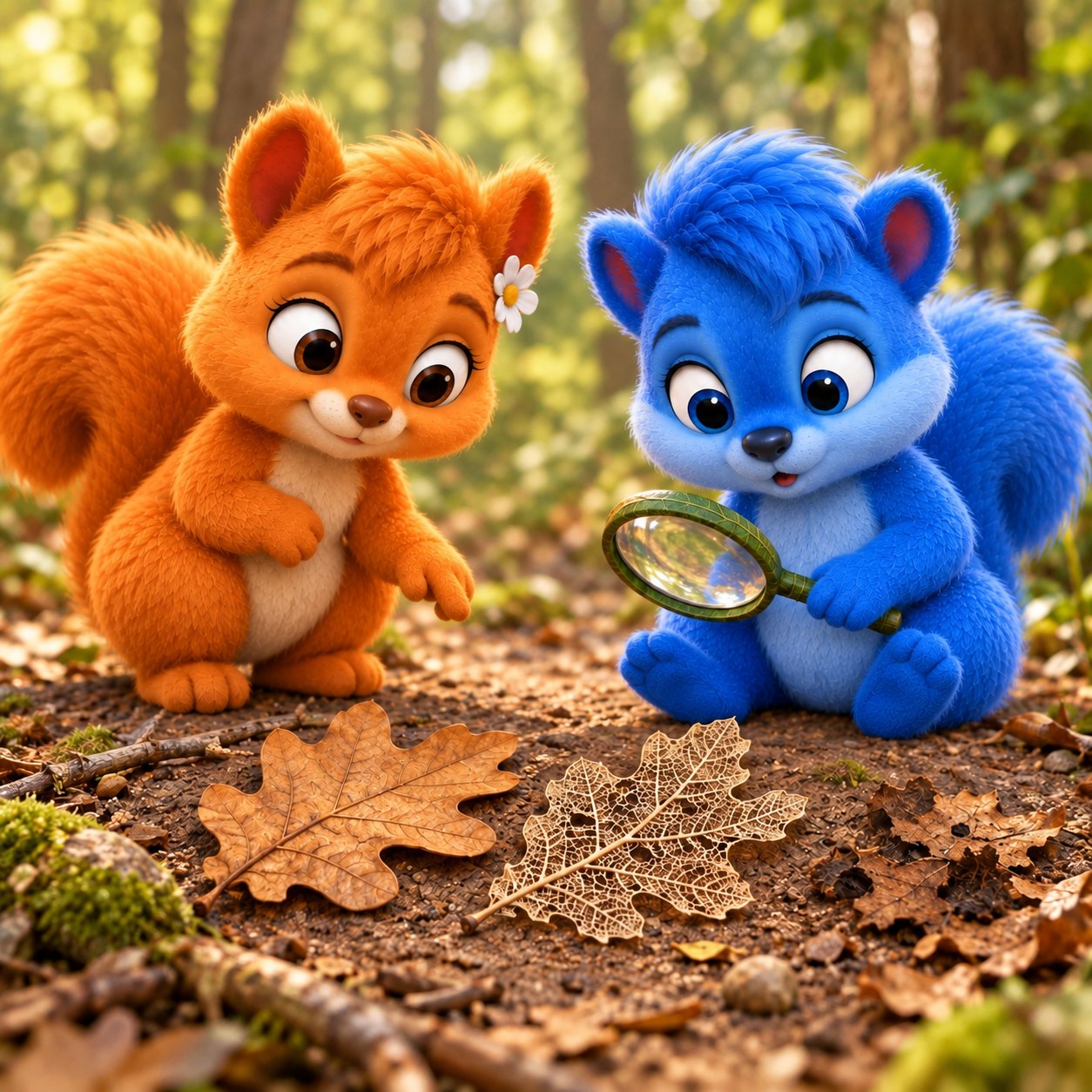
Soil & nature cycles
Soil animals break up old leaves; fungi and bacteria decompose them further. Materials change and nutrients become available again.
Open learning page →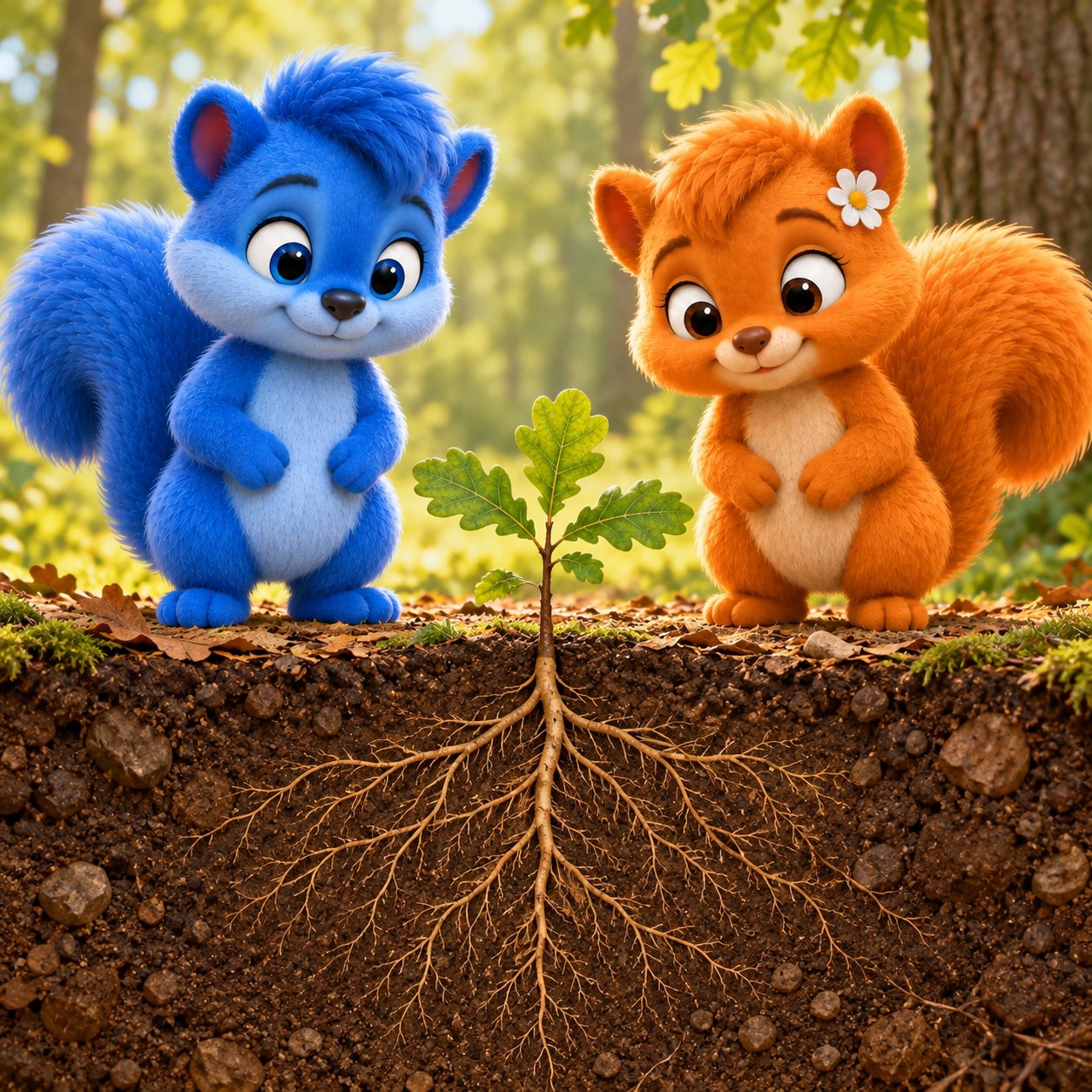
Soil & nature cycles
Roots anchor many plants and take up water and dissolved nutrients. Some also store reserves.
Open learning page →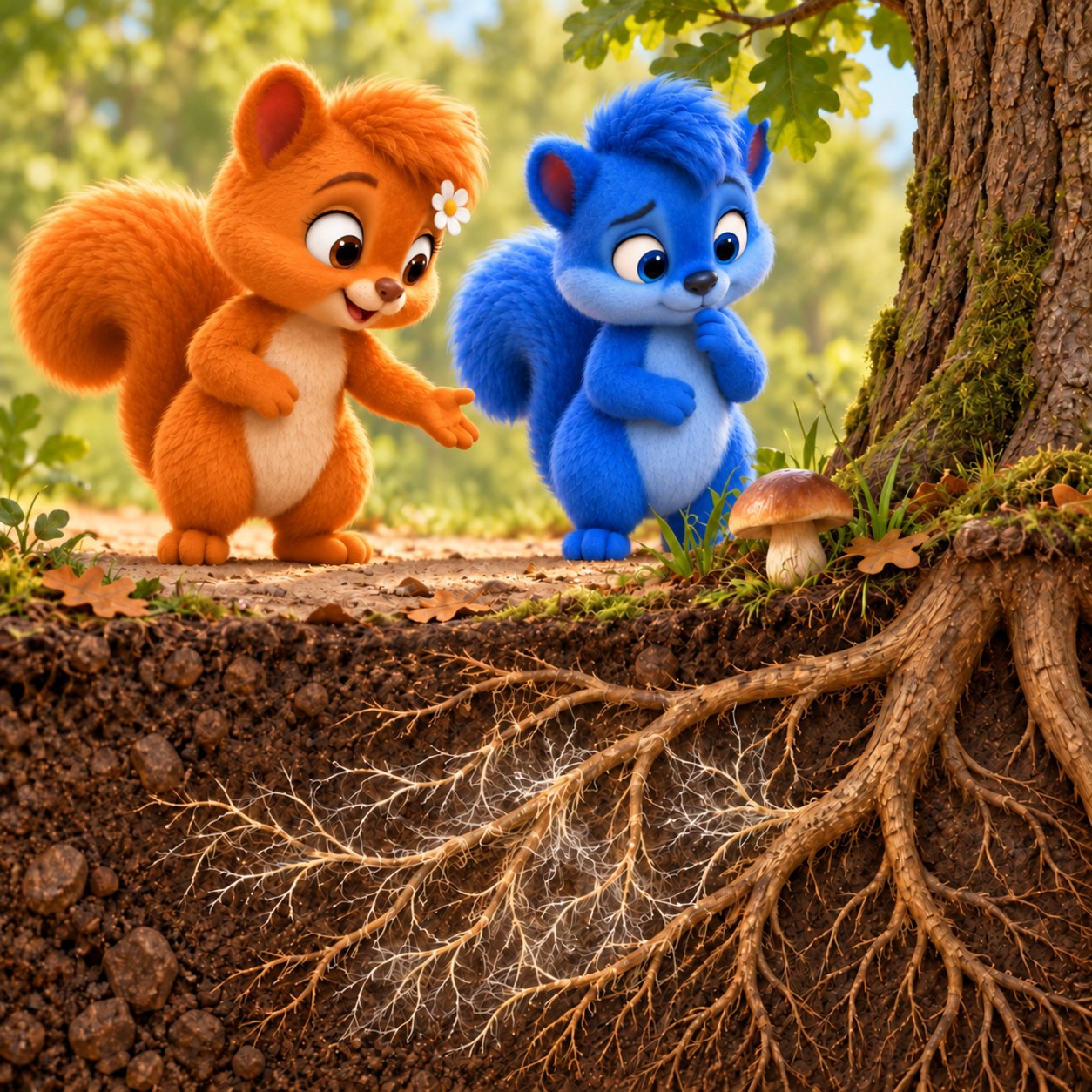
Soil & nature cycles
Many plant roots live together with fine fungal threads. The fungus can supply the plant with water and dissolved nutrients.
Open learning page →
Soil & nature cycles
Plants use light to make energy-rich substances. Plant-eaters eat them; other animals eat animals.
Open learning page →
Soil & nature cycles
Liquid water can evaporate into the air as invisible water vapour. Plants release water too.
Open learning page →