Herb garden and kitchen · Origanum vulgare
Oregano: look, smell and learn
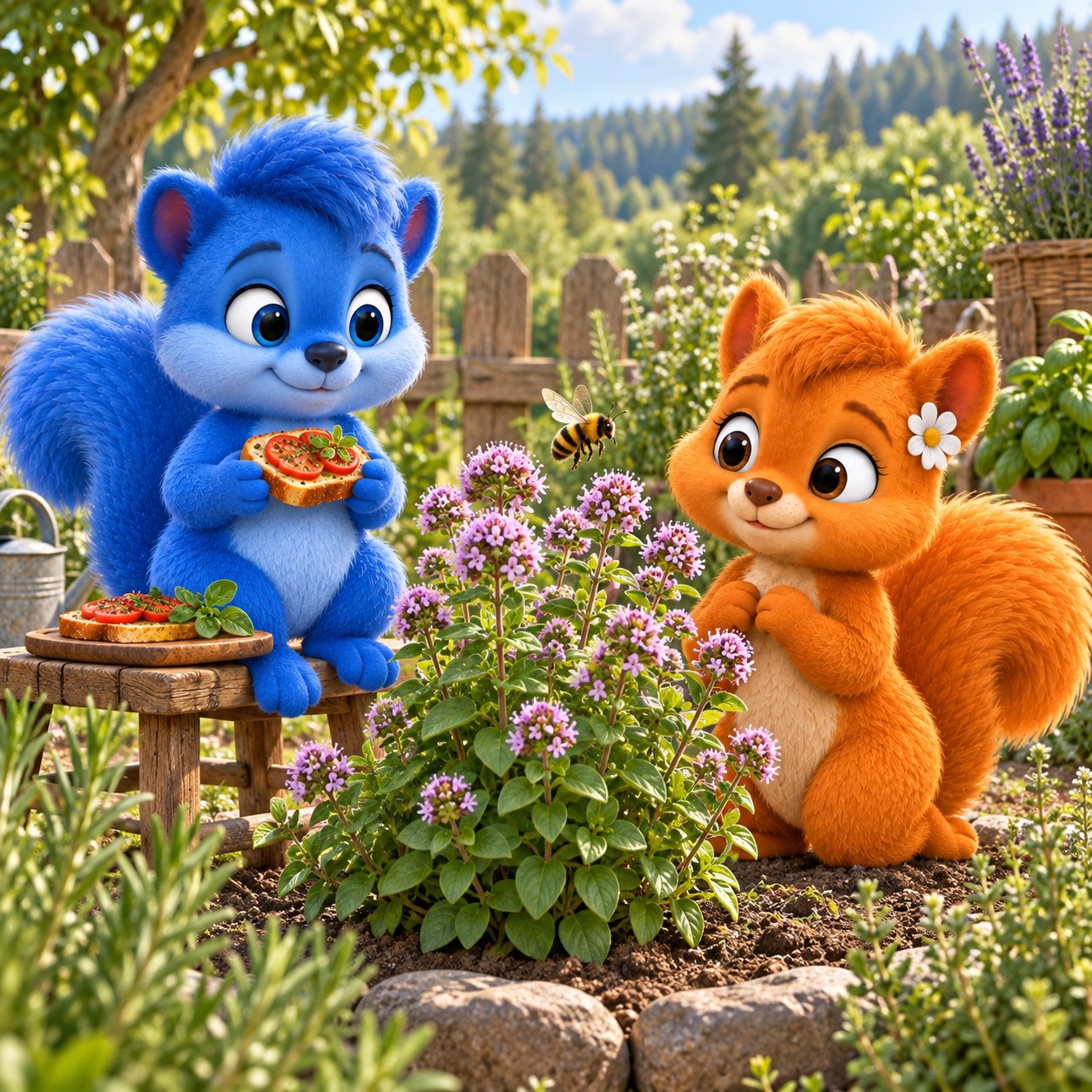
Oregano for tomato bread? First the pair quietly watch a bee visiting the flowers.
The short answer
Oregano has small oval leaves in pairs and pink-to-purple summer flowers. This kitchen herb likes a sunny place and soil that lets excess water drain.
An imagined Wusel scene
Puschel and Flauschi investigate
Puschel has his tomato bread ready. Flauschi watches a bee. Flauschi“Let it visit the flower in peace first.” Puschel nods. Puschel“My seasoning plan can wait.”
While Puschel waits, he notices the small leaf pairs. Puschel“There is something to see here even without tomato bread.” Flauschi nods and studies the flowers. For their later kitchen plan, they will use only known oregano selected and washed by adults.
What it looks like
Small oval leaf pairs and tiny pink to purple flowers in summer.
Scent and cooking
Aromatic; popular with pizza and tomato sauce.
How it grows
A sunny position and soil that lets excess water drain away.
Little Wusel quiz
What can you notice about oregano before it is used in cooking?
Show answer
Small oval leaf pairs and, in summer, small pink to purple flowers.
Word help
- pollen
- Fine powder from flowers. Pollination carries it to a suitable flower’s receiving surface. It is not a plant seed.
- pollination
- Pollen reaches a flower’s receiving surface, the stigma. Further processes can then lead to seeds.
Explore in more detail
Here you will find longer explanations and further details. You can explore them together.
Who benefits from oregano flowers?
Oregano has small flowers that appear pink to purple in many varieties. Insects can feed there and carry pollen between flowers. This transfer is called pollination. After further stages of development, successfully pollinated flowers can produce seeds.
Compare and understand
A kitchen herb is more than seasoning for people. Part of a garden plant can flower for observation while adults harvest leaves sparingly elsewhere. Dried oregano often no longer shows the flower structure: the flakes cannot reveal the whole plant.