Animals · Red fox
Discover the red fox
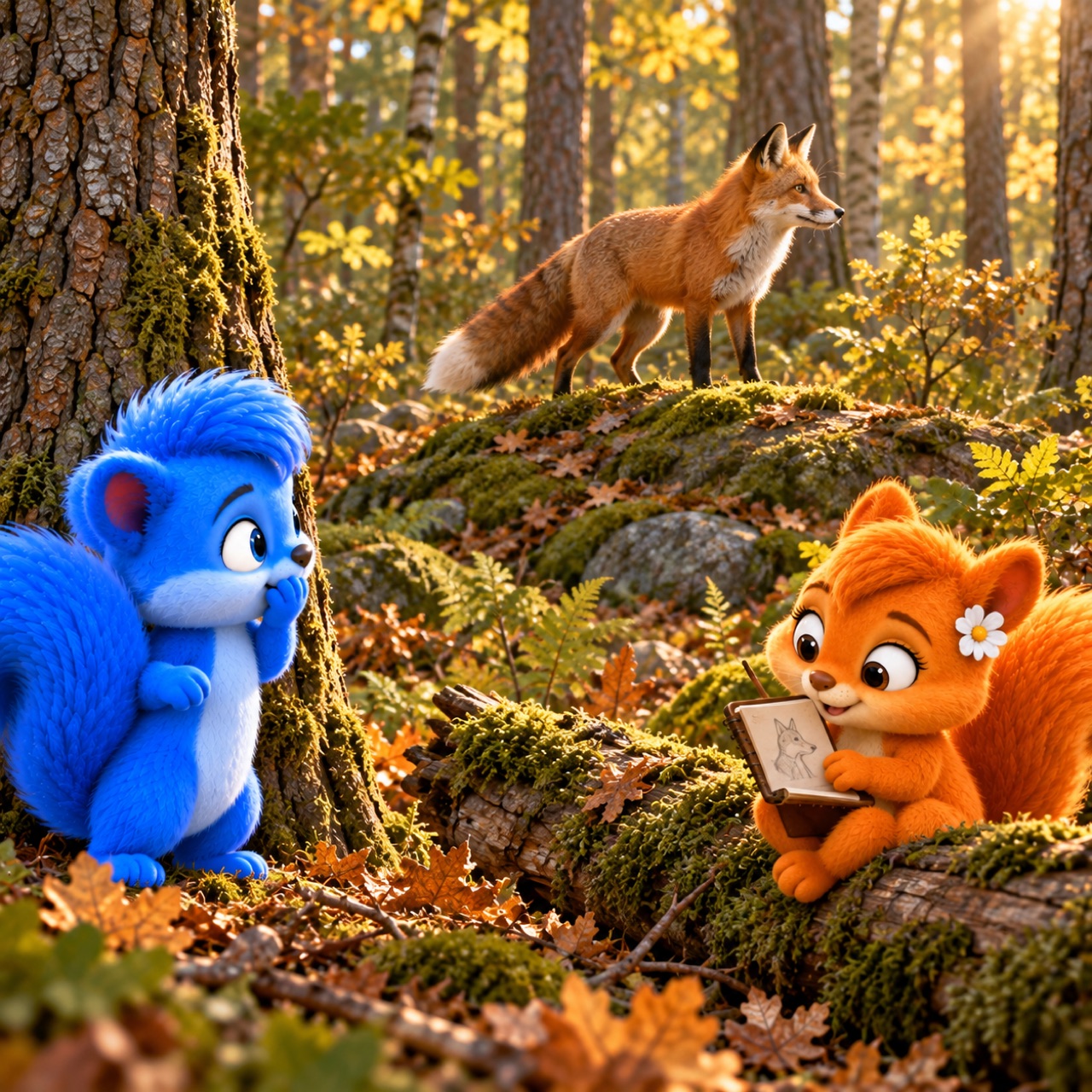
A red tail slips through the greenery. Puschel watches curiously. Flauschi explains how foxes live in and beyond the woods.
The short answer
A red fox has a pointed muzzle and bushy tail. It eats varied food, including small animals and fruit. Its reddish coat can vary. Watch from a distance without feeding it.
Listen to the animal
Real sounds from nature
A red fox barking
The red fox makes short, rough barks. Foxes make other sounds as well.
Recording: Jugrü / Wikimedia Commons · Original title: Bellender Fuchs.ogg · CC BY-SA 3.0 · MP3 conversion of the original recordingAn imagined Wusel scene
Puschel and Flauschi investigate
Puschel spots a russet tail between the trees. A red fox pauses on a mossy rise and pricks up its ears. Flauschi quickly sketches its outline in her little brown notebook.
Puschel“Has it seen us?” Puschel whispers. The fox listens for a moment and then moves on. The friends let it go undisturbed.
Real animal facts
Four things to know
Bushy tail
A red fox usually has a long bushy tail with a pale tip.
Sensitive ears
Its pointed ears help it hear quiet sounds.
Many habitats
Foxes live in woodland and fields, and even in cities.
Different foods
They eat small rodents, berries and other foods.
Mini quiz
What do you remember?
1. What helps a fox hear?
Choose one answer: a), b) or c).
- a)Its eyes
- b)Its pointed ears
- c)Its nose
Show answer
Correct answer: b): Its pointed ears Its pointed ears
2. Where do foxes live?
Choose one answer: a), b) or c).
- a)In woodlands too
- b)Only in woodland
- c)Only in open fields
Show answer
Correct answer: a): In woodlands too In woodlands too
3. How do we watch it?
Choose one answer: a), b) or c).
- a)From a distance
- b)We run after it
- c)We feed it
Show answer
Correct answer: a): From a distance From a distance
Explore in more detail
Here you will find longer explanations and further details. You can explore them together.
Understand step by step
How it works – simply explained
Ears provide clues
Quiet sounds aid foraging. Visible ears are only the outside part of hearing, not the whole process.
Food can vary
Foxes use plant and animal foods, helping them live in different environments, including settlements.
Nearby is not tame
A city fox remains wild. A fluffy tail does not make a pet. Observe at a distance without feeding.
References for this explanation: [1]