Animals · Red deer
Discover the red deer
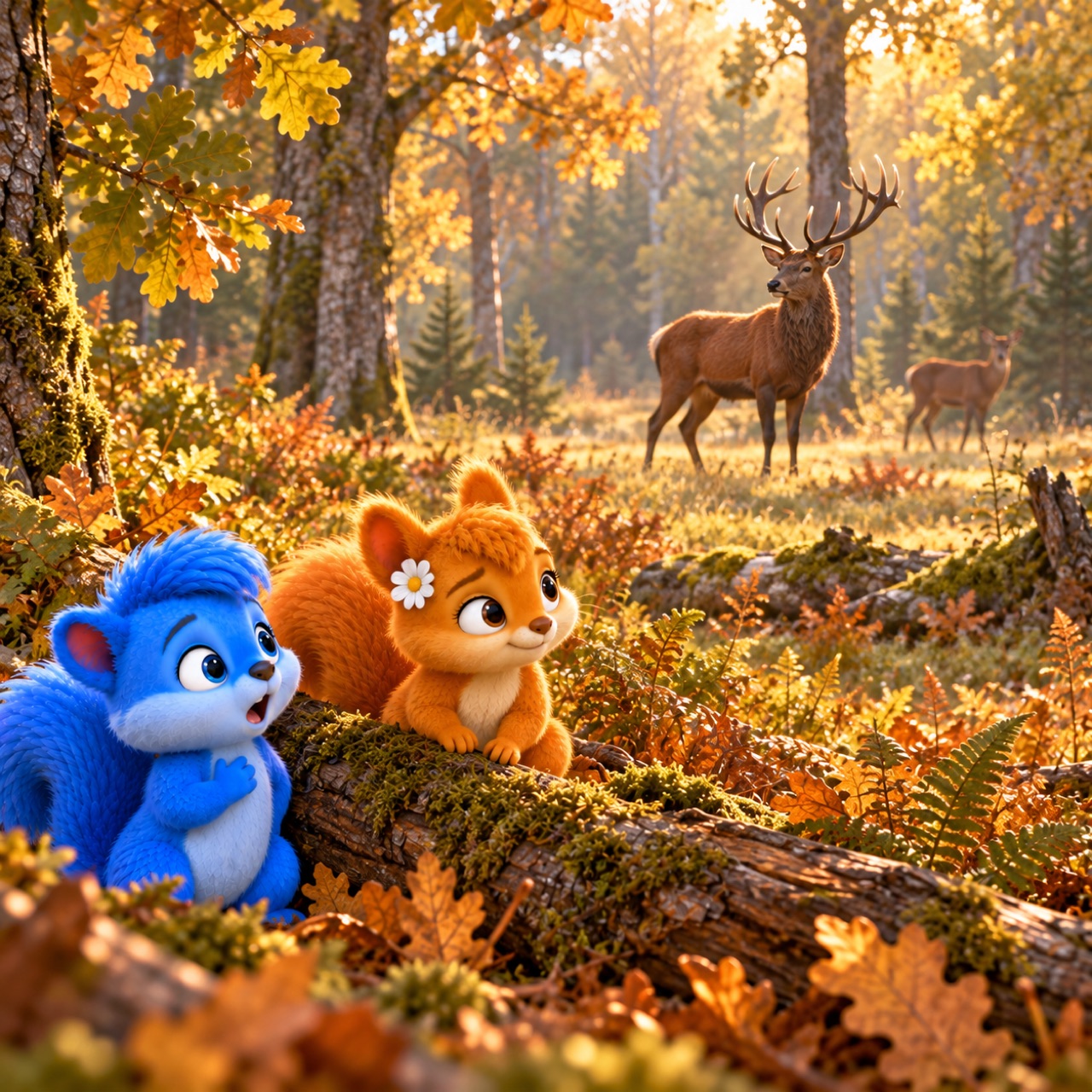
A large antlered animal in the clearing! Flauschi spots a red deer stag. Puschel learns why it is not simply a bigger roe deer.
The short answer
Adult male red deer usually carry branched antlers. They shed and regrow them regularly. A female red deer is not a roe deer: those are different species.
Listen to the animal
Real sounds from nature
Red deer stags calling in the rut
Two male red deer are calling here. Their roaring is especially heard during the rut.
Recording: Lawrence Shove / British Library Board via Wikimedia Commons · Original title: Red Deer (Cervus elaphus) (W1CDR0001424 BD3).ogg · CC BY-SA 4.0 · MP3 conversion of the original recordingAn imagined Wusel scene
Puschel and Flauschi investigate
Puschel first spots two big ears on a distant clearing. Then a red deer stag steps into the light. Puschel“What antlers!” he whispers, pressing a paw to his chest.
Farther back, Flauschi notices a hind. She has no antlers. The friends stay behind their log so the deer can move on in peace.
Real animal facts
Four things to know
A large deer
Red deer are among Germany’s largest free-living land mammals.
Stag antlers
Adult male red deer usually have branching antlers. They shed them each year and grow a new set. A young stag’s first antlers are often still unbranched.
Hinds without antlers
Female red deer do not have antlers.
Groups of deer
Red deer often live in herds whose members change during the year.
Mini quiz
What do you remember?
1. Who usually has antlers among red deer?
Choose one answer: a), b) or c).
- a)Males
- b)All calves
- c)Every deer
Show answer
Correct answer: a): Males Males
2. What happens to the antlers?
Choose one answer: a), b) or c).
- a)They remain for life
- b)They are shed every five years
- c)They are shed each year
Show answer
Correct answer: c): They are shed each year They are shed each year
3. How do we watch the stag?
Choose one answer: a), b) or c).
- a)From far away
- b)Right beside him
- c)By following him
Show answer
Correct answer: a): From far away From far away
Explore in more detail
Here you will find longer explanations and further details. You can explore them together.
Understand step by step
How it works – simply explained
Antlers are not permanent horns
Adult males usually carry bony antlers that shed and regrow, not lifelong unchanged horns.
Individuals differ
Females lack antlers; a young male’s first may be unbranched. Adult size and antlers do not fit every youngster.
Red deer are not roe deer
These are different species; roe deer are smaller. A female red deer is not a roe deer.
References for this explanation: [1]