Animals · Hedgehog
Discover the hedgehog
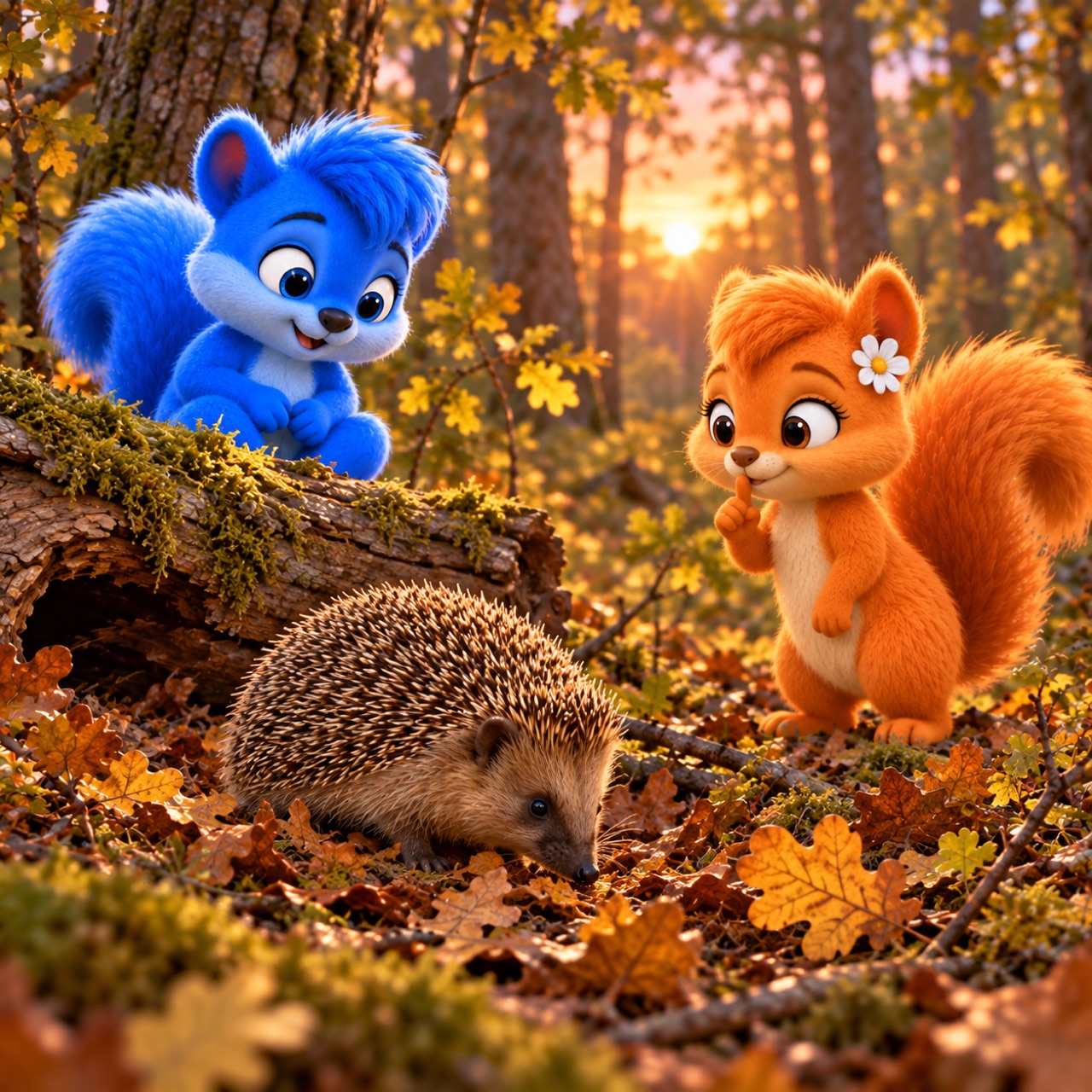
Rustle, rustle! Someone moves through the leaves. Puschel spots a hedgehog in the evening. What is it looking for?
The short answer
A hedgehog's spines are modified hairs. It mostly searches for small animals at dusk and night. Hibernation saves energy; we leave its resting place undisturbed.
Listen to the animal
Real sounds from nature
A hedgehog’s warning sound
This European hedgehog hisses because it feels disturbed. Watch hedgehogs from a distance and leave them alone.
Recording: Richard Huber / Wikimedia Commons · Original title: Braunigel Drohgeräusche.ogg · CC BY-SA 4.0 · MP3 conversion of the original recordingAn imagined Wusel scene
Puschel and Flauschi investigate
Puschel hears a rustle first. Flauschi raises a paw to her mouth. A small hedgehog sniffs among the leaves. Puschel“It wears its protection on its back!” Puschel whispers.
They stay behind the log and only watch. Soon the hedgehog disappears beneath a bush. Flauschi“Good night, little spiny wanderer,” Flauschi whispers.
Real animal facts
Four things to know
Protective spines
The spines are modified hairs that protect the hedgehog’s back.
Out after dark
Hedgehogs are mostly active at dusk and at night.
Food on the ground
They seek beetles, caterpillars, worms and other small ground animals.
Hibernation
Hedgehogs hibernate in a sheltered nest during winter.
Mini quiz
What do you remember?
1. When is a hedgehog mostly active?
Choose one answer: a), b) or c).
- a)Mostly at midday
- b)Mostly in the morning
- c)At dusk and at night
Show answer
Correct answer: c): At dusk and at night At dusk and at night
2. What protects its back?
Choose one answer: a), b) or c).
- a)Spines
- b)Feathers
- c)Scales
Show answer
Correct answer: a): Spines Spines
3. What does it do in winter?
Choose one answer: a), b) or c).
- a)It hibernates
- b)It stays active every day
- c)It migrates to warmer regions
Show answer
Correct answer: a): It hibernates It hibernates
Explore in more detail
Here you will find longer explanations and further details. You can explore them together.
Understand step by step
How it works – simply explained
Protection made from hair
Spines are modified hairs protecting mainly the back, not arrows the hedgehog shoots.
Food is found on the ground
Mostly at dusk and night it seeks small animals, not simply children’s favourite fruit.
Winter changes body state
Hibernation greatly lowers temperature, heartbeat and breathing to save energy. Leave shelters undisturbed; never wake an animal as a test.
References for this explanation: [1]