Birds · Great spotted woodpecker
Discover the great spotted woodpecker
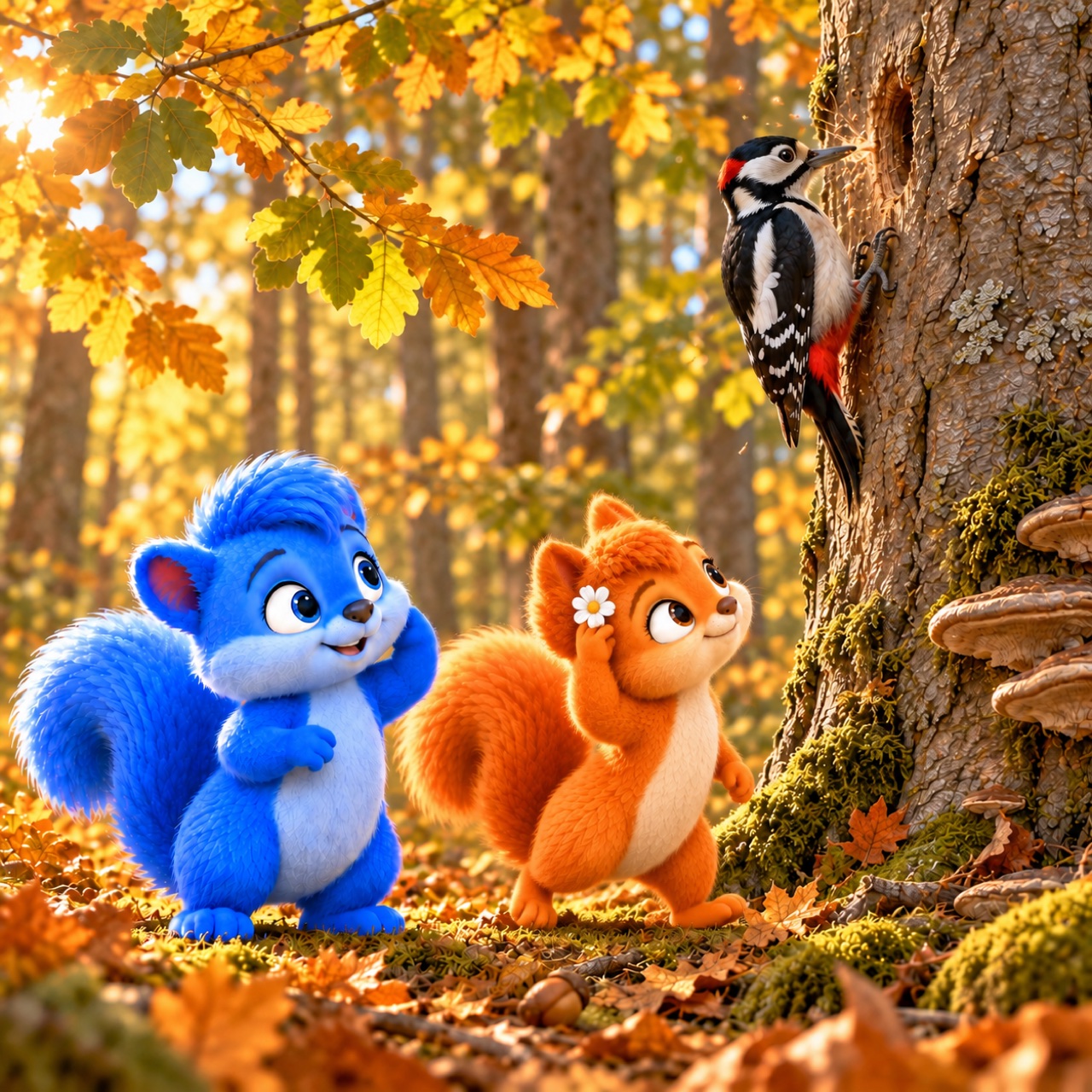
Tap, tap, tap! Who is knocking? The Wusels listen to a great spotted woodpecker and spot its striking feathers on the trunk.
The short answer
A great spotted woodpecker has black-and-white plumage and red markings. It works wood with its bill and searches for food. Drumming also sends signals; it differs from its call.
Listen to the animal
Real sounds from nature
The great spotted woodpecker’s call
The woodpecker can make short, strong calls.
Recording: Sander Pieterse / Wikimedia Commons (Xeno-canto XC47350) · Original title: XC47350 - Grote Bonte Specht - Dendrocopos major.ogg · CC BY-SA 4.0 · MP3 conversion of the original recordingThe great spotted woodpecker drumming
The quick drum roll comes from tapping wood with its beak. It is not a call.
Recording: T. Voekler / Wikimedia Commons · Original title: Great Spotted Woodpecker drum.ogg · CC BY-SA 3.0 · MP3 conversion of the original recordingAn imagined Wusel scene
Puschel and Flauschi investigate
Tap, tap, tap! Puschel stops on the woodland path. ‘Is someone knocking on a tree?’ Flauschi listens for a moment and spots a little bird high on the trunk. ‘Look, Puschel. A great spotted woodpecker!’
Puschel puts a paw to his cheek in surprise. The bird clings to the trunk and taps the bark with its beak. Then everything is quiet. ‘Perhaps one day it will show us its tree cavity,’ Flauschi whispers. They walk on quietly and leave the bird in peace.
Real animal facts
Four things to know
Black, white and red
Great spotted woodpeckers have black-and-white plumage and red feathers below the rear of the body. Adult males also have a red nape patch; juveniles have red on the crown.
Pecking at bark
This woodpecker searches under bark for insects and their larvae, using its strong beak.
Drumming as a message
The great spotted woodpecker uses rapid drum rolls to communicate with other woodpeckers and mark its territory. This differs from pecking and tapping while searching for food.
A cavity in a tree
Great spotted woodpeckers can make a cavity in an old tree. Other animals may use such cavities later.
Mini quiz
What do you remember?
1. Which colours does the woodpecker show in the picture?
Choose one answer: a), b) or c).
- a)Black, white and red
- b)Green and yellow
- c)Brown and white
Show answer
Correct answer: a): Black, white and red Black, white and red
2. What does it seek under bark?
Choose one answer: a), b) or c).
- a)Berries
- b)Blades of grass
- c)Insects and larvae
Show answer
Correct answer: c): Insects and larvae Insects and larvae
3. What can it make in a tree?
Choose one answer: a), b) or c).
- a)An underground burrow
- b)A tree cavity
- c)A nest of twigs
Show answer
Correct answer: b): A tree cavity A tree cavity
Explore in more detail
Here you will find longer explanations and further details. You can explore them together.
Understand step by step
How it works – simply explained
Tapping has different purposes
Wood work may find food; drumming also communicates. Not every tap means the same activity.
Cavities provide homes
Woodpeckers create tree cavities that may later help other animals. Not every hole comes from the same bird.
Age and sex change features
Young birds have red crowns, adult males a red nape patch. One picture cannot represent every individual.