Pirates: what is history and what is invented?
Treasure maps make exciting stories. Historical documents tell a different story from many adventure books.
The short answer
Pirates attacked ships and stole cargo; that is real history. Many familiar treasure-map stories and characters instead come from novels and films. Evidence helps distinguish storytelling from history.
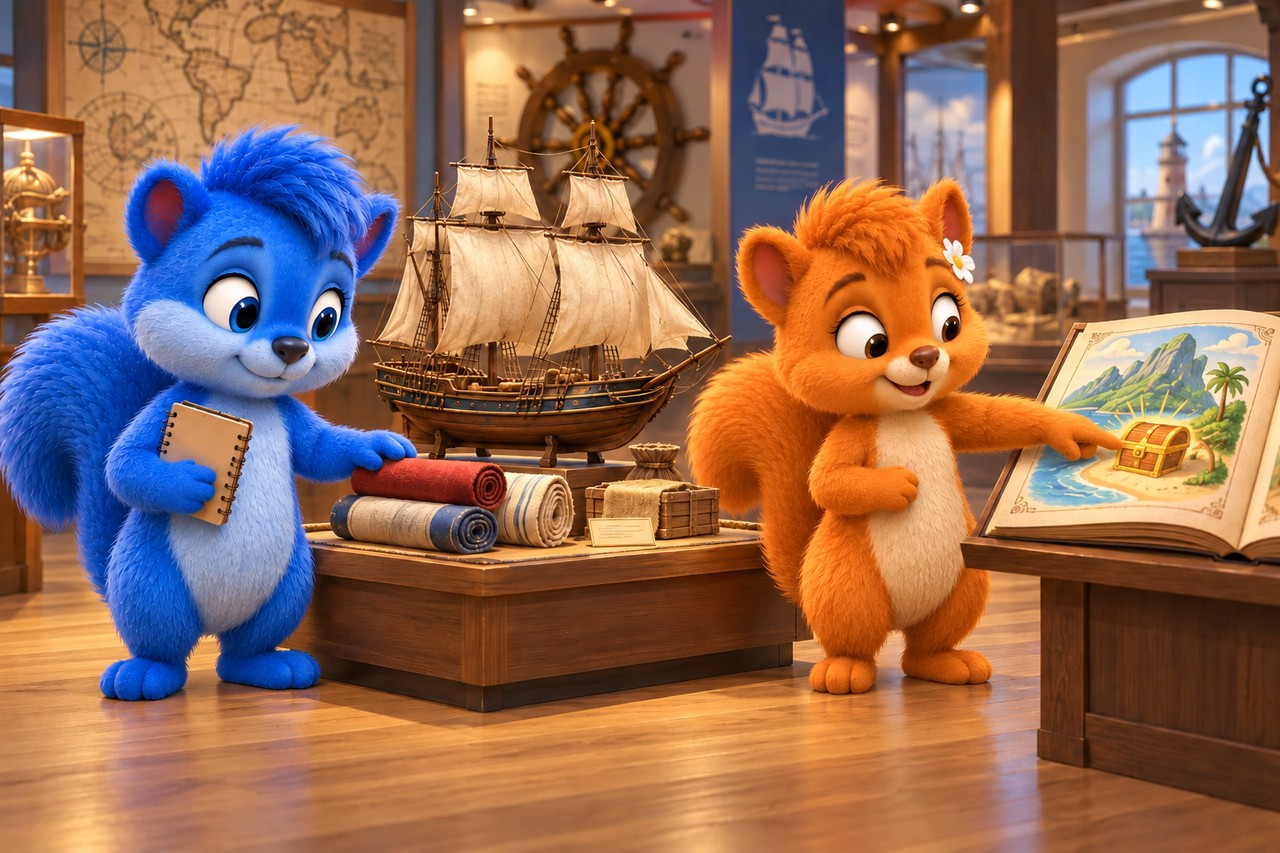
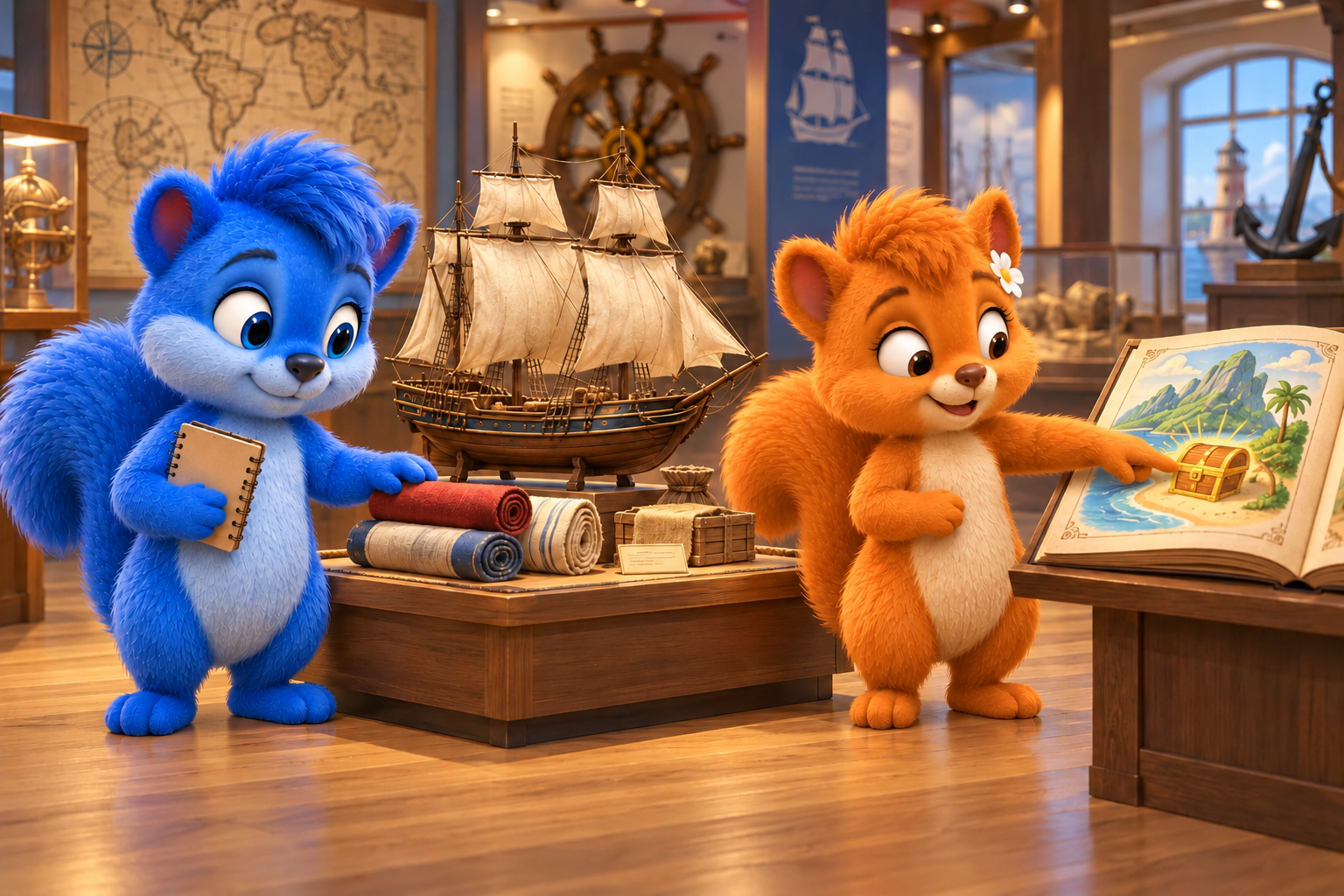
Two equal-sized Wusels compare an invented ship model and cloth cargo with a chest in a book illustration. Artistic museum scene, not a reconstruction of a verified voyage. The book’s island and chest are explicitly fictional. AI-created illustration, not a photograph of nature.
What the diagram shows
The diagram simplifies the process. First compare its shapes and arrows. You can read its labels in larger text below.
Read the picture labels
These are the words and sentences from the diagram above. The full explanation follows below.
- What evidence can check a claim?
- Historical letter
- Invented picture book
- Who wrote it? When and why? Other evidence?
- Can preserve clues about the past. Not every sentence is automatically true.
- Can tell an exciting story. Does not prove a real treasure discovery.
- Ask for evidence; distinguish history from imagination. Drawings are examples, not original documents or a treasure map.
An imagined Wusel scene
Puschel and Flauschi investigate
Puschel places a film treasure map with historical finds. Flauschi checks its origin: an invented story. They make separate areas for fiction and documented history. An exciting picture is welcome in the first area.
Look closely
Puschel examines cloth rolls beside the ship. Flauschi points at a golden chest inside the open picture book. It visibly belongs to an illustration, not an object found on a real pirate voyage.
An example to help you understand
Draw your own island and treasure chest. Label it Our invented story. Add another card: A museum preserves old letters about pirates. Which card describes imagination, which makes a checkable claim about museum holdings? Even a genuine old document need not be correct in every sentence. An adult can help you ask who wrote it and whether other evidence agrees. Your drawing is not an invitation to dig for treasures.
Try explaining it
What helps distinguish pirate history from invented stories?
Choose a), b) or c), then explain your choice.
- a)Use a film as evidence if its costumes look old.
- b)Treat a story as proven once many books repeat it.
- c)Check evidence and where the story came from.
Show the explanation
Correct: c): Check evidence and where the story came from.
Pirates attacked ships and stole cargo; that is real history. Many familiar treasure-map stories and characters instead come from novels and films. Evidence helps distinguish storytelling from history.
Explore in more detail
Here you will find longer explanations and further details. You can explore them together.
1. Cargo became loot
Pirates attacked ships and stole valuable cargo: goods carried aboard. People could be injured. These attacks were not harmless treasure hunts. Our ship and cloth rolls represent transporting goods, not a verified particular pirate vessel.
Checked against: [1]
2. Treasure maps often belong to books
Many books show an island with a cross marking buried treasure. Historical pirates almost never buried their loot, often spending it quickly. Almost never does not mean never. An exciting book illustration is not evidence of a real treasure map. William Kidd is a known exception: in 1699 he hid valuables on Gardiner’s Island near New York. Some were recovered and later used as evidence. This exception did not make burial a rule for all pirates. Adventure literature helped spread the familiar treasure-island image.
Checked against: [1]
3. An authorisation changes the term
Privateers received wartime permission to capture merchant ships. The written authorisation was called a letter of marque. Legally this differed from piracy without such permission. Attacks were still dangerous for people aboard. One side’s permission did not mean nobody was harmed.
Checked against: [2]
4. How can we check a claim?
Museums examine old letters, records and pictures. Historical sources are surviving traces from the past. Ask who wrote something, when and why. A later adventure novel tells an invented story. It may reveal how people imagined pirates without proving its events happened.
Checked against: [2]
An optional question for further exploration
You can use the longer explanation above. This is extra, not needed for the first quiz.
An extra question
Does a cross on a drawn island prove real pirate gold lies there?
Discover the answer
No. It can belong to fiction. Claims about a real location need checkable historical evidence. Most pirates did not bury their loot.
Pictures and sources for adults
Sources for further reading
Facts checked against the specialist sources below on 12 October 2026. The Wusel scene is fictional; comparisons and simplified models are explicitly explained. Sources are in English.