Audio drama: a story for the ears
Voices, sounds and pauses help us understand a story without pictures. How can we plan a short original scene?
The short answer
An audio play tells a story with voices, sounds and sometimes music. A sound can suggest a place or action without showing it. Listening tests whether other people actually understand it.
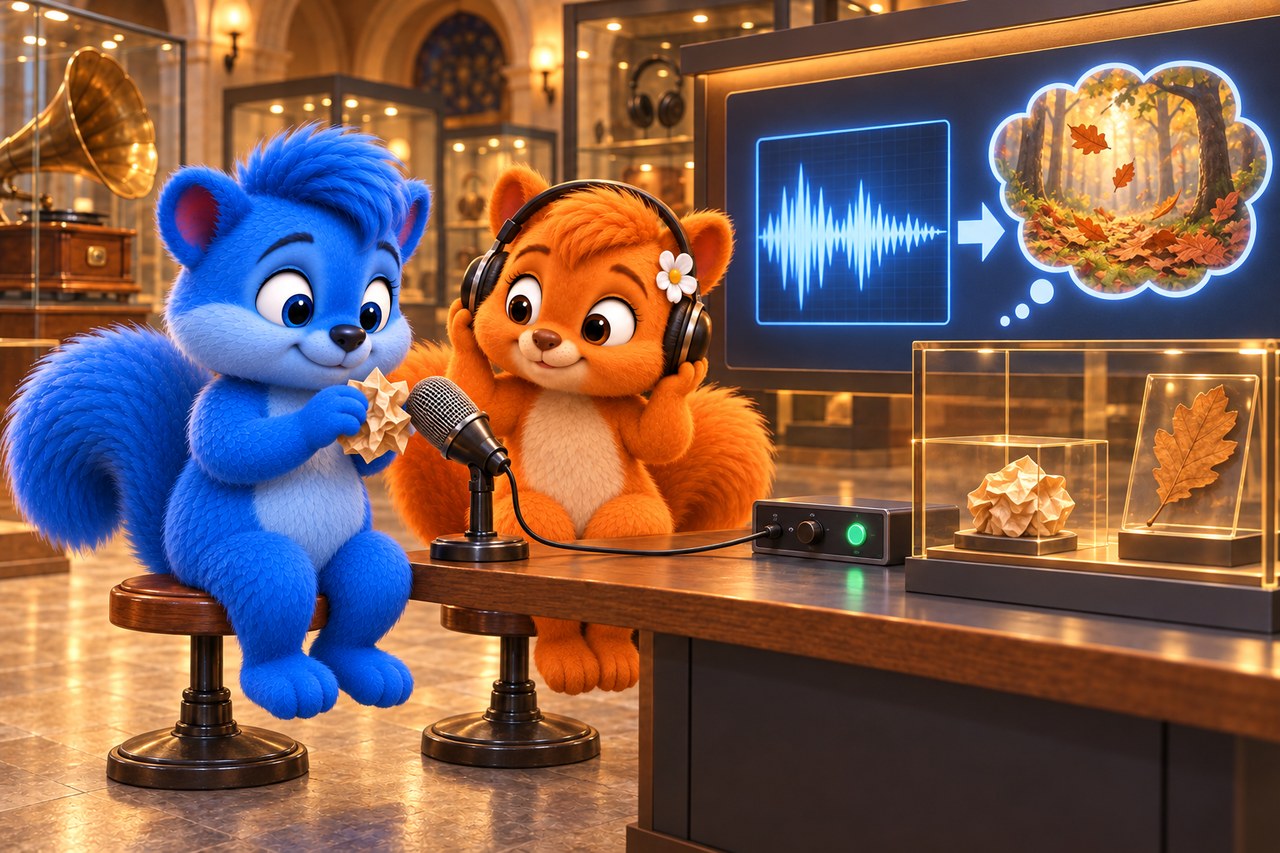
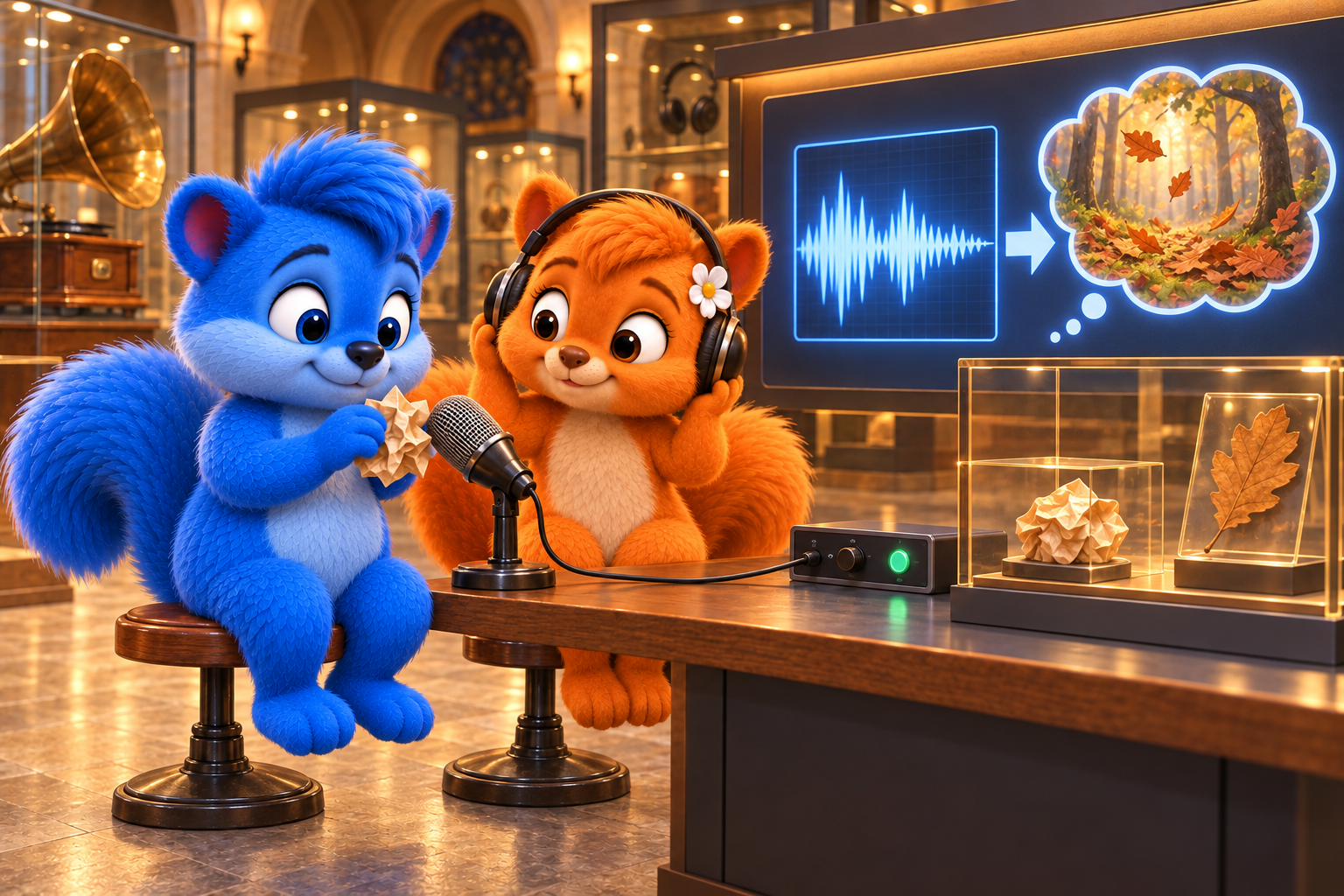
Puschel and Flauschi in the museum. Sound station: paper rustles at a microphone; recording and imagined woodland are compared. Simplified inanimate museum model; arrows and colours help explain it. AI-created illustration, not a photograph of nature.
Explained in three pictures
1 Make a sound
Hands rustle paper; a microphone records the sound.
2 Sound is stored
Voices and sounds are arranged into a story.
3 A setting forms in the mind
When listening, paper may sound like rustling leaves. Try comparing the sounds.
More about the picture
An audio drama tells a story through voices, sounds and pauses. A made sound may suggest a place even though it was produced elsewhere. Test by listening and comparing whether paper suggests leaves to you; a picture alone cannot demonstrate a sound.
An imagined Wusel scene
Puschel and Flauschi investigate
Puschel records rustling and calls it a woodland path. Listening without a picture, Flauschi thinks of paper. They add footsteps and a suitable narrator's line. On replay she understands the setting; the single sound was not enough.
Look closely
Compare the museum model with the three picture steps. Voices and sounds are arranged into a story.
An example to help you understand
Original activity: write a short line such as “Something rustles under my feet.” Separately note: “Gently crinkle paper.” Speak the line, then make the sound and let someone listen without looking. Ask what setting they imagine. It might suggest leaves, but need not: compare descriptions rather than insist on one correct guess.
Try explaining it
How can you check whether a sound in an audio play is understandable?
Choose a), b) or c), then explain your choice.
- a)Explain the sound file's name before anyone hears it.
- b)Assume others hear the same thing because of the intention behind the recording.
- c)Someone listens without pictures and describes what they recognise.
Show the explanation
Correct: c): Someone listens without pictures and describes what they recognise.
An audio play tells a story with voices, sounds and sometimes music. A sound can suggest a place or action without showing it. Listening tests whether other people actually understand it.
Explore in more detail
Here you will find longer explanations and further details. You can explore them together.
1. Tell a story through voices
Audio drama tells a story through sound. Characters may speak to each other; a narrator may add information. Without visible pictures, listeners need to understand who acts and what happens from what they hear. Test a short scene without showing pictures alongside it.
2. Separate words from sound cues
A script is our written plan. Note who says each line and put sound instructions separately alongside it. This keeps spoken words distinct from instructions. Productions use different formats; our simple paper plan does not need to copy the precise BBC layout.
Checked against: [1]
3. Sounds can be manufactured
Sound creators make some effects with objects different from those imagined. In film, recreating movement sounds to match the action is called Foley. Other sounds may come from permitted recordings. A sound in a story does not automatically prove the imagined location was really recorded.
Checked against: [2]
4. Listen, compare and improve
A recording may contain voices, music, effects and background sounds. Ask what mood they create and what the sound actually lets you know. For an original scene, check whether the words are understandable and the effect comes at a suitable moment. Pauses may be part of the design too.
An optional question for further exploration
You can use the longer explanation above. This is extra, not needed for the first quiz.
An extra question
Why does rustling in audio drama not prove it was really recorded in a forest?
Discover the answer
Because a suitable sound can also be created at a station using paper. Words and sounds invite imagined scenes; they alone cannot establish the actual recording location.
Pictures and sources for adults
Sources for further reading
Facts checked against the specialist sources below on 12 October 2026. The Wusel scene is fictional; comparisons and simplified models are explicitly explained. Sources are in English.