Discovery 18 / 27
Puschel & Flauschi’s Forest Discoveries
The Mystery of the Footprints
The green explorer’s magnifying glass with a leaf-shaped handle
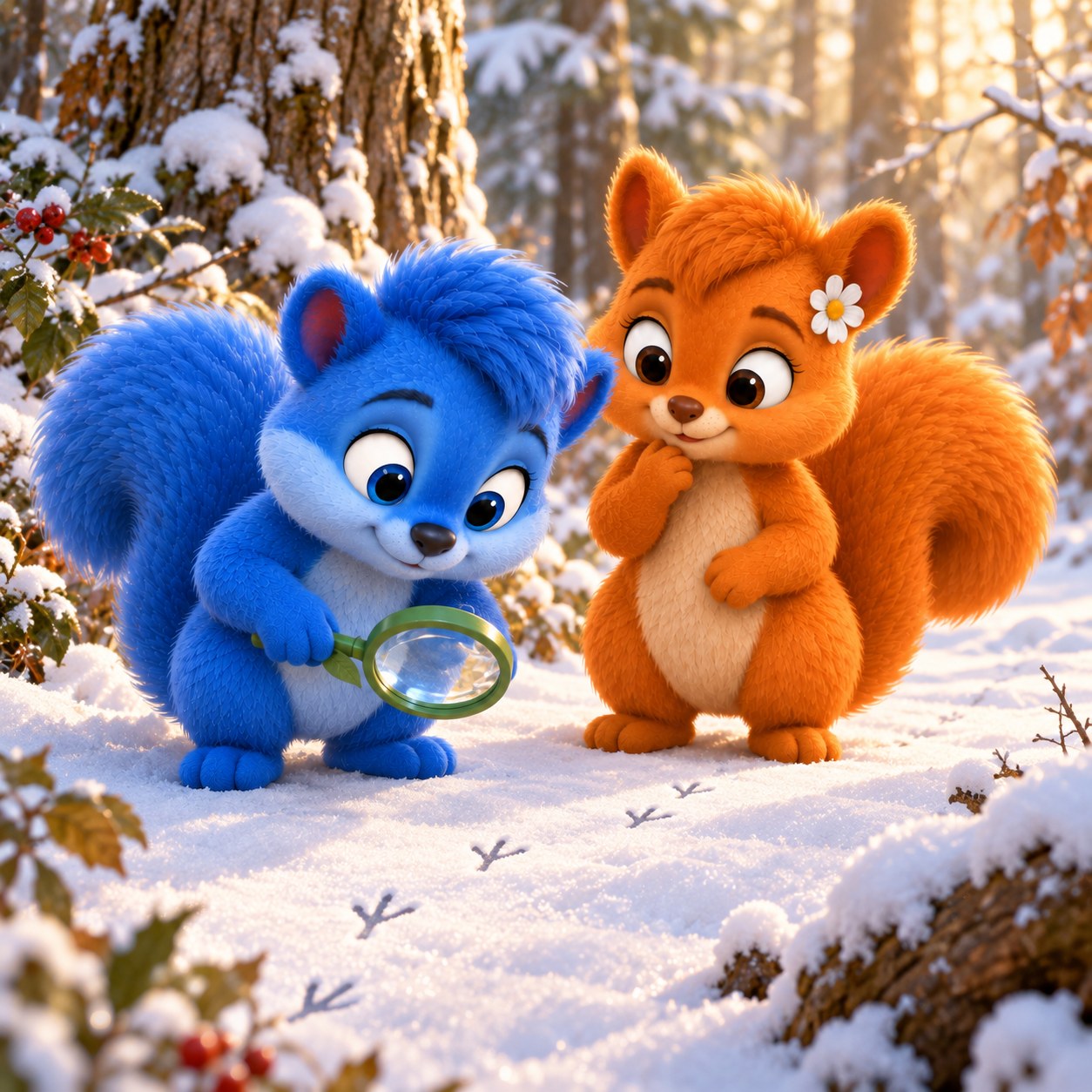
After snowfall, the woods were very quiet. At the edge of the firm path, Puschel spotted small marks in the snow. Several thin lines met at one point in each mark.
Puschel“Someone drew lots of tiny arrows. Perhaps they point towards the nut shop!”
He stopped beside the marks and held the green magnifying glass above them. Flauschi studied several prints. They did not step on them or brush snow aside.
Flauschi“They look like footprints. When an animal steps on soft snow, it presses the snow down. A print can remain. These thin toe marks fit a bird.”
Puschel“Then it must have been that woodpecker we met. Or a mouse on stilts.”
Flauschi smiled. Many birds leave similar tracks. Experts need several clues for a more careful answer. The size, shape and pattern of prints matter. The marks in the snow could not reliably tell the two which bird had visited.
Flauschi“We know there are small prints here. We think a bird made them. We do not know which one. It is all right to say that.”
Puschel noticed one print already looked a little rounder. Wind and warmer weather could change tracks. A footprint did not stay like a fresh picture forever.
Puschel“Then snow is a notebook that sometimes rubs out its own pages.”
Flauschi nodded. The tracks continued towards the shrubs. But the two stayed on their path and searched for no sleeping place. Puschel quietly said goodbye to the unknown visitor. He did not need to catch up with it to make a discovery.
Look closely
What the two discovered
An animal’s foot can leave a print in snow, soft sand or damp soil. These marks are called footprints or tracks. They often do not show on hard ground.
In many bird tracks we see thin toe marks. Paws and hooves leave other shapes. A bird print alone often cannot tell us which kind of bird passed by.
Experts compare several prints for a better guess. How big are they? What shape are they? How are they arranged? Snow, wind and thawing weather can change them. A thaw means it becomes warm enough for snow to melt.
We can watch tracks without following an animal. We leave prints and possible hiding places untouched. Story pictures are not a reliable guide to every kind of track.
Explorer’s rule: Leave animals and plants in peace. Just watch and do not damage anything.
Sources for adults: Woodland Trust: Animal tracks in snow · Woodland Trust: Animal tracks for children
Keep exploring
Where shall we wusel next?
Choose how to keep exploring: another story or a related activity.
Look for woodland treasures
Take an adult along and choose the printable nature bingo. Leave plants and animal homes untouched.
Start exploring →Keep exploring together
Look closely with nature bingo and woodland games.
Explore woodland games →