The little Wusel story
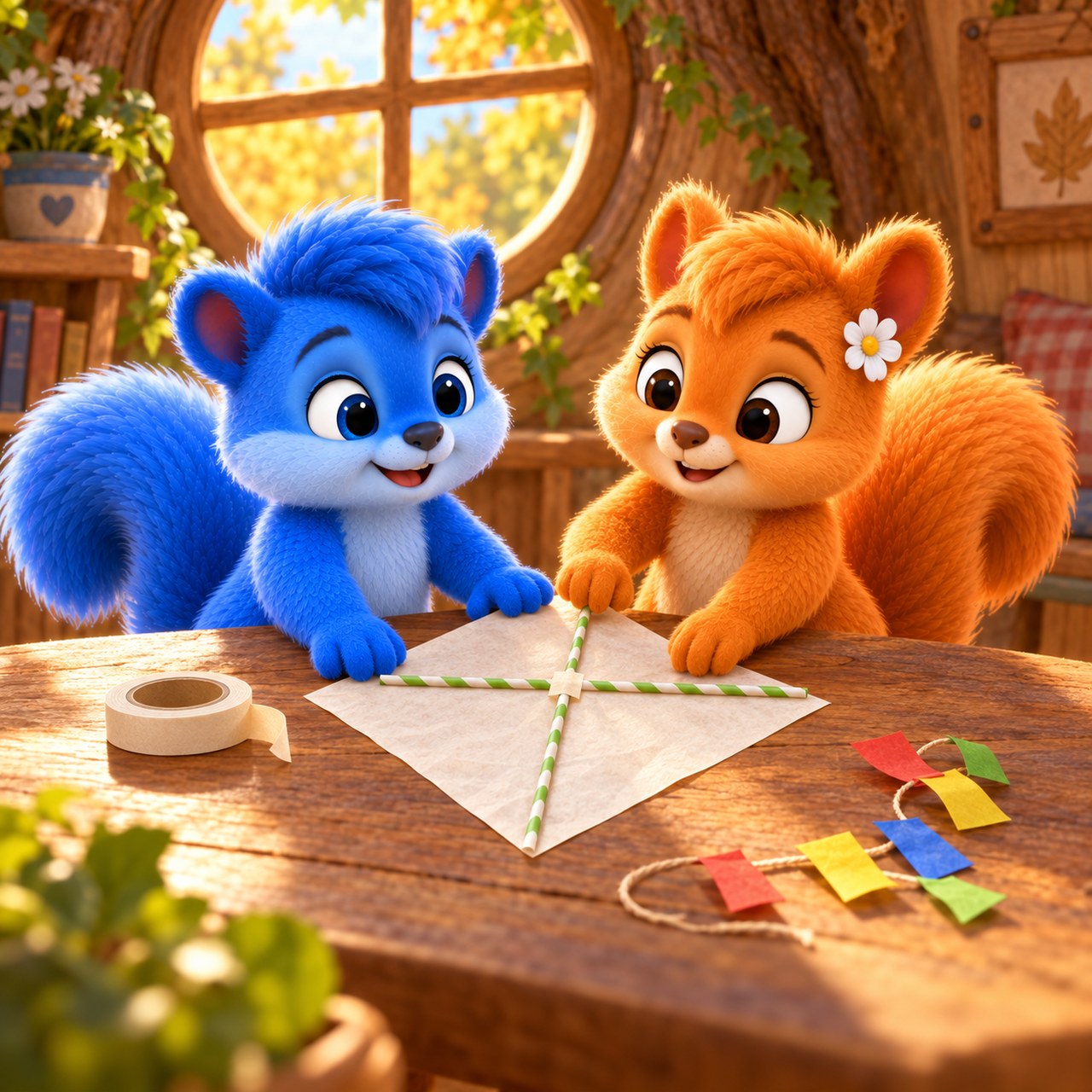
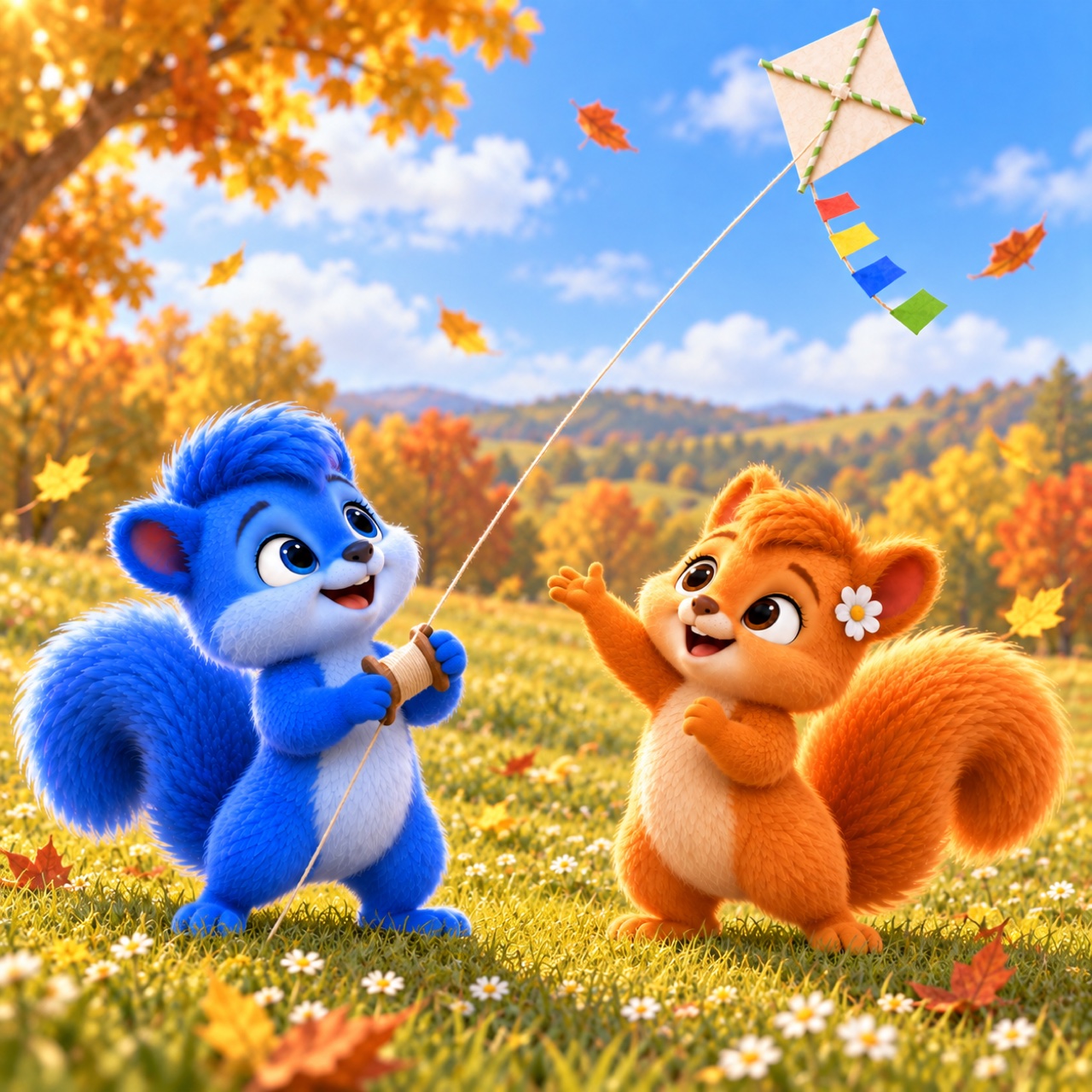
Ever since Puschel watched the maple wing spin, he had wanted to try something with the wind himself. Puschel“A propeller as big as my tail!” he cried. Flauschi laid two light straw rods over a sheet of paper. Flauschi“Let us make a little kite instead. We can hold it together.” Puschel kept the paper still while Flauschi fixed the cross in place. Then they gave the kite a colourful strip tail. Out on the open meadow, Puschel slowly let out a little string. The breeze lifted the paper kite gently. Puschel“It is dancing!” Puschel called. Flauschi watched it: Flauschi“And this time your tail can stay on the ground.” They both giggled.
What you need
- five straight paper straws: two for the crossbar and three for the longer centre spine
- one large sheet of thin, light paper, such as gift wrap (about 50 × 70 cm)
- sticky tape, a pencil and a ruler
- scissors and a few light paper strips for the colourful kite tail
- a long, soft kite line and an empty cardboard tube to wind it around
How it works
- Spread everything out on a large table. Gently push the end of one straw into another to make the short crossbar. If the straws will not fit together, tape their ends together. An adult can help so the straws do not bend.
- Join the other three straws in the same way to make the long centre spine. Lay the short bar across it, a little above the middle. Your frame now looks like a cross. Tape the place where the bars meet firmly on both sides.
- Place the cross on your paper, with the long straw pointing up and down. Use a pencil to join the four straw ends into a big diamond: top, right, bottom, left, and back to the top. Leave about two finger widths of extra paper around the edge.
- An adult cuts out the diamond. Put the straw cross in its centre. Fold the spare paper over the straws at all four corners and tape it down. Carefully tape the middle too. The paper should lie flat without tearing.
- Tape a few light paper strips to the bottom tip for a colourful tail. It helps the kite stay steady in the air. Puschel would like to add ten strips, but start with just a few so your kite stays light.
- Now add the line. An adult ties one end tightly around the centre of the straw cross. Give it a gentle pull: does the knot hold? Attach the other end to the cardboard tube. Wind the line loosely around it, leaving only a short length free at first.
- Go to a clear meadow with an adult. Hold the kite with its top tip pointing up and its paper face away from the wind. When you feel a gentle breeze, one person lets the kite go while the other holds the tube and slowly unwinds a little line.
- Not flying yet? That is normal for kites. Check together: is the cross firm? Is the paper smooth? Is the tail hanging from the bottom, and is the wind gentle? Then try again. Flauschi says, “Tinkering is part of every Wusel adventure!”
Adult help: Build and fly the kite together. Adults help especially with cutting, taping and tying. Choose an open meadow away from roads, tall trees and power lines. Keep the kite indoors during thunderstorms or strong winds. Never wind the line around fingers, necks or animals.
Discover how maple wings travel with the wind →
Keep exploring
Where shall we wusel next?
Choose how to keep exploring: another story or a related activity.
Play outdoors
Nature bingo and Wuselwood memory cards turn forest ideas into play.
Open forest games →Look more closely at the forest
Short stories explain real nature observations in child-friendly words.
Open Forest Discoveries →