Body & Senses
Why do some touches tickle?
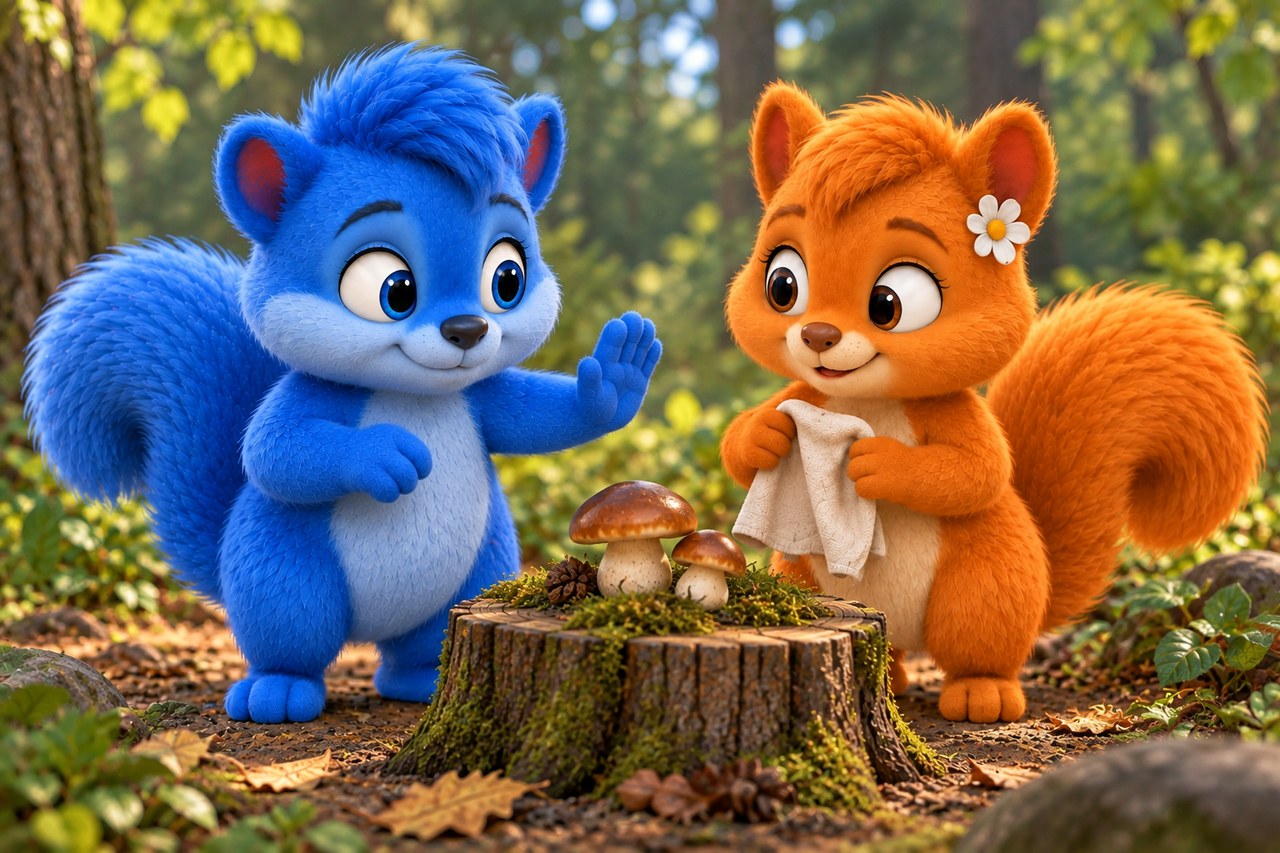
A light touch makes Puschel giggle. Flauschi asks when tickling feels pleasant.
The short answer
The skin sends touch signals to the brain. Some light touches feel ticklish. How they feel also depends on the situation. Laughing does not automatically mean: please continue.
An imagined Wusel scene
Puschel and Flauschi investigate
Flauschi laughs when a soft feather brushes her arm. A moment later she says, “Stop.” Puschel puts the feather away straight away. They sit together and think: Flauschi laughed and still wanted it to stop. Both can be true.
Try explaining it
Someone laughs while being tickled and says stop. What matters now?
Choose a), b) or c), then explain your choice.
- a)Stop straight away.
- b)Continue because the person is laughing.
- c)Stop after one more round.
Show the explanation
Correct: a): Stop straight away.
The skin sends touch signals to the brain. Some light touches feel ticklish. How they feel also depends on the situation. Laughing does not automatically mean: please continue.
Word help
- cell
- A tiny living unit. Living things are made of cells.
- nerve
- A bundle of fibres that carry signals through the body.
Explore in more detail
Here you will find longer explanations and further details. You can explore them together.
Understand step by step
How it works – simply explained
Skin reports touch
Small nerve endings respond to contact and send signals onwards. Different touches do not all feel alike.
The situation matters too
The brain processes both touch and situation. Light contact may feel ticklish, unpleasant or barely noticeable. People differ.
No counts even during laughter
Laughter is not reliable permission. Anyone who dislikes tickling may say or show this. The other person stops; feelings need no proof.
The key points again
Discovery 1
Skin contains sensory cells that detect touch.
Source: [1]
Discovery 2
The brain considers both touch and context. People may find some light touches ticklish.
Source: [1]
Discovery 3
Not everyone likes tickling. Laughter does not automatically mean someone wants it to continue.
Source: [2]