Trees and leaves · Sweet Chestnut Tree
Recognising a Sweet Chestnut Tree
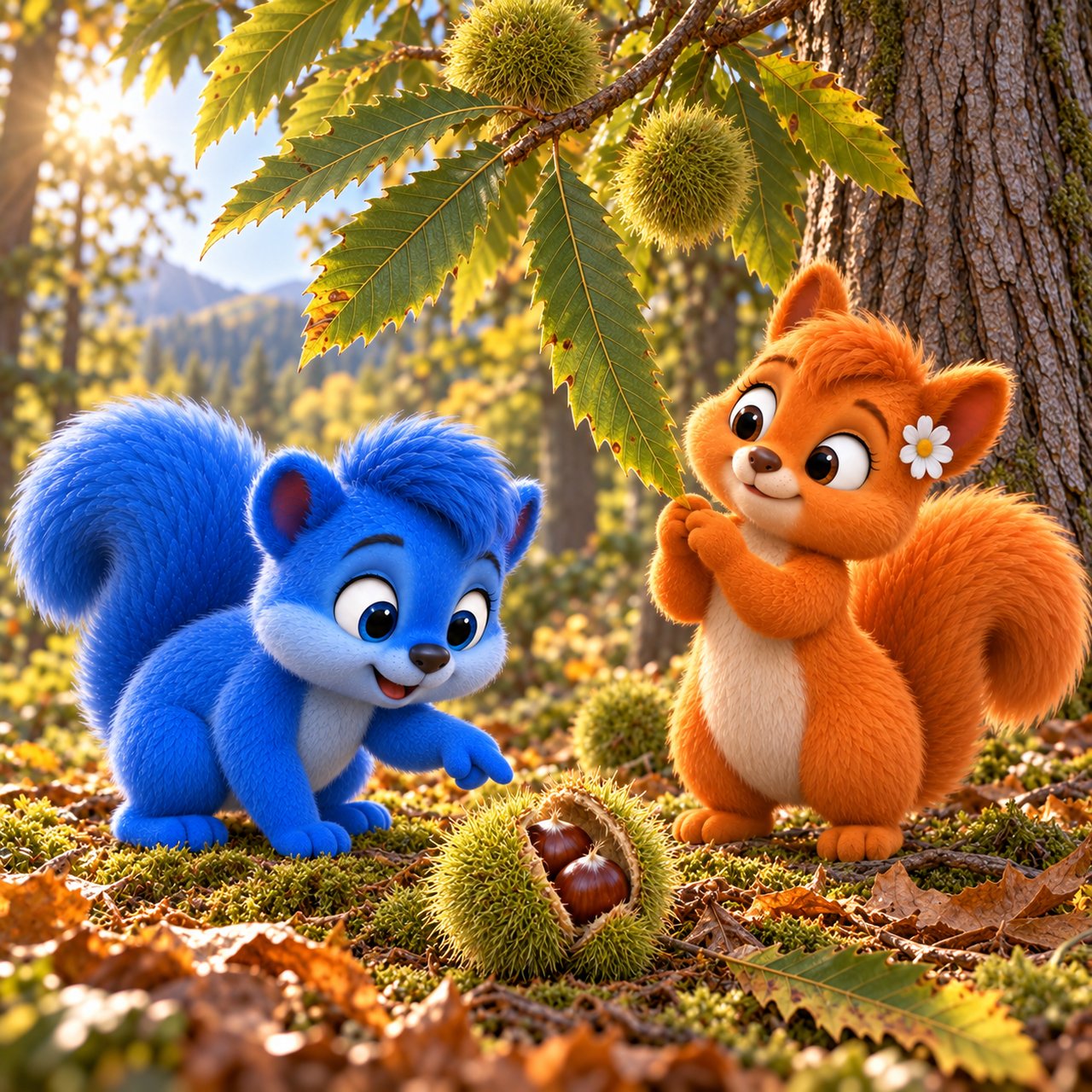
A fruit in a prickly case! Puschel keeps his distance. Join Flauschi to spot the sweet chestnut’s long, toothed leaves.
The short answer
Sweet chestnut has single long leaves with sharp teeth along the edges. Fruits sit inside a husk with many fine prickles. Do not confuse it with horse chestnut: similar names do not make fruits edible.
An imagined Wusel scene
Puschel and Flauschi investigate
Puschel wants to combine two chestnut pictures because their names sound alike. Flauschi shows the single long leaves beside horse chestnut's hand-shaped divided leaf. They separate the cards again. Similar names do not mean the same plant.
The leaf
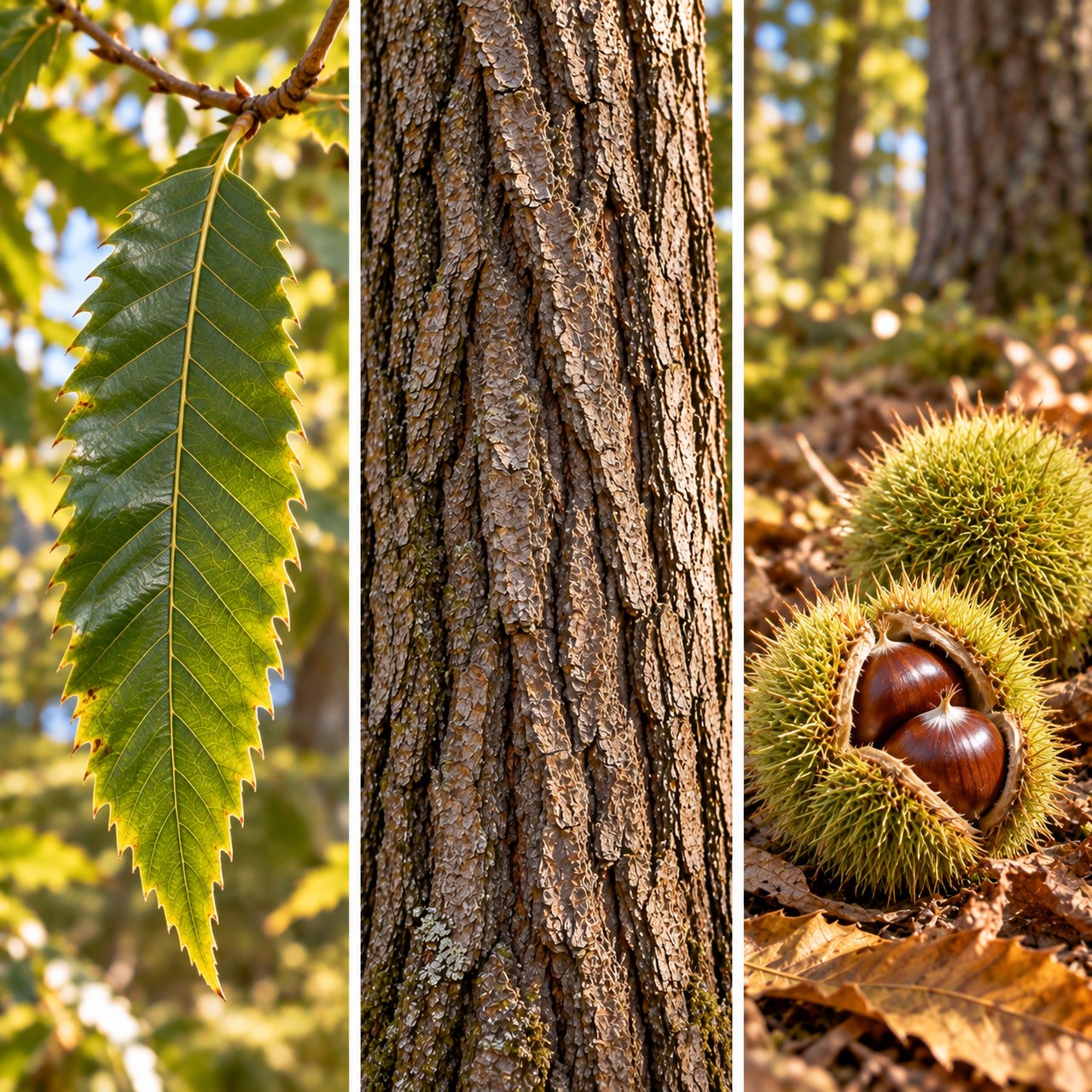
One long, narrow leaf grows from the twig. Its edge has sharp teeth. It is not shaped like a hand with several leaflets.
The bark
On older sweet chestnut trees, the brown-grey bark becomes rough, with deep grooves running along the trunk.
The fruit
The round green husk has many fine spines. When it opens, brown chestnuts with little pointed tips become visible.
Mini quiz
What do you remember?
1. What shape is a sweet chestnut leaf?
Choose one answer: a), b) or c).
- a)Long and narrow with sharp teeth
- b)Hand-shaped with many leaflets
- c)Like a fir needle
Show answer
Correct answer: a): Long and narrow with sharp teeth Long and narrow with sharp teeth
2. What covers the fruit husk?
Choose one answer: a), b) or c).
- a)Many fine spines
- b)An acorn cap
- c)Smooth cone scales
Show answer
Correct answer: a): Many fine spines Many fine spines
3. What should you do with a fallen chestnut?
Choose one answer: a), b) or c).
- a)Look at it with an adult
- b)Taste it right away
- c)Put it in your pocket to try later
Show answer
Correct answer: a): Look at it with an adult Look at it with an adult
Explore in more detail
Here you will find longer explanations and further details. You can explore them together.
Three tree clues
Sweet chestnut or horse chestnut?
Both have brown fruits inside cases, but they are different trees. Sweet chestnut has long single leaves with pointed teeth. Horse chestnut has several leaflets arranged like a hand. The densely prickly sweet chestnut case also differs from the more sparsely spiked horse chestnut case.
Compare and understand
Similar names do not mean equal edibility. Horse chestnuts are not substitutes for bought sweet chestnuts. A learning picture cannot authorise foraging: only knowledgeable adults select safe sweet chestnuts for eating. Observe fallen leaves and look at prickly cases from a distance.