Body & Senses
How do we learn a new movement?
A new movement does not work straight away. Puschel discovers why patient practice helps.
The short answer
A new movement needs coordination between the brain, muscles and senses. Practice can improve this teamwork. Small steps, feedback and breaks help. Different people need different amounts of time.
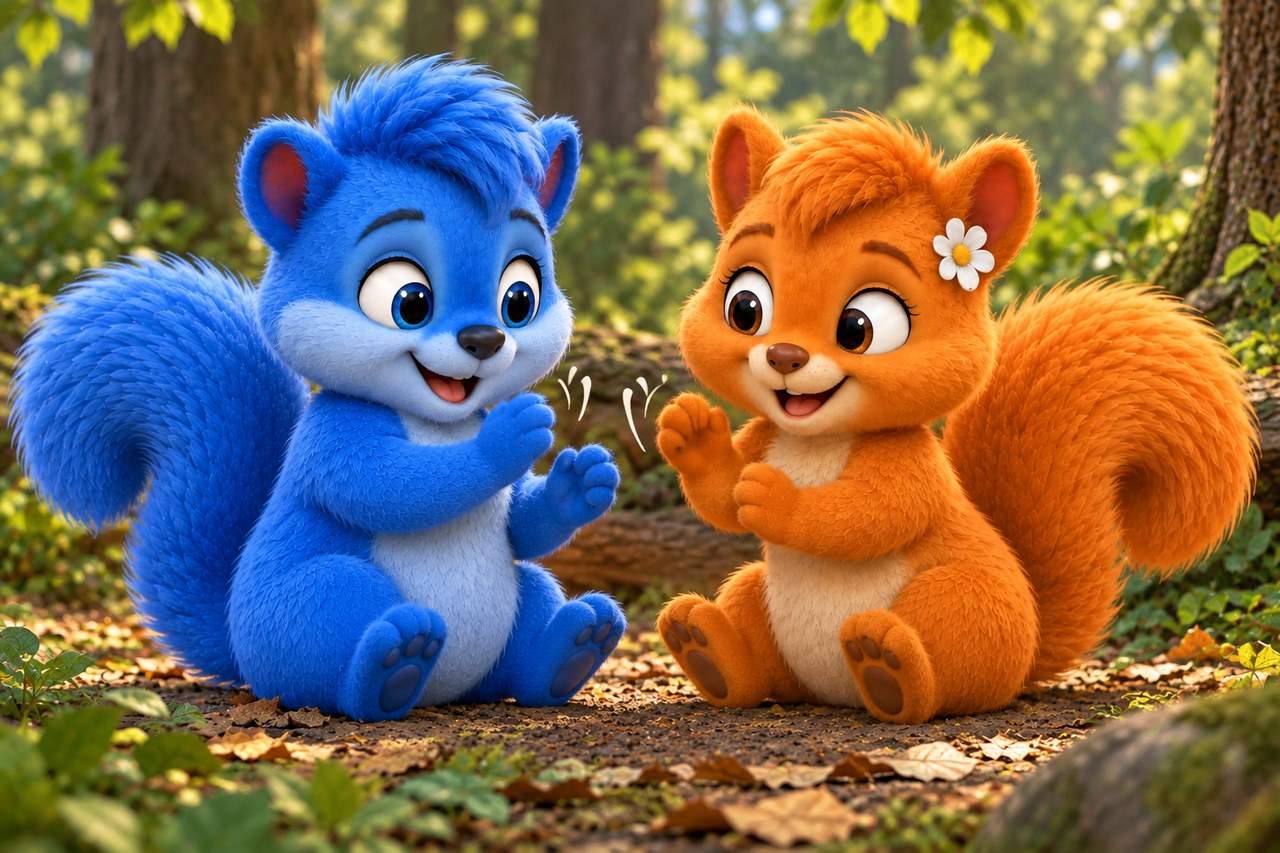
An imagined Wusel scene
Puschel and Flauschi investigate
Puschel's throw misses the large basket. Flauschi moves it closer and he tries a calmer throw. This time it lands inside. After a break they practise that small step again before increasing the distance.
Try explaining it
What can help when learning a new movement?
Choose a), b) or c), then explain your choice.
- a)Skip errors without checking which small step is difficult.
- b)Practise a small part and take breaks.
- c)Practise the whole sequence faster before individual parts work.
Show the explanation
Correct: b): Practise a small part and take breaks.
A new movement needs coordination between the brain, muscles and senses. Practice can improve this teamwork. Small steps, feedback and breaks help. Different people need different amounts of time.
Word help
- joint
- A connection between bones. Many joints allow movement.
Explore in more detail
Here you will find longer explanations and further details. You can explore them together.
Understand step by step
How it works – simply explained
A first try gives clues
When throwing a soft ball, the brain uses information from eyes, muscles and joints to control when and how strongly muscles work.
A next try can change
You might notice the ball went too far. Feedback helps adjust the next movement. Practice is more than thoughtlessly repeating an action.
Small steps help
Holding first, then a short throw: smaller tasks can be easier to practise. Breaks and suitable help count. Learning speed differs between people.
References for this explanation: [1]
The key points again
Discovery 1
The brain processes information from the senses and body and guides movement.
Source: [1]
Discovery 2
Repeated practice can improve coordination. People do not all need the same amount of time.
Source: [1]
Discovery 3
Small steps, feedback and breaks support learning. Mistakes do not prove someone cannot learn.
Source: [1]