Woodland plants · Viola reichenbachiana
Discover woodland violet
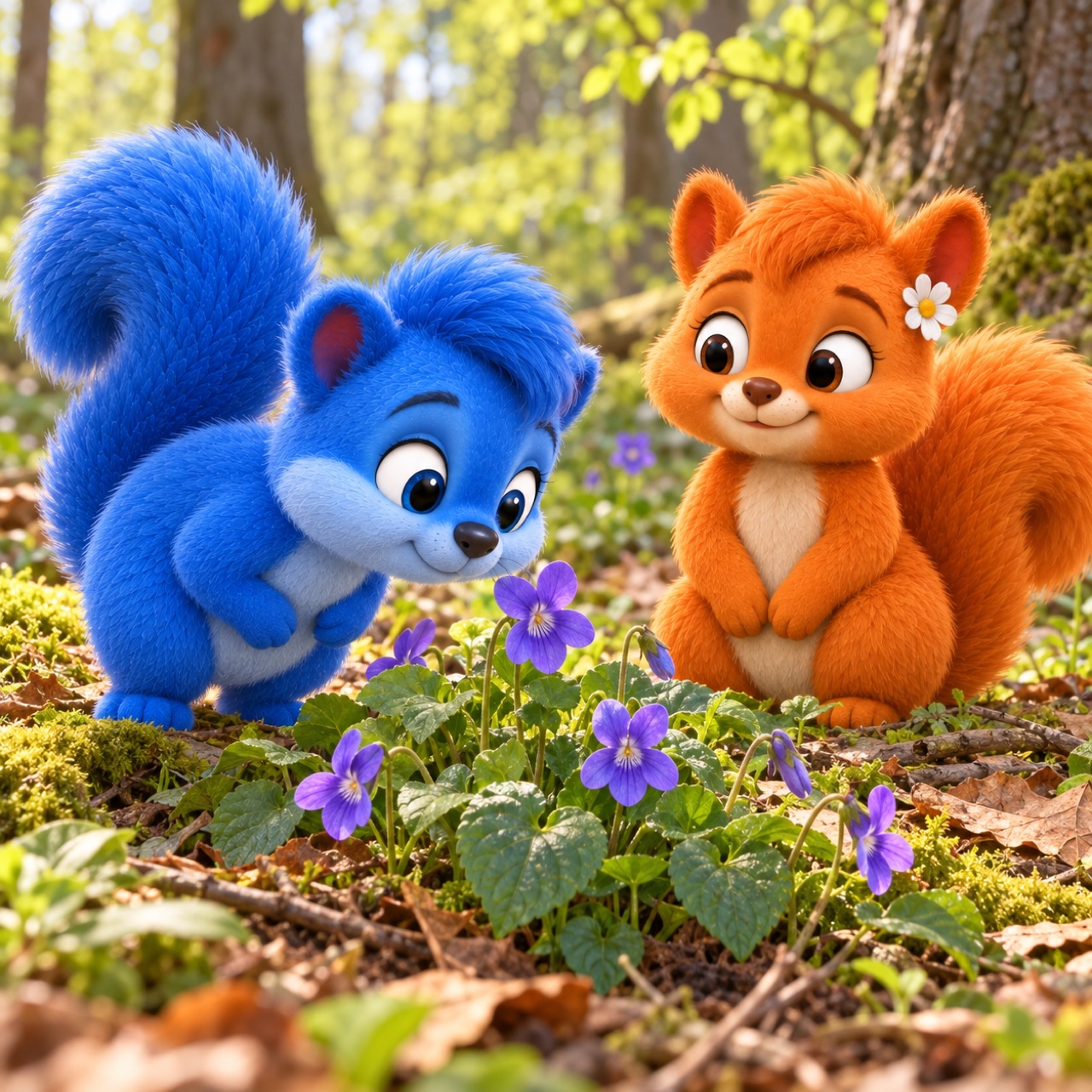
A purple splash in the green woods: Puschel spots a woodland violet. Flauschi points out its little heart-shaped leaf.
The short answer
Wood violets usually have pale violet flowers. The leaves have a heart-shaped notch at the base, where the stalk joins. Other violets may look similar. Compare flowers and leaves together and leave the plant undamaged.
An imagined Wusel scene
Puschel and Flauschi investigate
Puschel bends down to a tiny violet splash of colour. Flauschi points out the heart-shaped leaf beneath it.
Puschel looks for a second flower and compares its colour with his eyes. Flauschi stays beside him on the path. Flauschi“A tiny patch of colour is enough for a good pause,” she says. They leave the low plants to grow undisturbed.
Plant clues
Three things to notice
Violet flower
The small flowers are usually pale violet.
Heart-shaped leaves
The leaves have a clearly heart-shaped base.
Low growth
Woodland violets grow low to the ground in deciduous woods.
Mini quiz
What do you remember?
1. What colour are wood violet flowers usually?
Choose one answer: a), b) or c).
- a)White bell-shaped flower
- b)Violet flower
- c)Yellow flower
Show answer
Correct answer: b): Violet flower Violet flower
2. What does Puschel compare on the woodland violets without picking them?
Choose one answer: a), b) or c).
- a)The usually pale violet flower colour
- b)The underground root shape
- c)The cross-section of a cut stem
Show answer
Correct answer: a): The usually pale violet flower colour The usually pale violet flower colour
Explore in more detail
Here you will find longer explanations and further details. You can explore them together.
Are all violets the same species?
No. Many violet species look very similar. Leaf shape, flower structure and habitat help compare woodland violets. A flower may have a spur, a small part projecting backwards. Colour alone cannot reliably distinguish similar species.
Compare and understand
Compare the same plant parts in photographs rather than just a purple patch in the woods. If you cannot distinguish the species reliably, “a violet” is an honest observation. Good nature study includes admitting uncertainty. Leave wild plants in place and do not eat them using this page as a guide.