Earth & Space
Why do things fall down?
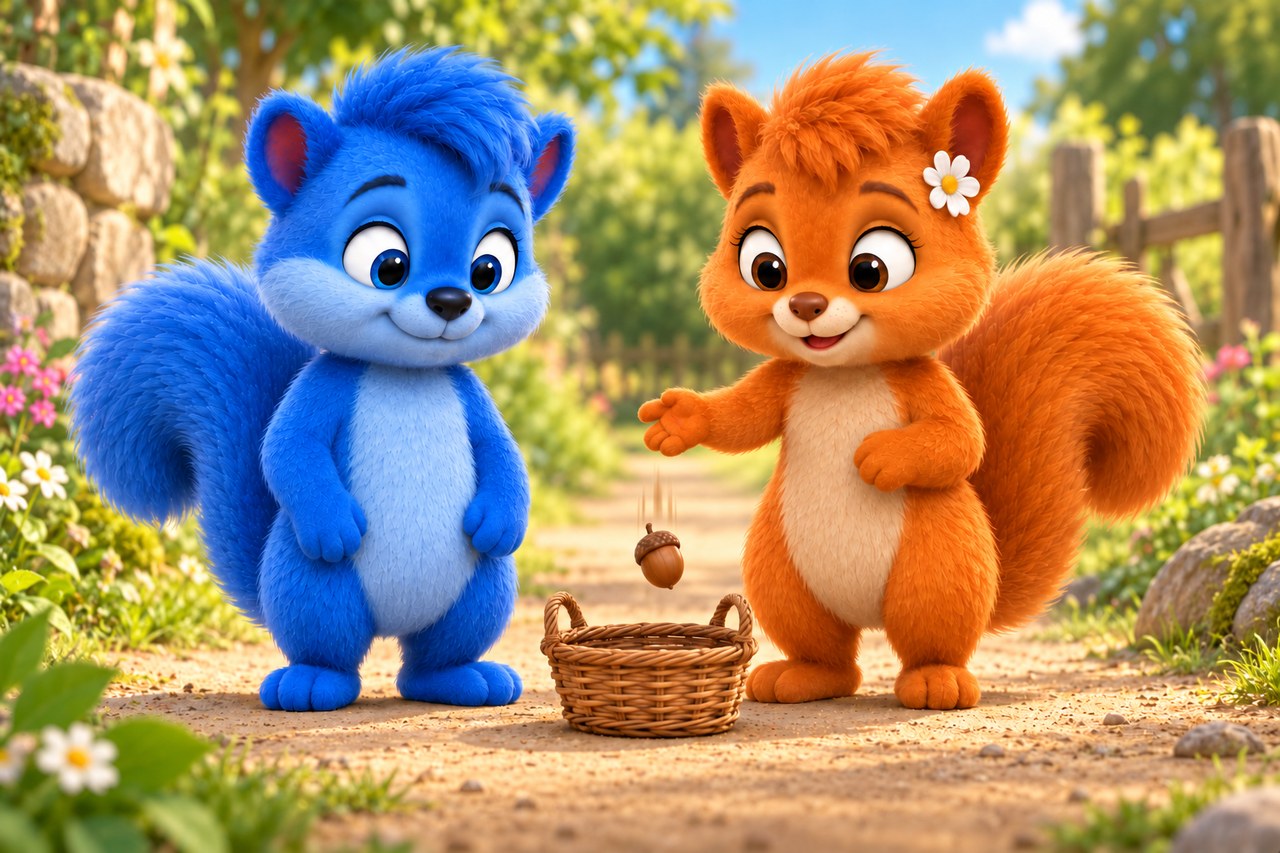
Flauschi releases an acorn above a basket.
The short answer
Earth attracts objects. We call this pull gravity. That is why released objects fall towards the ground. Other objects with mass attract one another too, but Earth's huge mass makes its pull especially noticeable.
An imagined Wusel scene
Puschel and Flauschi investigate
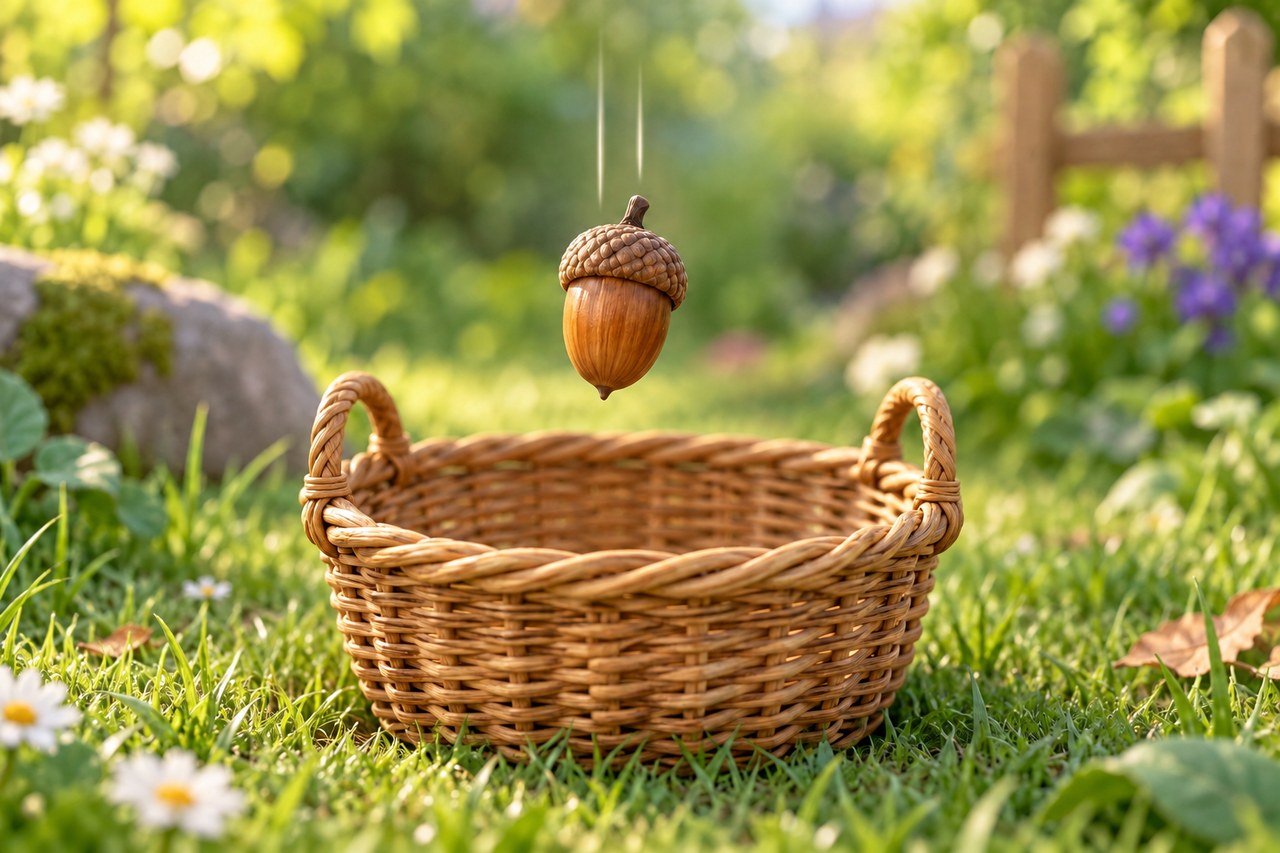
Flauschi holds an acorn just above a basket. Flauschi“Where will it go when I let go?”
Puschel“My guess is the basket!” The acorn falls inside.
Flauschi“Earth attracts the acorn. We call that gravity.”
Puschel“Like a magnet?” Flauschi“It is a different force. The acorn does not need to be made of iron.”
Puschel retrieves it. Puschel“Good thing the basket was underneath.” They keep their experiment small and throw nothing across the garden.
Why don’t people in Australia fall off Earth?
“If Australia is at the bottom of Earth, shouldn’t people there fall off?” Puschel wonders.
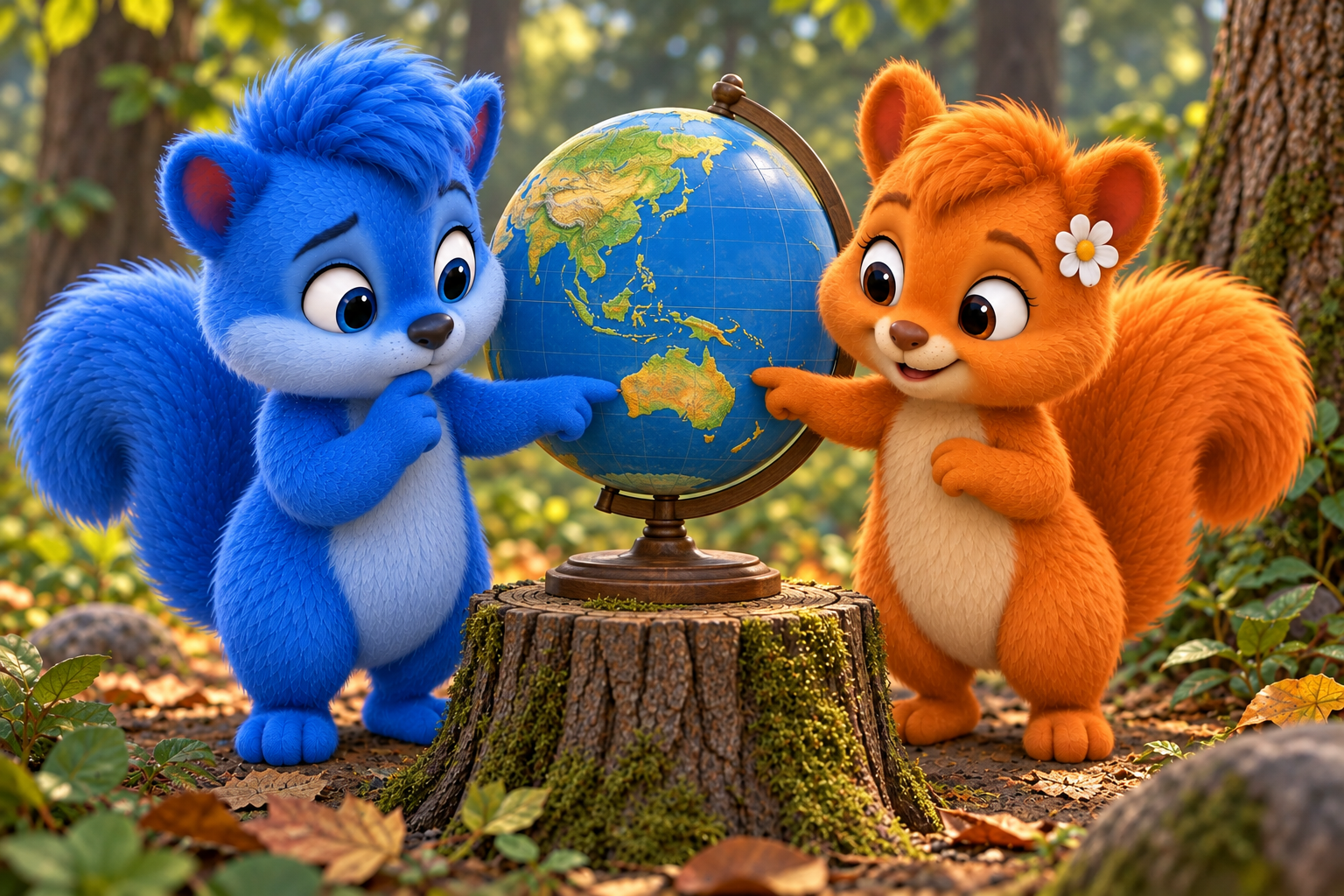
“Luckily, Earth keeps us on the ground,” Flauschi explains. “The whole Earth pulls us towards it. This invisible force is called gravity.” That is why we land back on the ground after a jump. The same happens in Australia.
Here is the trick: “down” points towards Earth’s centre wherever you are. Our feet point towards the ground and our heads towards the sky. It is exactly the same in Australia!
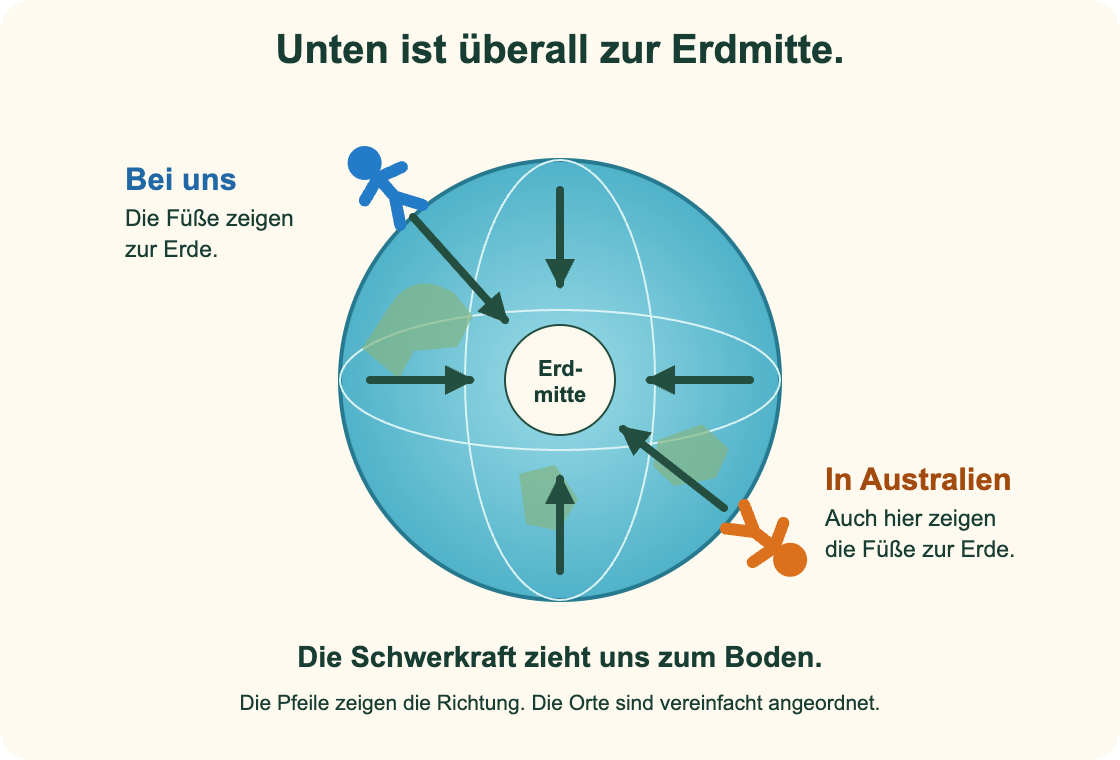
People in Australia may look upside down in a drawing. But space has no shared “down” for them to fall into.
“So they don’t feel upside down?” Puschel asks. “Exactly,” says Flauschi. “In the picture, you look upside down to them!”
Little Wusel quiz
Where does “down” point for people in Australia too?
Choose one answer: a), b).
- a)Approximately towards Earth’s centre.
- b)Always towards the bottom edge of a drawing.
Show answer
Correct answer: a): Approximately towards Earth’s centre. Approximately towards Earth’s centre. A drawing can be turned, but the direction towards the ground stays the same for people there.
Why does a light feather often fall slowly in air?
Choose one answer: a), b).
- a)Air can strongly slow its motion.
- b)Gravity does not act on feathers.
Show answer
Correct answer: a): Air can strongly slow its motion. Gravity acts on the feather too. Air resistance slows its fall.
Word help
- mass
- A property of objects, measured in grams or kilograms, that affects gravity and resistance to changes of motion.
Explore in more detail
Here you will find longer explanations and further details. You can explore them together.
Understand step by step
How it works – simply explained
Earth attracts
Objects with mass attract one another. Earth has a great deal of mass and pulls nearby objects: gravity.
Without support a fall begins
Your hand supports a ball. Releasing it lets gravity pull it towards Earth. Down means roughly towards Earth’s centre.
Air can also slow falling
A feather and a compact object are slowed differently by air. Without air this additional resistance disappears. Gravity and air resistance are different influences.
Why down differs on the other side of Earth
Arrows from different points of a globe point roughly towards its centre. People on the opposite side have a different down direction from yours. They do not fall off: Earth attracts them and the ground supports them. Paper has a top and bottom, but space has no fixed paper-like down direction.
The key points again
Discovery 1
All things with mass attract one another. Mass describes how much matter a thing contains; we measure it in grams or kilograms, for example. This attraction is called gravity. Earth’s gravity pulls things towards Earth.
Discovery 2
Near Earth, gravity pulls objects approximately towards Earth’s centre. We call that direction “down”. In Australia, “down” also means towards the ground and onwards towards Earth’s centre.
Source: [1]
Discovery 3
Gravity acts on wood, stone and many other materials, even without air. But air can slow things as they fall. This is called air resistance. A light feather is slowed especially strongly by it.