Body & Senses
Where does my breakfast go?
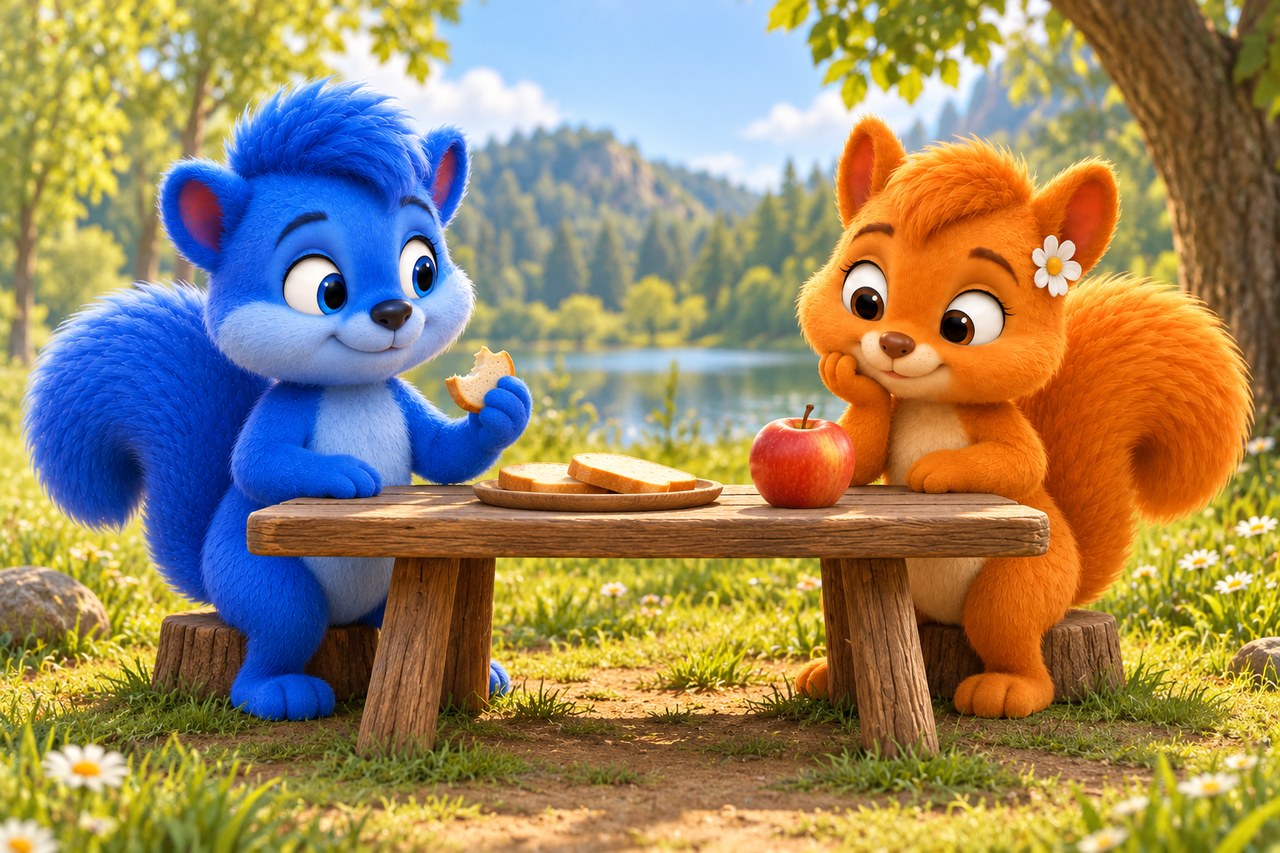
Puschel has swallowed a bite and wonders where it travels next.
The short answer
Your breakfast is broken up in the mouth and further digested in the stomach and intestine. Small nutrient building blocks enter the blood mainly in the small intestine. Undigested material passes on and later leaves the body.
Your breakfast takes different paths
1. Mouth and food pipe
The bite is chewed and mixed with saliva in the mouth. After swallowing, muscles in the food pipe push it onwards. Food does not simply fall down like water down a drain.
2. Mixing in the stomach
The stomach mixes its contents with digestive juices. Chemical breakdown starts in the mouth and continues in the stomach and small intestine. A bite does not instantly become a ready-to-use nutrient.
3. Absorption in the small intestine
The two walls stand for a greatly enlarged section of intestine. Orange dots are small nutrient parts: they can be absorbed through the small intestine wall into the body. Brown leftovers travel further along inside.
4. Water in the large intestine
The remaining contents enter the large intestine. Water is absorbed here, among other things; blue dots show it. The contents become firmer. Water was already absorbed in the small intestine too.
5. Waste leaves the body
The last part of the intestine is called the rectum. It holds stool until it passes out through the anus. The anus is the opening at the end of the digestive tract. Only part of your breakfast becomes this waste.
Brown shows contents moving along inside, orange shows nutrient parts that can be absorbed, and blue shows water. Arrows through the wall mean absorption into the body; arrows inside mean onward movement.
The pictures show an order, not a scale map of the body. Blood and another transport fluid called lymph distribute absorbed substances.
The liver, pancreas and gallbladder also help digestion; their connections are omitted here.
Where has your breakfast gone after you swallow it?
It moves through the food pipe, stomach and intestines and is broken down. Many nutrients pass through the small intestine wall into the body, for uses such as energy and growth. Leftovers reach the large intestine; stool leaves through the anus. Not all of breakfast becomes stool.
An imagined Wusel scene
Puschel and Flauschi investigate
At the picnic, a piece has suddenly gone missing from Puschel’s slice of bread. He inspects what remains.
Puschel“That bite was here a moment ago. Now I cannot see it!”
Flauschi“You chewed and swallowed it. In people, food travels through the oesophagus to the stomach and later to the intestines.”
Puschel looks at his tummy. Puschel“A journey with several stops?”
Flauschi“Yes. The body breaks food down and absorbs nutrients.” Puschel puts down his bread to ask his next question. Only after he has finished speaking does he take another small bite.
Little Wusel quiz
Where does digestion begin?
Choose one answer: a), b).
- a)In the mouth
- b)Only in the large intestine
Show answer
Correct answer: a): In the mouth It begins in the mouth, including chewing and the action of saliva.
Put these stops in order: intestines, mouth, stomach.
Choose one answer: a), b).
- a)Mouth → stomach → intestines
- b)Stomach → mouth → intestines
Show answer
Correct answer: a): Mouth → stomach → intestines The order is mouth → stomach → intestines. The oesophagus connects the mouth and stomach.
Word help
- nutrient
- A substance a living thing needs to live and grow.
Explore in more detail
Here you will find longer explanations and further details. You can explore them together.
Understand step by step
How it works – simply explained
Break up and move along
Teeth make food into smaller pieces. Saliva moistens it and starts breaking down some ingredients. After swallowing, muscles in the food pipe push it to the stomach.
Mix and break down
The stomach churns food with digestive juices. Breakdown continues in the small intestine. Nutrients are ingredients your body can use, for energy and growth, for example.
Absorb and remove
Many nutrients pass through the small intestine wall into the body and are carried onwards. The large intestine absorbs water, among other things. Undigested remains eventually leave as stool. Your breakfast does not simply vanish.
A bite of bread on its journey
You chew bread into smaller pieces and mix it with saliva. Its ingredients also need breaking down. Starch in bread is broken into smaller sugar components. Think of a long string of beads being separated into small pieces. Suitable nutrients can then be absorbed through the gut wall. Bread contains no real beads; this is a comparison. Digestion means more than chewing and swallowing.
References for this explanation: [1]
The key points again
Discovery 1
Digestion begins in the mouth: teeth break food into pieces, and saliva starts some of the breakdown.
Source: [1]
Discovery 2
The oesophagus carries food to the stomach, where it mixes with digestive juice.
Source: [1]
Discovery 3
The small intestine absorbs many nutrients. Undigested material continues to the large intestine.
Source: [1]